High as the Clouds

October 5, 2015 — Huangshan City, Anhui Province

In Chinese, “Qiyun” means “as high as the clouds”. That’s true of Mount Qiyun, but only because the clouds slip down to meet it.

Rising just 585 meters above sea level, Qiyun strains, rather than thrusts, out of the dripping Anhui countryside. From heaven, clouds twist like the fingers of ghostly gods, stroking some of the mountain’s 36 ragged peaks and gripping others in a moist embrace.

For modern tourists, Qiyun is much overshadowed by its larger, far more physically impressive brother – Huangshan, less than 50 kilometers away – but through the passing of ages, the toppling and rebirth of dynasties, the wars that have riven China, Qiyun has stood as the epicenter of Taoism in southern China.

Perhaps it’s the millennia-old carvings of heroes and gods that glower out of Qiyun’s alcoves and caves that provide the air of mystery that have kept pilgrims climbing Qiyun’s steps since the 8th century. Perhaps it’s the natural scenery of the rocky peaks and the lush, river-split valleys below this one of Taoism’s four sacred mountains.

Or maybe it’s just the clouds, the way they wrap the mountain in their chilly fingers and cup peaks in their moist palms, deadening sound and fogging vision and spiriting visitors away from this world and its history, dynasties, wars, and concerns.

I read about Qiyun the evening before my last day in Anhui, and decided I wasn’t yet done punishing my legs. Getting there wasn’t easy, though. It was back to the early-morning bus station for more waiting and wandering and asking and wondering.

After a while, I learned that the same bus I’d taken to Hongcun the day before runs by the village at the base of Qiyun, but it doesn’t stop there. I’d have to ask the driver to make a special stop on the outskirts of town, then walk a couple of kilometers to the village.

I arrived at the crossroads an hour later, and the bus lurched to a stop. Sure enough, the peak to my left was “as high as the clouds”, and rain spit from the heavens.
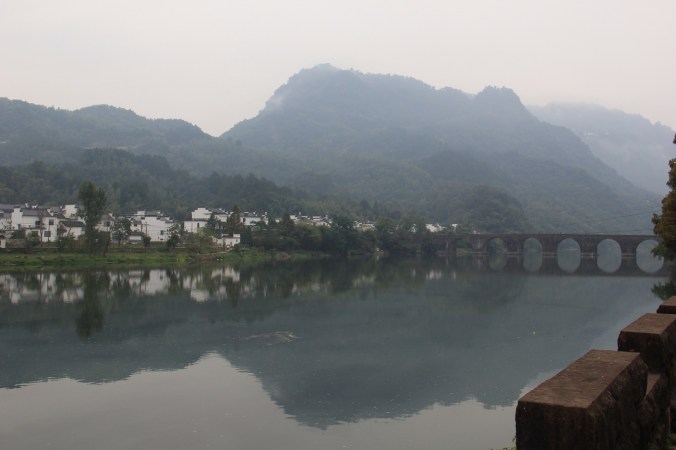
Mount Qiyun is wreathed in clouds above a Huizhou village.

Mount Qiyun is wreathed in clouds above a Huizhou village.

As I walked toward the many-arched bridge that led to the mountain base, I stopped by a baozi shop to pick up some steamed buns and a local pancake filled with beans, peppers, and bean noodles, then promptly burned the skin off the roof of my mouth trying to protect them from the sog.

Compared Huangshan, the climb up Qiyun’s stairs was gentle and short, but in the rain and humidity, my pace left me sopping by the time I climbed to the main gate. From there, Qiyun’s paths wound along the cliff sides and up to its peaks. Everywhere, alcoves hid graves, altars, and shrines to Taoist heroes and gods, and hidden speakers whispered the plucked notes of a guzhen. Here and there out of the trees and rocks rose temples dating from the Song, Ming, and Qing dynasties.

Perhaps the spookiest place on the mountain was a huge, sheltered recess which housed a few dozen statues and carvings. I ducked into one cave, lined on both sides with the crumbling visages of ancient priests. The cave plunged into darkness behind a large altar, and I tip-toed in.

The darkness was encompassing, but in the back reaches of the cave, golds and whites glittered in the dark. As I stood, waiting for my eyes to adjust to the black, bats squealed and shuffled just above me. I began to make out figures in the gloom.

Gods, or demons, many armed and many eyed. Some snarled and brandished weapons. Other just sat and stared. Silence, except for the bats.

I battled a sense of unease that tried to force me back into the light, and tried to take it in. When I turned finally retreated out into the haze of murky daylight, an odd sort of relief washed over me, despite the thickening rain.

Out of the alcove, the path climbed to a plateau upon which sits an ancient village, its walls plastered white and its roofs black in the Huizhou style. The village clung to the cliffs, looking out on the river below which hugged the Anhui hills as it cut through more white-and-black hamlets. A giant yinyang was shaved out of the fields at the foot of the mountain, and all around clouds wreathed the trees.

More ancient temples were scattered among the Huizhou homes, many of which made use of their bottom floors to sell food and beer, souvenirs, or joss sticks for burning in offering to the gods. After clambering down one set of rain slicked stairs, I found some dinosaur footprints alongside a decorative archway that was more than 600 years old.

I spent a couple more hours climbing up and down stairs, squeezing between rocks, and stepping through temple halls before the rain began to fall in earnest. I tucked my camera deep in my bag and ran to the top of the highest peak. From the top I saw nothing but the clouds and heard nothing but the drip of the rain.

Spirited away, just as Qiyun promised.

Without an umbrella or a rain jacket, I ran the paths back to the main gate, then down the stairs to the village below. I only fell once.

I arrived at the crossroads where the bus had left me, and I stood in the drizzle waiting for it to return. I tried in vain to flag down a few passing tourist buses, then finally stuck out my thumb. Only a moment went by before a middle-aged woman pulled up and asked if I needed a lift back to Tunxi. I thanked her profusely and asked how much she wanted.

“Just pay whatever you think is fair,” she said.

As we wound along the country roads I dozed off in the front seat and dreamed of clouds.
A Dolphin God in the Waste

August 7 — Jiayuguan City, Gansu Province

We have bowed before The Dolphin and looked upon his heavenly kingdom.

Like Buddhist pilgrims, we twisted through Jiayuguan’s broad, empty avenues with no sure destination, assured in the knowledge that we’d know what we were looking for when we found it.

A sign: Above the tree tops floated a white globe, gleaming in the sun and impossible to interpret.

Like the three magi, we followed the shine in the sky and found our Lord.

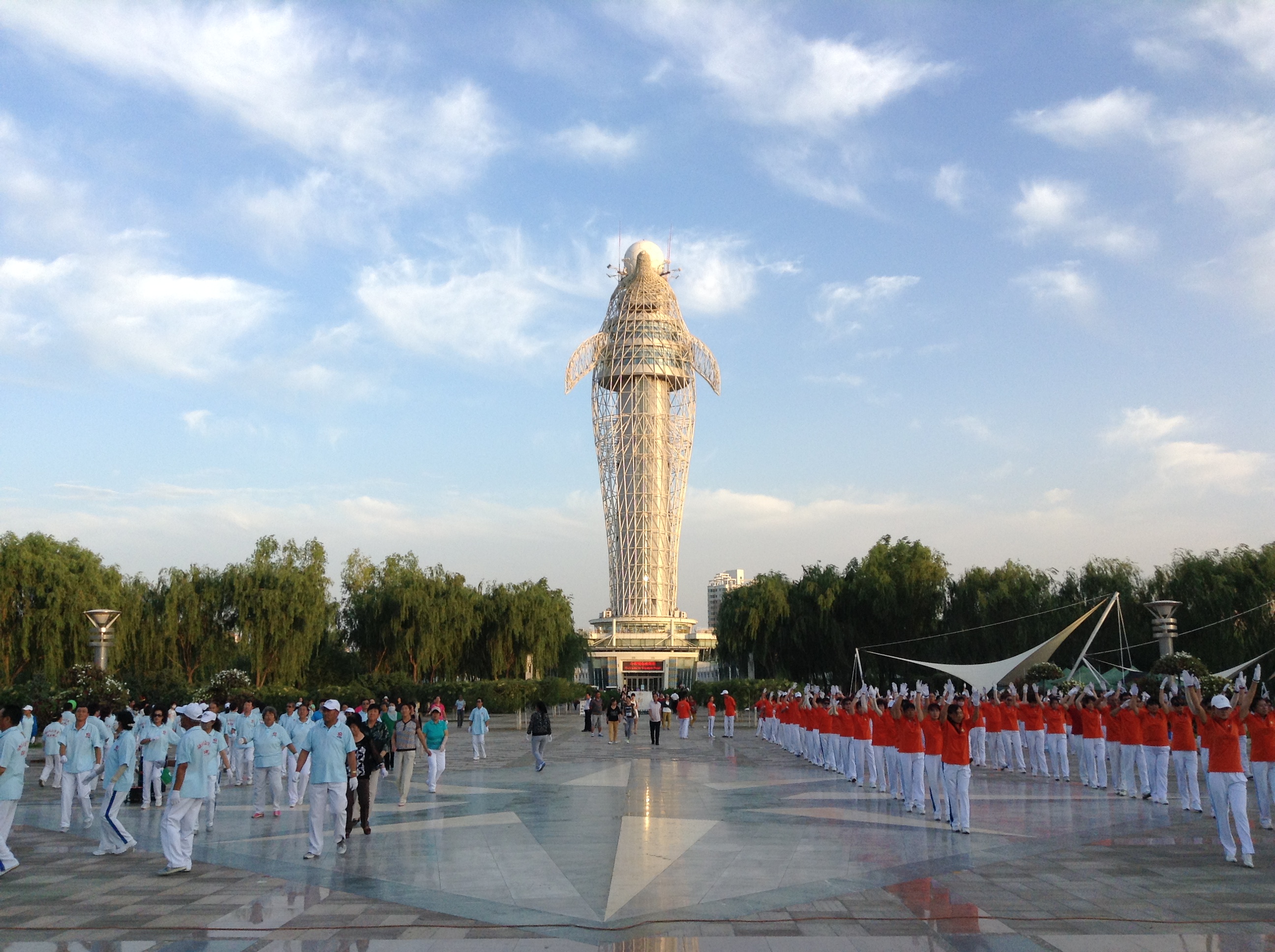
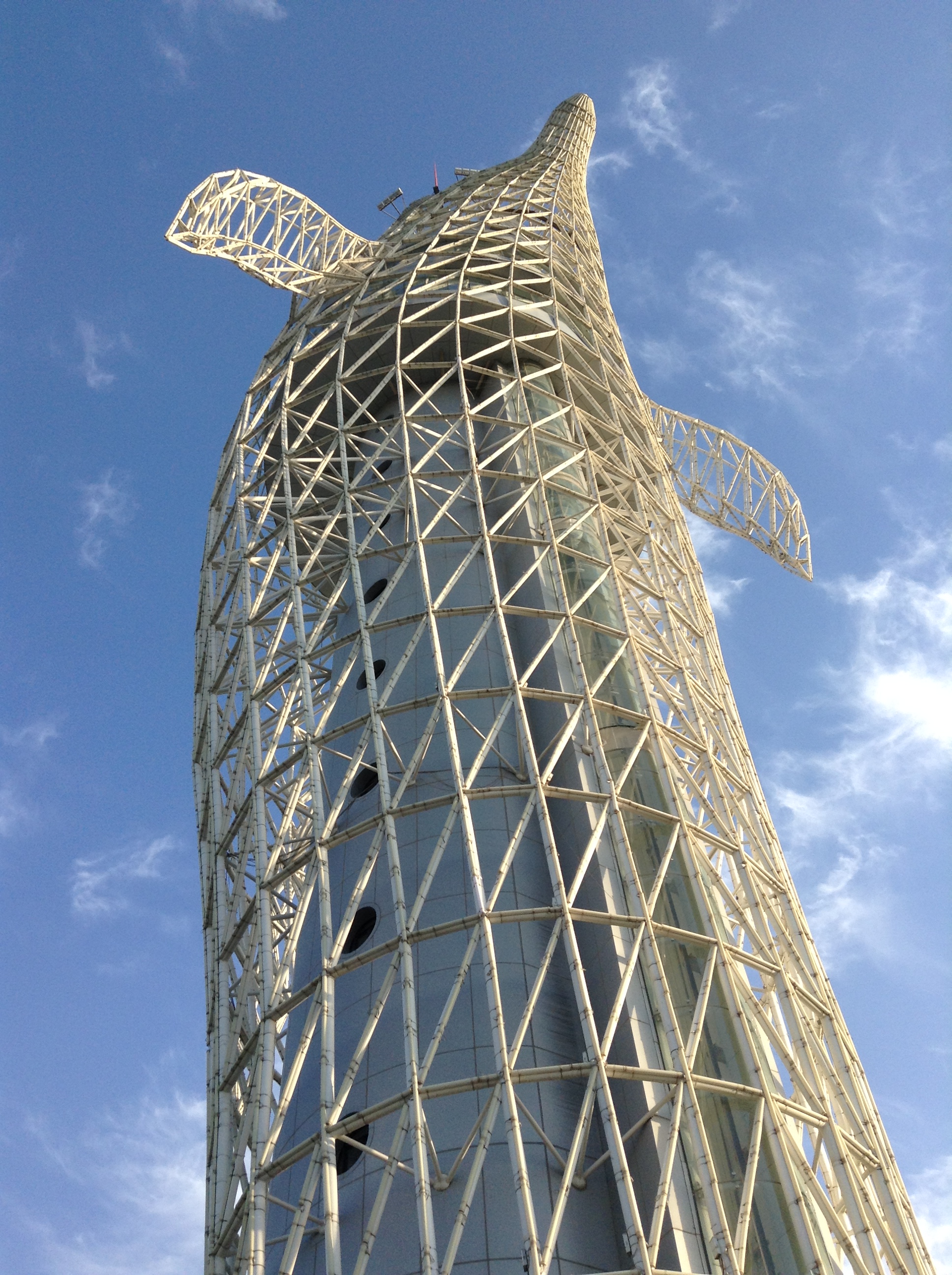
In the middle of a leafy park in the middle of one of the world’s driest and furthest-from-the-ocean cities, The Dolphin rose out of a shallow fountain, perched on its tail fins, looming over all.

The only words we could find were: “What the hell?”

The Dolphin God

The Dolphin God

We approached it with trepidation. Beneath its cracked skin of interlocking white metal beams floated a gut-like atrium and an esophageal elevator.

We made an offering of ourselves.

As it turned out, The Dolphin was actually a gussied-up atmospheric monitoring station. Inside it was a small museum about China’s weather patterns and some exhibits on climate change, plus a collection of photos of the rest of China’s weather stations. Pretty normal stuff.

Atop the elevator, things got weird.

The Dolphin’s head is a 360-degree viewing deck, complete with heavy-duty binoculars. From the top, we could see why we’d had an unshakable feeling that something was amiss in Jiayuguan City.

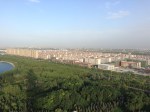
Jiayuguan has a population of just more than 230,000 people, making it tiny by Chinese standards. But with a Dolphin’s-eye view, we saw the city sprawled out in every direction. Even stranger, it looked like the North Korean utopia realized.

Everywhere apartment blocks of disconcerting suburban sameness rose out of the desert, each red roof capped with its own solar-heated water heater. Tens of thousands of apartments, broken up only by huge, centrally located, hour-glass shaped nuclear cooling towers. Golden, decorative streetlights lining sweeping avenues.

Surrounding The Dolphin – again, in the middle of a desert waste – was a leafy and lush park that must have equaled New York City’s Central Park. It was practically drowning in streams, fountains, and lakes and overgrown in greenery.

And all of it was empty. No people in the apartment clones, no cars on the streets, no commerce anywhere. The infrastructure for perhaps millions, and all of it unused. The only thing that seemed to move at all was the steam drifting out of the nuclear plants. A heaven on earth, desolate.

We found the priests locked in ritualistic competition for their deity’s divine favor.

In the square below two groups danced, one next to the other, a narrow lane in between. Those in one group wore blue polo shirts, the other red. They stood in two blocks made of parallel lines of worshipers. In unison, they shuffled their feet and raised their hands and heads to the sky, keeping pace with the rhythmic, modern tunes that blared from speakers set up among them.

Each group whirled to a different tune, and as we watched, the music spilling forth from each amped up decibel by decibel in an attempt to out-loud the other. They pretended not to notice each other, even as they shot furtive glances scanning for any slip in synchronicity that could signal final victory. On and on it went as we slunk along in gap.

A man, not of that bizarre priesthood, approached me and asked where we were from. After a brief exchange in pleasantries, I told him the huge city looked empty.

“Does anyone actually live here?” I asked.

“No,” he said. “But someday they will come.”

Above, the dolphin reigned — still and omnipresent.

Worshipers compete for the favor of their deity.

Worshipers compete for the favor of their deity.

Chengdu Day 1

I’ve put off writing about Chengdu (成都) because I don’t really know what to say about it without inducing boredom.

That’s not because Chengdu is boring. It’s because the best parts are like the humid fog that rises out of the Sichuan’s mountain forests and mixes with the humid smog that rises of its drab concreate forests: languid, hazy, smelly, and not at all what you expected. Lonely Planet has it right. By all means Chengdu should be a miserable place. Actually, it’s pretty lovely. It’s just hard to see why.

So instead of writing some kind of terrible Chengdu opus in which we could wander blindly and lost, then, I’m just going to break it into a few little chunks and call it good. Those Panda’s I promised at the start will finally arrive. Soon.

For starters, Jordyn and I have wanted to visit Chengdu since we started looking for jobs in China. One of our early job offers was teaching children for EF in Chengdu. We read plenty about it. It sounded like our kind of place. Surrounded by mountains. Laid back. Full of tea house culture. Ancient culture. The home of the Pandas.

It isn’t anything like we thought. But it is, too.

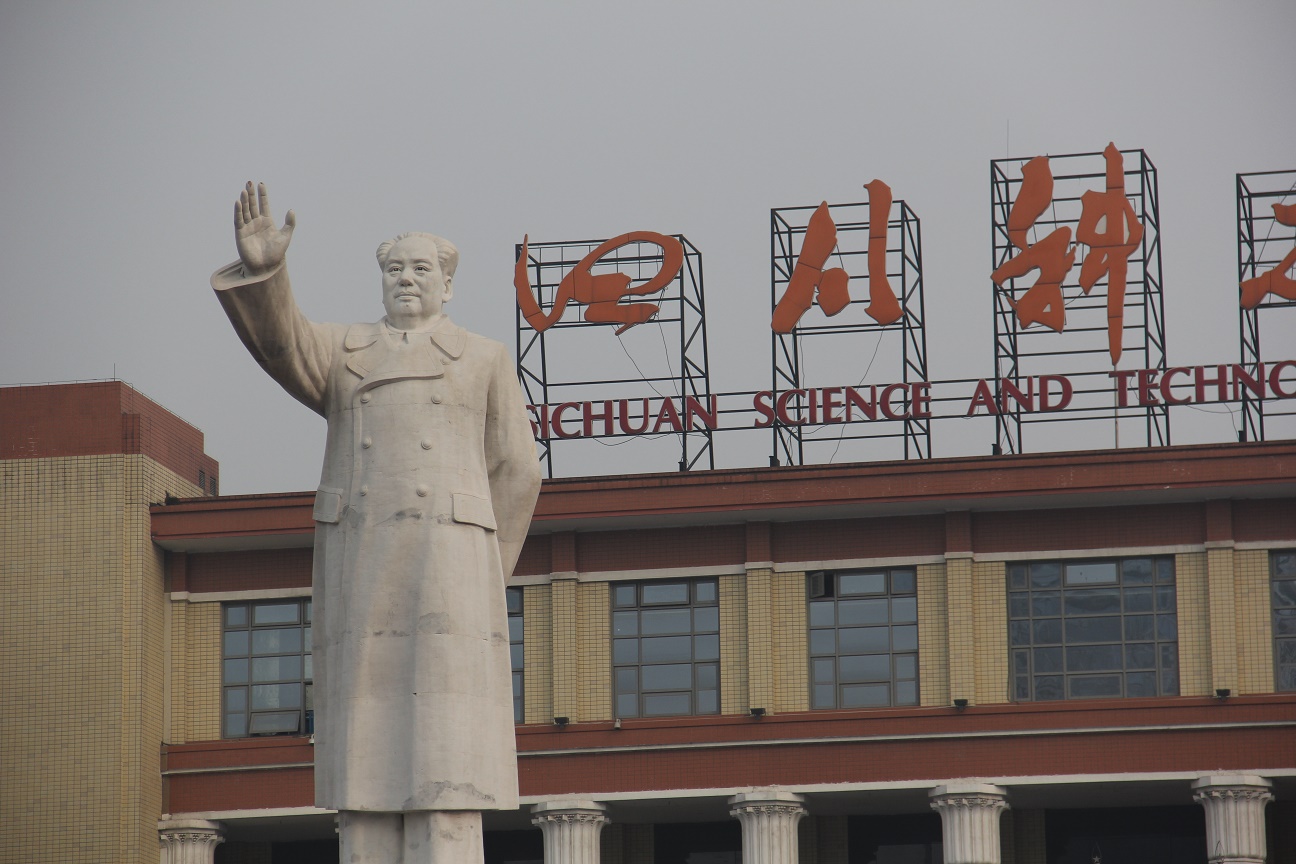
We took a short walk to the city square the first morning, getting a good look at the resident Mao statute and the uncheckpointed square nevertheless guarded by dogs and Segways and armor trucks. We got some coffee at McDonald’s. Globalization has its benefits.

Chairman Mao welcomes you to Chengdu's central square.

Chairman Mao welcomes you to Chengdu’s central square.

But our first real goal was to get the ancient history of Chengdu out of the way. Forty kilometers outside of Chengdu is the Sanxingdui archeological site believed to have been a major Bronze Age city and the center of a kingdom that flourished in Sichuan for more than 1000 years. Artifacts from the Kingdom of Shu indicate that isolated from the rest of China by the mountains which surround the Sichuan Basin, the Shu developed a unique and distinct culture until it was conquered by the Qin in 316 B.C. and integrated it into what would become the Middle Kingdom.

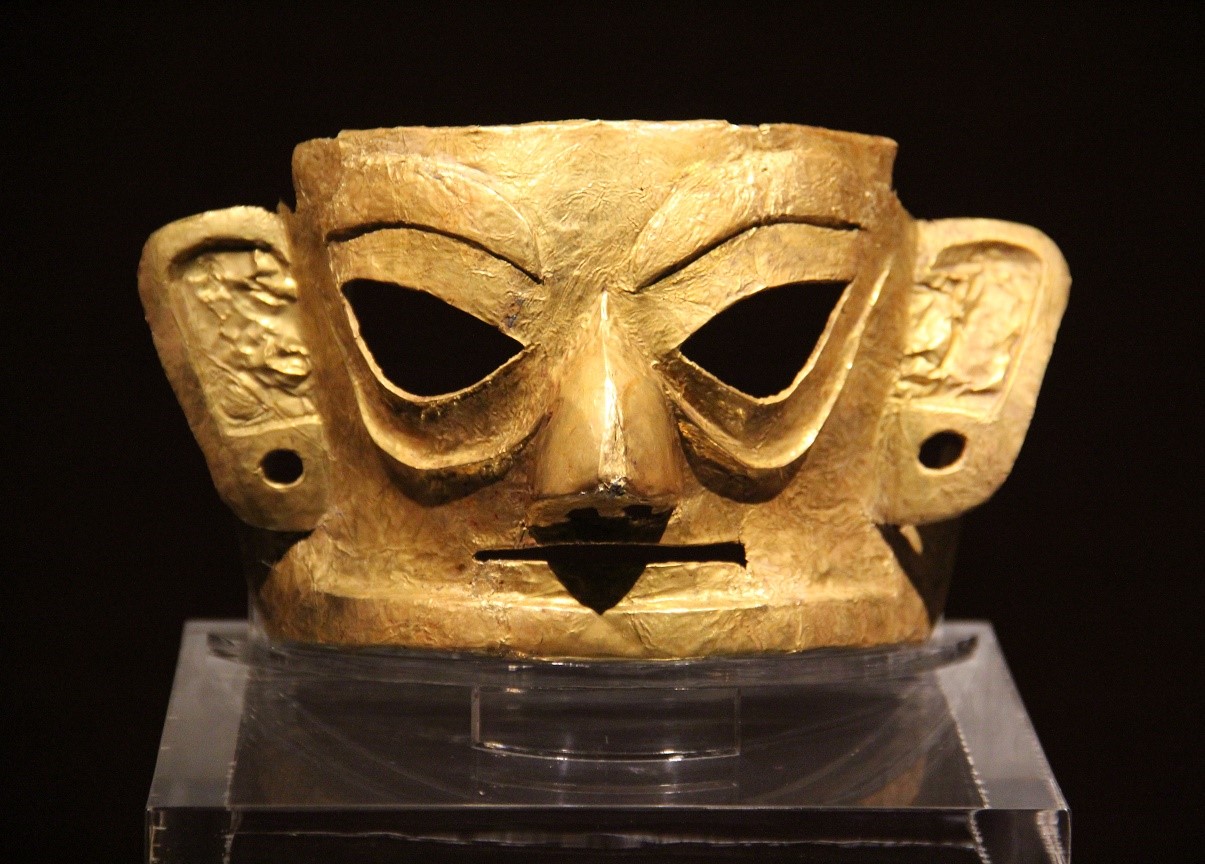
Another also distinct Shu site was discovered in 2001 in the Chengdu city limits during real estate development. Called the Jinsha Site, this second ancient city represented the final era in Sanxingdui’s cultural evolution as the political capital relocated to what is now Chengdu. A new museum was built around the still-active dig, which has uncovered jade, weapons, tools, ivory, and some beautifully advanced iron and gold work.

This gold mask is one of the Jinsha Site's most impressive treasures.

This gold mask is one of the Jinsha Site’s most impressive treasures.

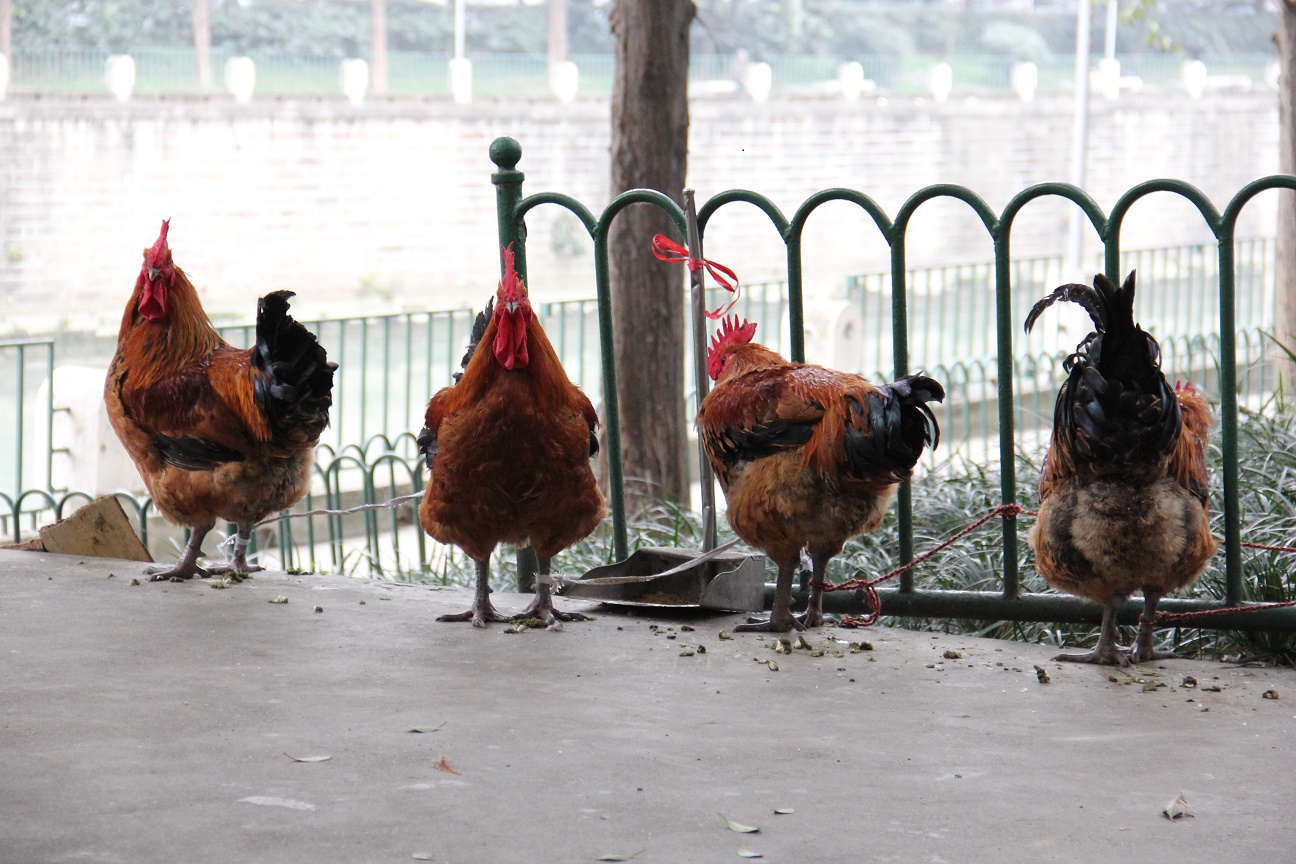
Plus on the way to the museum we got our first introduction to roosters tied with leashes to trees like dogs. We would see a lot more of these.

More of these.

More of these.

In the afternoon, we wandered around the Wenshu Temple neighborhood.

Wenshu Monastary is Chengdu’s oldest, founded during the Tang Dynasty sometime around the 7th century. It was torched during the wars of the Ming Dynasty, then rebuilt in its current form during the Qing.

Wenshu was our first encounter with the sweeping eaves style of architecture that dominates in Sichuan and diverges considerably from the Beijing style. The sprawling temple itself was crowd- and incense- and monk-filled in the usual style, nothing particularly unique but still pretty and peaceful.

We struck up a conversation with a group of old men who wanted to take some pictures with us. They tried to teach us something about Buddhism, but the dialect made understanding near impossible until a tiny septuagenarian with long, thin hair, no teeth and a great James Hong impression told them to cut it out. He talked to us in superb English about America instead. He’d never been but knew all about it. He still wanted to go to California someday. Then we all snapped some pictures and went our separate ways.

In the park outside of the walls, the old men gathered with their caged birds, hung on lines between the trees. The birds squawked and squealed at the wind while their owners shaded in a pagoda squawked and squealed at their card game.

After the temple, we walked the reconstructed “old” streets nearby, watching the food and ware hawkers ply their trade. There were nut vendors, meat vendors, bamboo juice vendors, calligraphy vendors, and even “Panda IKEA.”

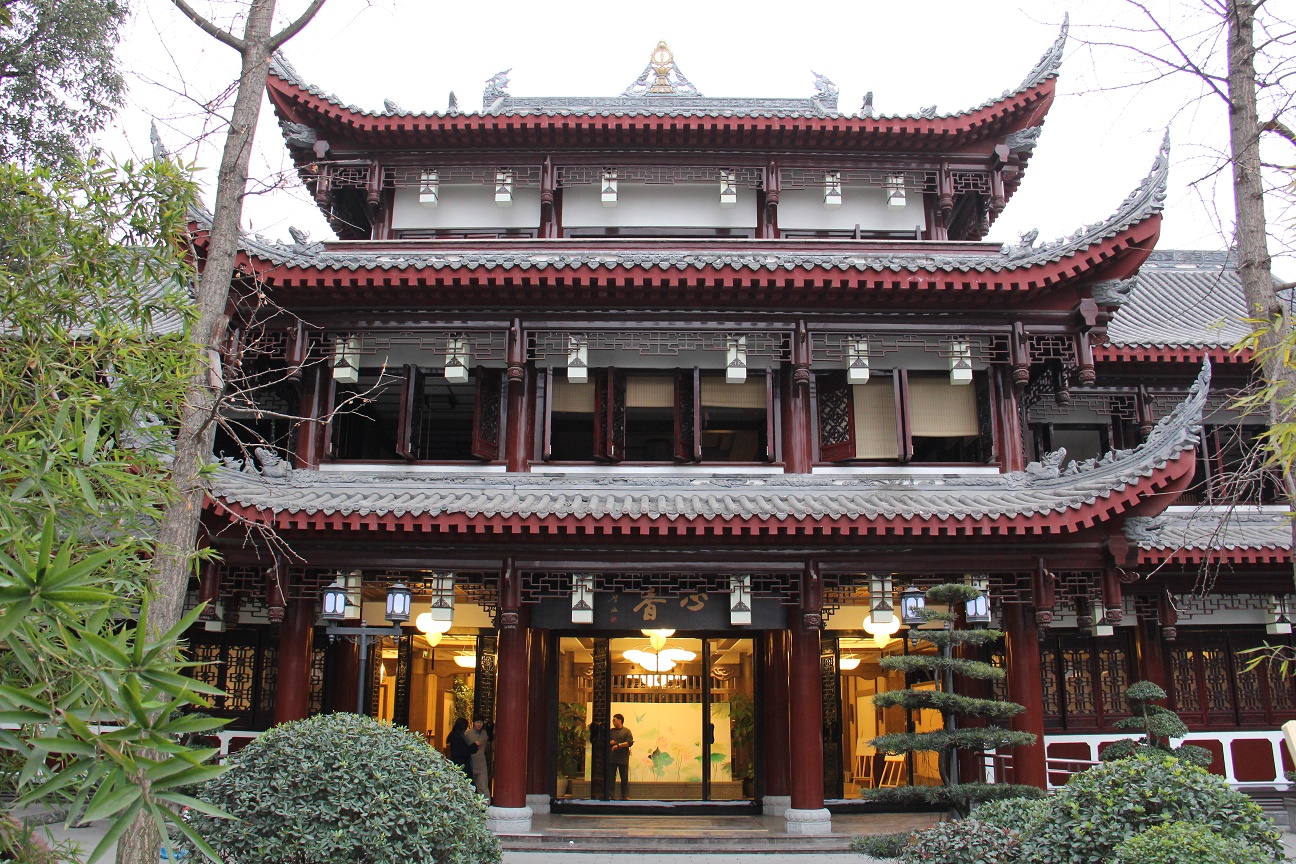
The highpoint of our first day in Chengdu, though, was Wenshu’s vegetarian restaurant. The sleek wood and white dining room tended to by monks and nuns featured a 5-dollar, all-you-can-eat, all-vegetarian buffet with choices of more than 25 different dishes. Salads, soups, pastas, breads, casseroles, and deserts of all types with more kinds of vegetables and beans and tofu than I’ve ever seen. And perhaps the tastiest I’ve ever eaten.

Culinary enlightenment?

Wenshu's vegetarian restaurant.

Wenshu’s vegetarian restaurant.