China’s little Europe

This weekend Jordyn and I took a trip to England. And Italy. And Germany. And the whole time, we stayed in China.

Tianjin is one of those places that all the foreigners in Beijing say they’re planning to go to, eventually. Even though it’s only 30 minutes away by bullet train, most of them never do. We finally did.

At 14 million people, Tianjin is the fourth largest city in China behind Shanghai, Beijing, and Guangzhou and is one of the country’s four direct-controlled municipalities along with Shanghai, Beijing, and Chongqing. It’s location on the Bohai Gulf as well as on the banks of the Hai River, which connects northern China to the Yangtze River via the Grand Canal, also made it one of the most important ports in China, especially after it was forcibly opened to French and British trade by the Treaty of Tianjin, which was signed in 1860 following China’s defeat in the Second Opium War. Over the following decades, Great Britain and France were joined by Japan, Austria-Hungary, Italy, and Belgium in establishing self-administered foreign concession areas in Tianjin, each with its own government buildings, public facilities, and neighborhoods.

That’s what makes Tianjin so interesting: The city is a patchwork of early-20th-century European buildings and avenues that trumpet the cities colonial past and steel-and-glass skyscrapers that announce its intent to own the future. And underneath it all scoot the overstuffed electric tricycles ubiquitous to China.

Sunday was Qingming festival, or Tomb Sweeping Day, so I was off work. Jordyn also had Monday off, so we decided it was time to take the trip. We’d tried to do the same with Toby on the same weekend last year but showed up to the train station too late and didn’t have time to make the trip. This time we planned ahead and bought tickets a few days before.

Tianjin is a walking city.

There’s the old downtown, lined with European-turned-Chinese banks of the columned variety, most of them (of course) webbed by renovation scaffolding during our visit.
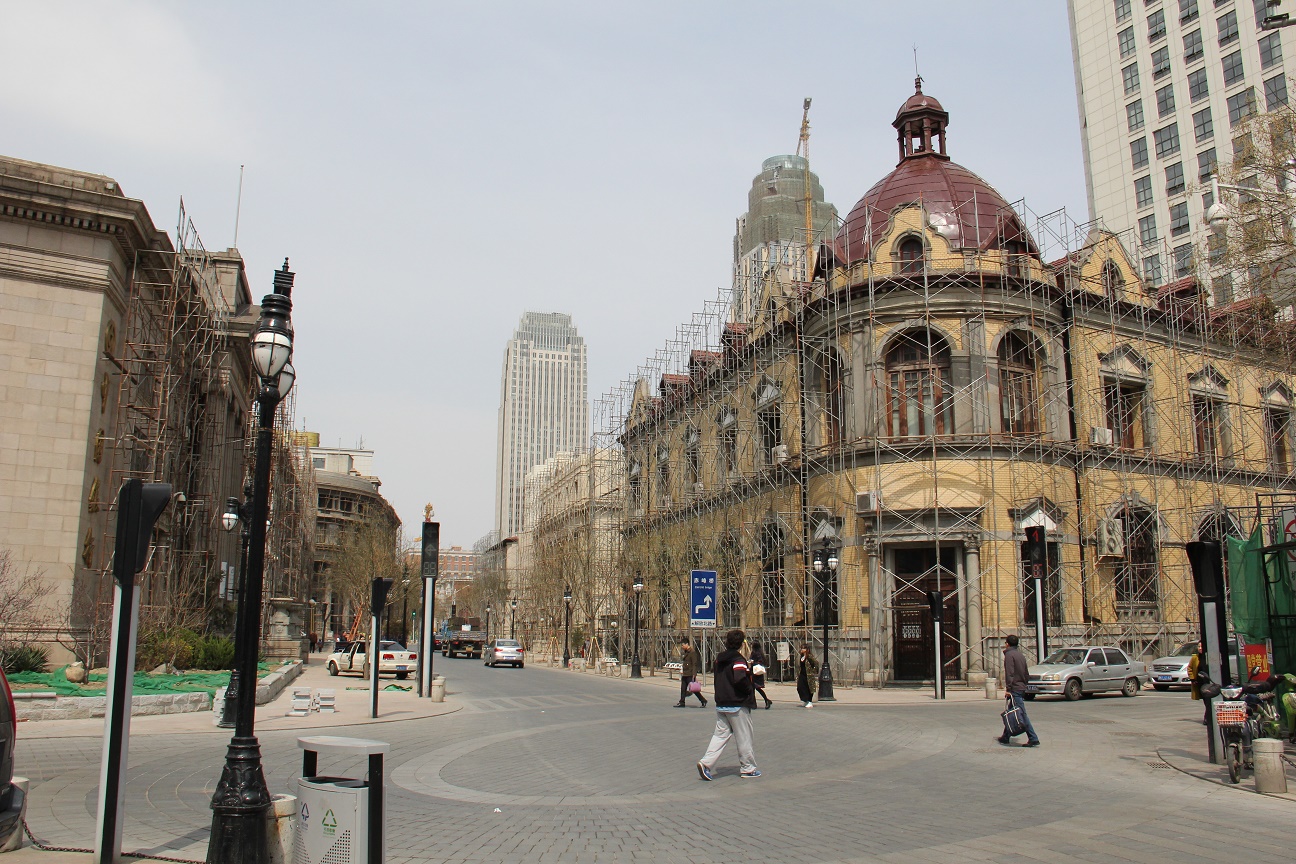
Banks in Tianjin's downtown

Tianjin’s downtown is mostly banks built during the early 20th century to house European companies. These days they are mostly Chinese banks.

There’s the riverside parks, lined first across from the train station and a giant clock with the old British treaty port, then with fishermen, then with the skyscrapers.
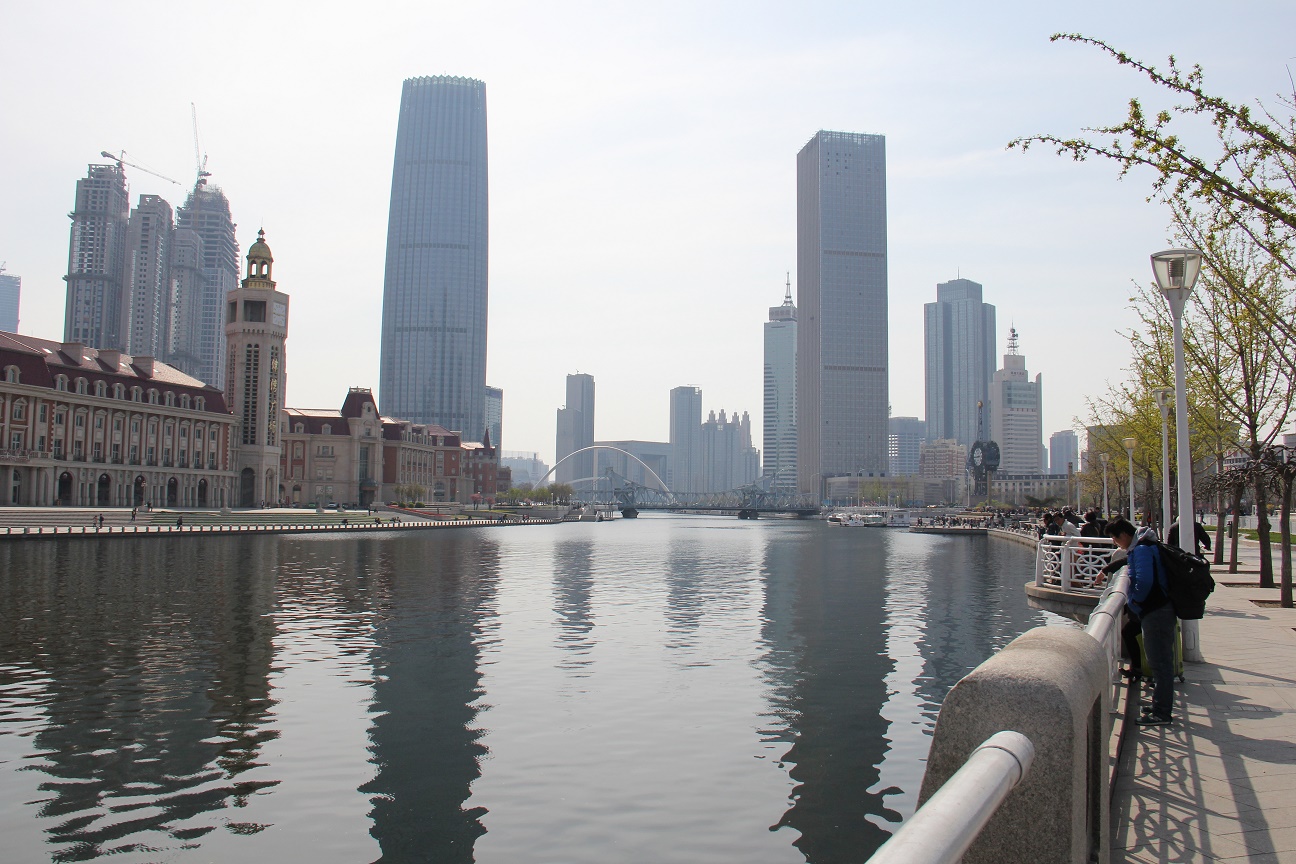
Tianjin

The treaty port sits on the river across from Tianjin’s train station. Past the bridges down the river, the city’s skyscrapers project a different attitude.

There’s the Italian Concession, Tianjin’s version of Little Italy, lined with Italian villas and European-style restaurants and souvenir shops catering to the domestic crowd.
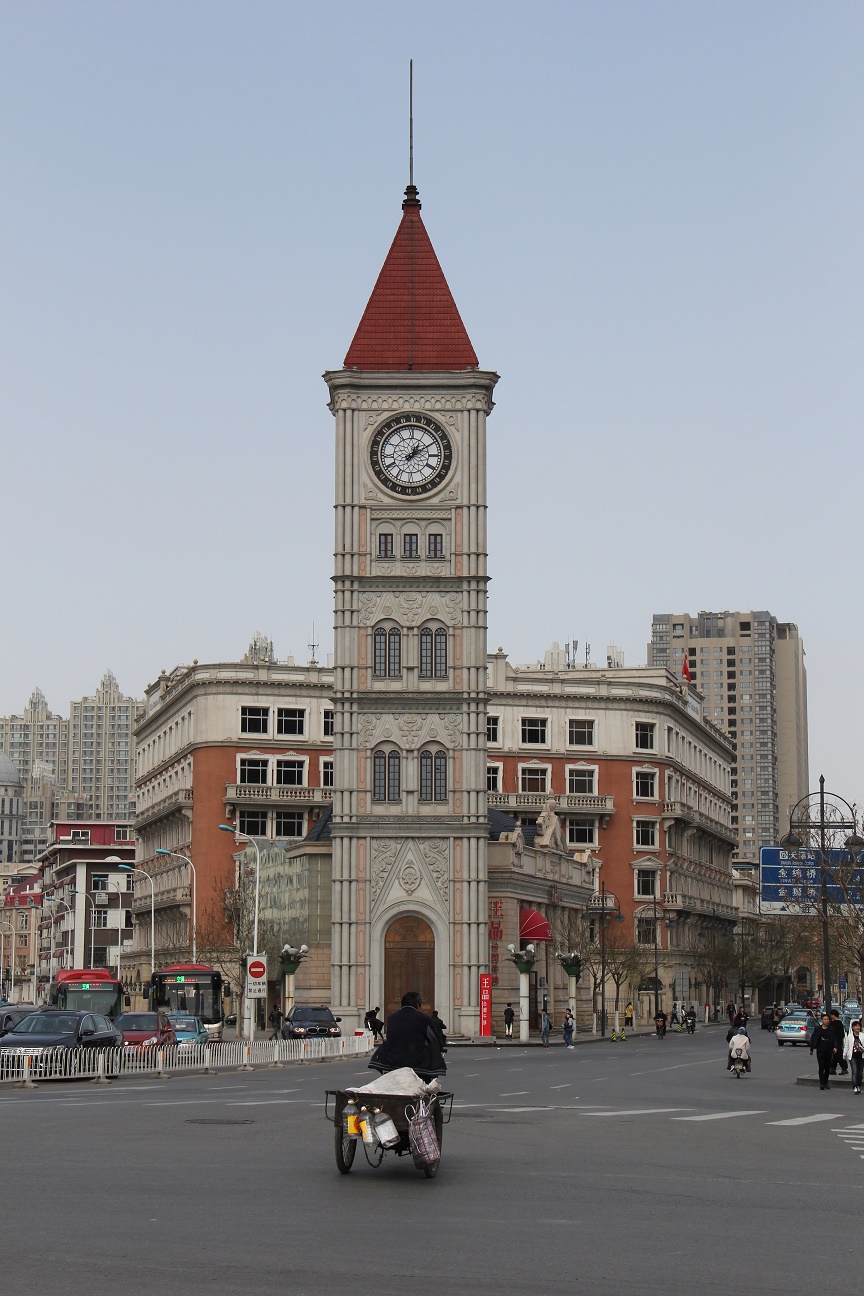
Tianjin's Italian concession

This clock tower marks the entrance to Tianjin’s Italian concession, complete with gold statues, fountains, and lots of cheesy Italian (and German?) restaurants.

There’s the ancient town street, lined with traditional Chinese craft shops that look like they’ve seen better days.

There’s the creepy China house, a house lined with tourists and constructed entirely of concrete and vases or pieces of vases.
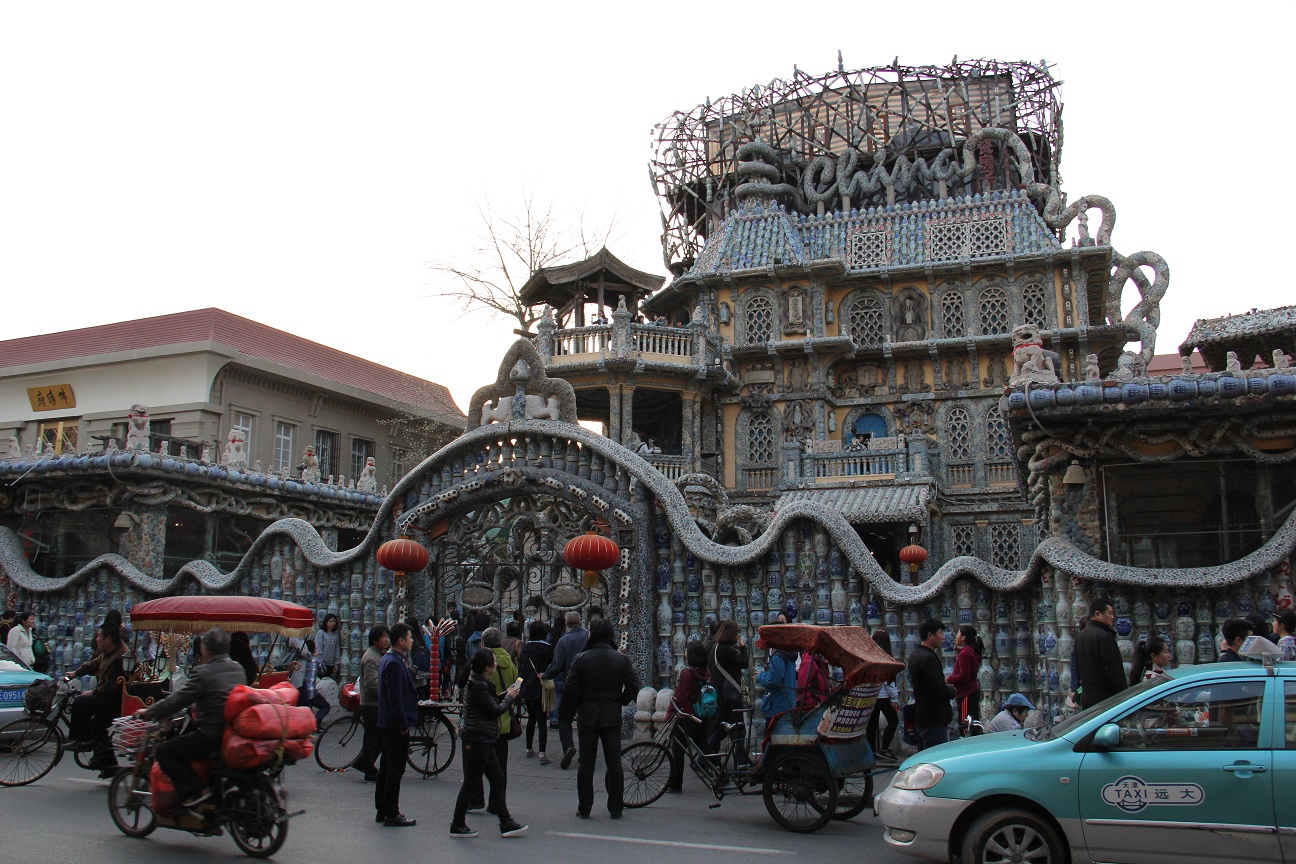
Tianjin's China house.

Tianjin’s China house.

There’s the wide avenues, lined with buses and cars and where, on Qingming, you might catch a man burning piles of paper money for his ancestors in the middle of an intersection or a group of people trying to keep the grass from catching on fire when their paper money takes off with the wind.
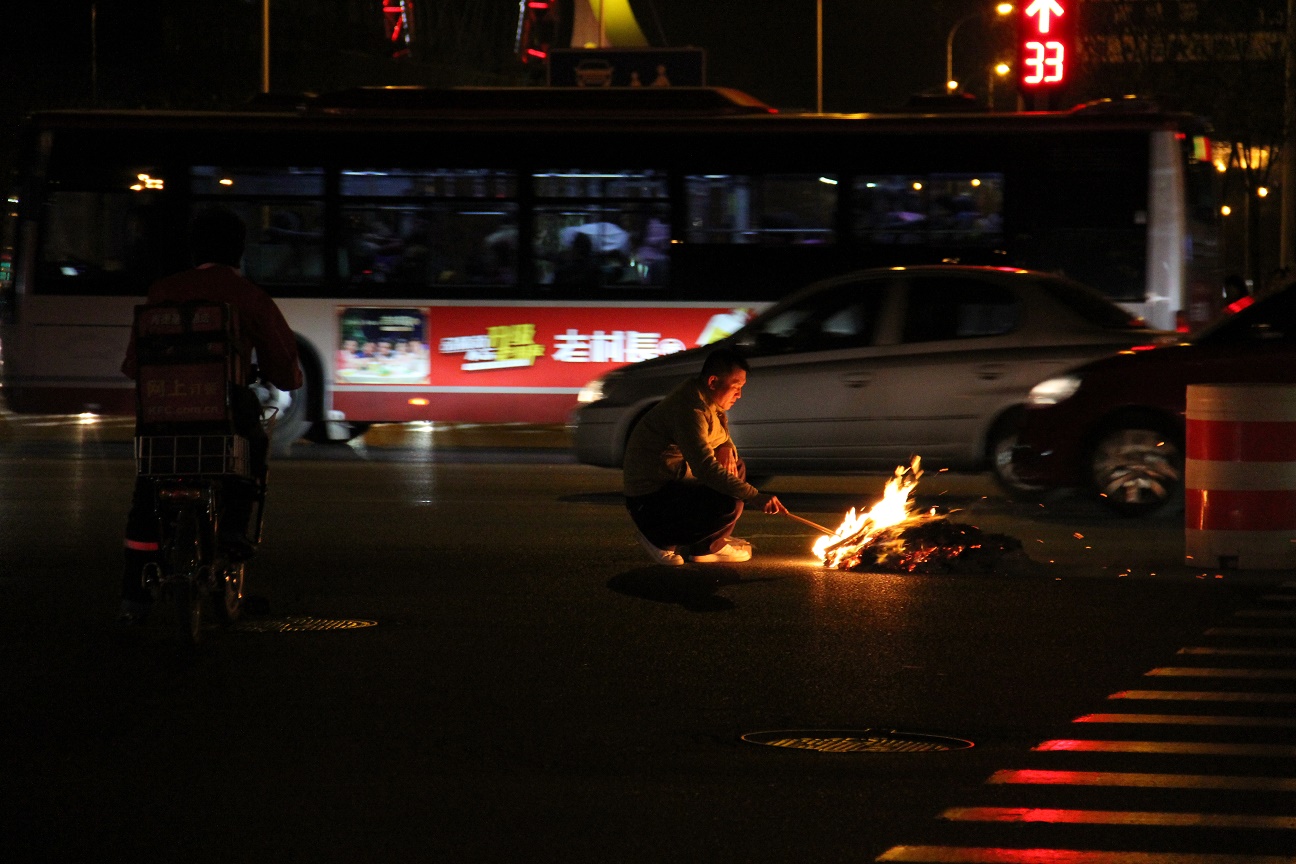
A man burns paper money in Tianjin

On Qingming, people burn paper money as well as iPhones and other gadgets, for their ancestors to use in the afterlife.

There’s the Yongle Bridge, topped with the Tianjin Eye, the world’s only Ferris wheel ( (120-meters) built on top of a bridge, and lined by a riverwalk where revelers launch flaming lanterns into the night.
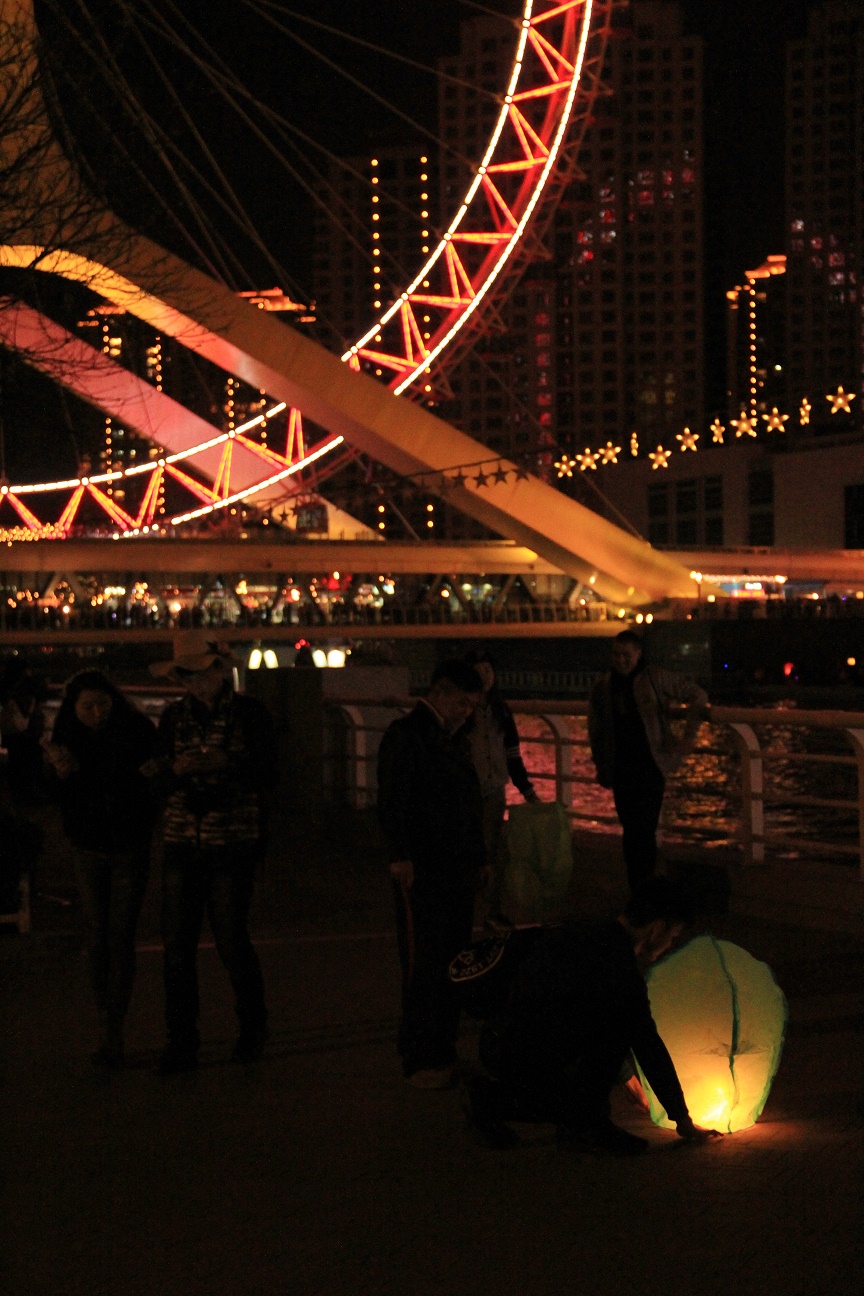
People light lanterns near the Tianjin Eye

Evening celebrators light floating lanterns under the glow of the river-spanning Tianjin Eye, the world’s only Ferris wheel built on top of a bridge.

There’s the 五大道 wudadao (five big avenues) area, lined with blossoming trees and the mansions of former government officials and generals, some of their abodes straight out of 1910 London, others out of Spain.
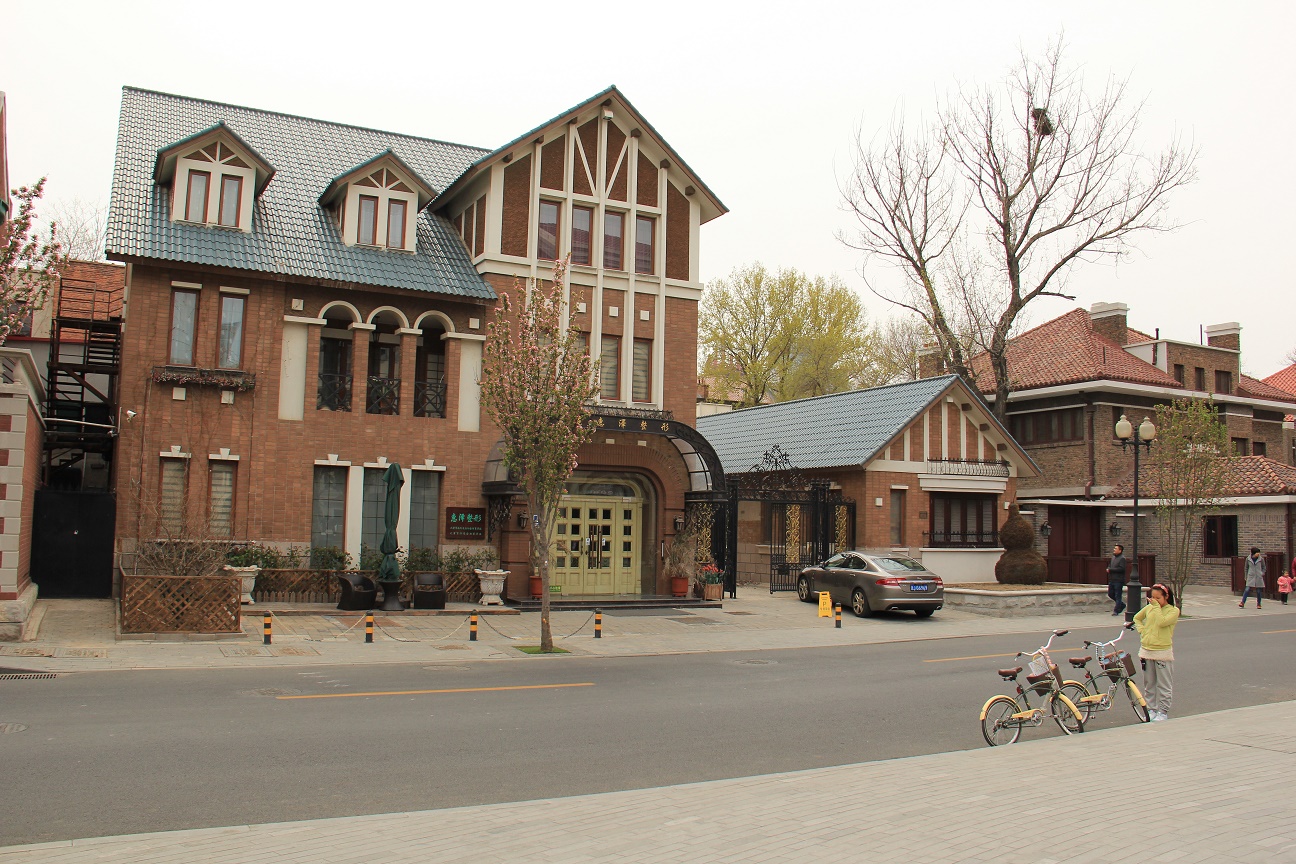
House in wudadao

Houses in the wudadao district certainly don’t look Chinese.

And there’s Tianjin’s biggest shopping avenue, lined with glittering monuments to consumerism and punctuated by the French-built St. Joseph’s cathedral hiding at the very end.
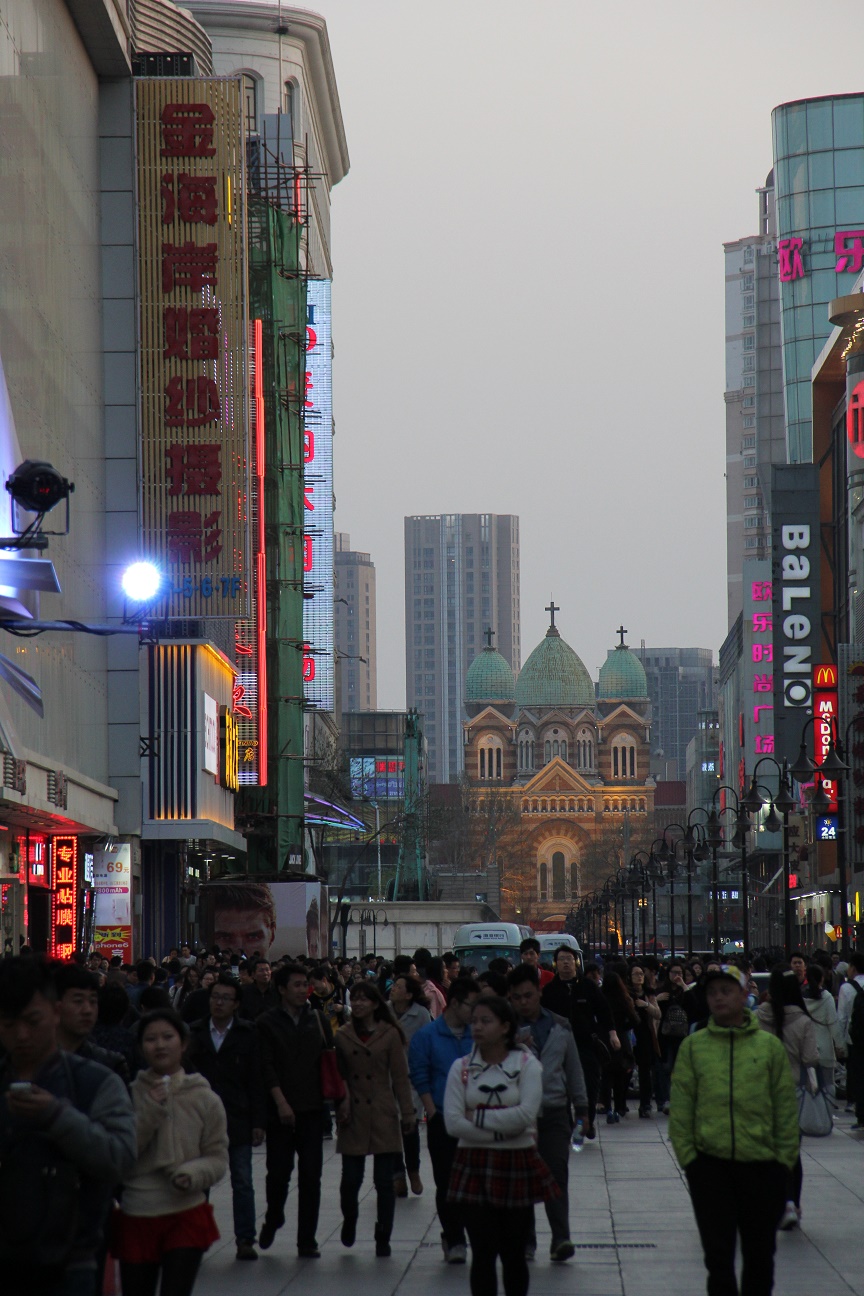
St. Joseph's Cathedral

St. Joseph’s Cathedral is the end point of Tianjin’s biggest shopping street.

For people who liked walking, Tianjin is good for a pair of days well spent.

The city is at once much cleaner than Beijing and also more traditional. Its modern streets and streets alike have almost no trace of what one comes to expect as China, save for all the Chinese people as well as the army of food and repair carts posted at many of the intersections. Many of the European-style doorways the traditional red paper characters and door gods pasted on them. And St. Joseph’s Jesus is covered in Chinese writing. The contrast was somewhat disorienting.
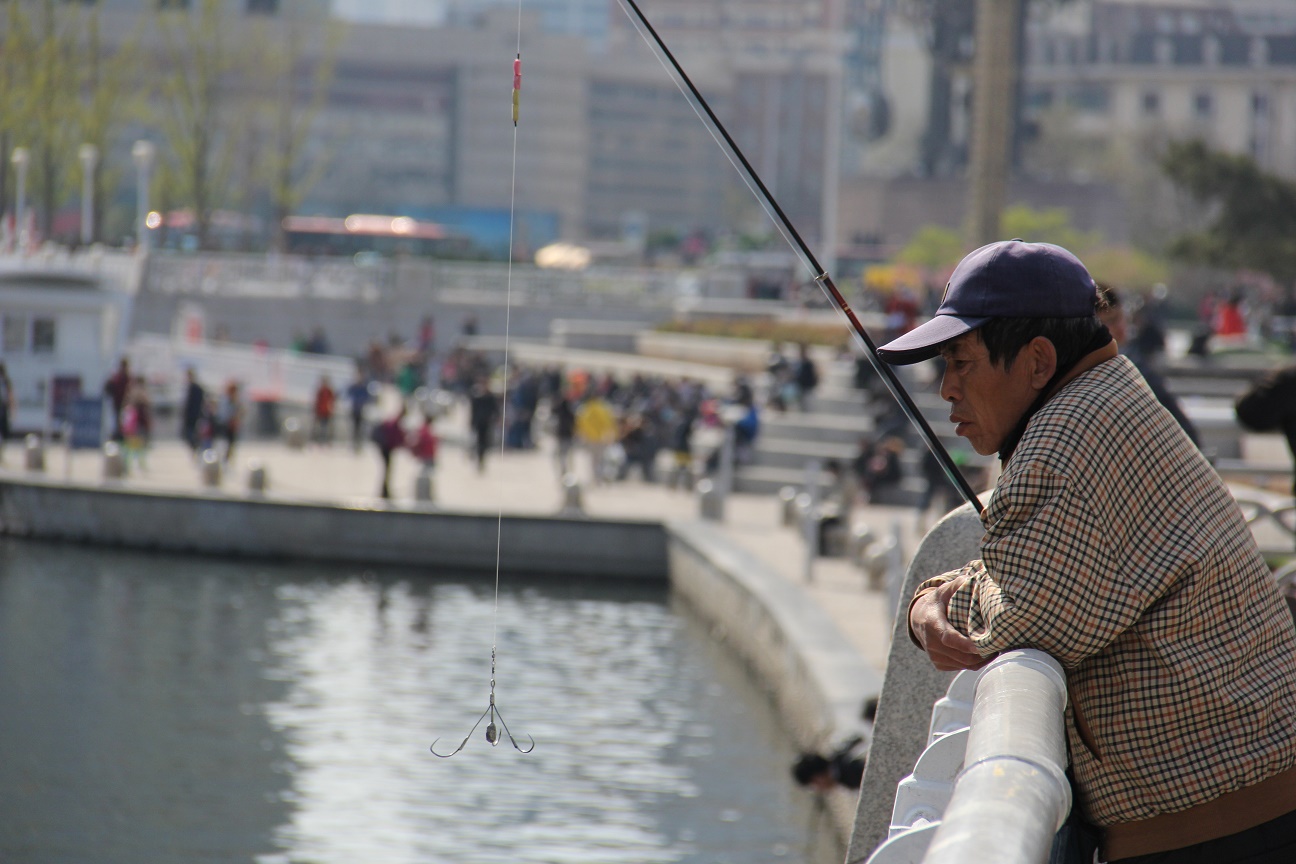
A man takes a break from fishing near the train station.

A man takes a break from fishing near the train station.

Jesus with Chinese characteristics.

Jesus with Chinese characteristics.

Tianjin is also well-known for its snacks, notably jianbing and 狗不理包子 goubuli baozi (translated as Steamed buns that dogs don’t pay attention to).

Jianbing are common in Beijing but originate in Tianjin. They’re basically a crepe, covered in egg and wrapped around cilantro, onion, shrimp crackers (I think), and a spicy sauce. Jordyn loves them so we tried two different styles, one of which made with green peas and fried dough instead of shrimp crackers I’ve never before seen. We decide Tianjin’s jianbing are indeed superior to Beijing’s.

Gobuli is actually the name of Tianjin’s most famous steamed dumping restaurant, which has been open for more than 100 years. More famous Chinese than I care to list have eaten there, and the Empress Cixi called its namesake dumplings the most delicious in China. The strange name (Steamed buns dog doesn’t pay attention to) originates with a villager who came to Tianjin to learn to make dumplings. His name was gou (dog). As he learned, he developed the special style that is Goubuli’s specialty, but would get so absorbed in making his dumplings that people started to say “Dog doesn’t pay attention to people, only to bao zi.” Eventually the saying was shortened to Dog doesn’t pay attention” and the name stuck.

The veggie baozi at Goubuli.

The veggie baozi at Goubuli.

It turns out Goubuli also has a branch in Beijing where Jordyn and I have eaten a few times before, though we didn’t know it until we returned from Tianjin. They are our favorite steamed dumplings. Regardless, we had to eat in Tianjin’s original branch, so for an excessive price – truly – we ordered one set of eight vegetable baozi. They were delicious, but we decided the baozi round goes to Beijing.

Goubuli baozi in Tianjin.

Goubuli baozi in Tianjin.
Big Changes at the Zoo

Note: Animal pictures below.

The weather was nice enough today after a nasty stretch of air to make it back to the zoo.

Any zoo is a favorite place of mine, and the Beijing Zoo has been my go-to place whenever I’ve felt homesick. Today was just a good chance to visit the animals after about six months away. I was surprised to find some substantive changes after such a short time.

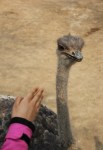
For one, ticket prices dropped from 40 yuan to 10. Second, the zoo has put up more barriers and new cutesy signs to try to prevent feeding (and probably subsequent injury), which is nonetheless still popular among the locals, who bring bags of vegetables (me = guilty) and chicken guts and such as treats for the animals.

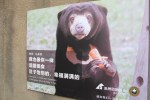
Finally, in just a few months the zoo has managed to tear down the old nasty bear enclosure, where I once watched the Asiatic black bear down bottle after bottle of coke just like a middle-aged American office worker while taking breaks to munch on the hot dogs with which he’d been pelted. In its place was built Bear Mountain, which has a trio of really pretty nice grassy and wooded enclosures. They are home to a bunch brown bear cubs and the old Asiatic black bears. Inside the new walkways, decorated with some native-people’s-style cave art, is a line of beautifully designed posters of bears doing bear things along with sayings like “Just like you I feel sadness, but I also keep striving to be happy” or “Just like you I need a family. Without my mother I would die” in both English and Chinese. It seems as if the management is pushing hard to relate the animals to humans. Although the consciousness regarding animals and their place in the world is changing rapidly, China still badly needs that kind of push so its good to see.

I could probably write a Friedman-esque think piece about how the evolving zoo represents China at large or something, but instead we’ll just say that I’mhappy to see the progress. I really do think its a good portent for the future.

Anyway, here’s a few pictures I snapped.

A Chinese New Year Resolution – from Zigong

If my writing can’t keep you here, maybe this Panda cub will help:

IMG_0104

There’s more where that came from, too.

As most of you know, for years I’ve muttered some mutterings here and there about starting a blog. I’m not usually one for New Year’s resolutions, but I’ve never tried a Chinese New Year’s resolution and seeing as it is Chinese New Year’s Day and I am in China, I’m going to give it a shot. You heard it first, then. Resolution: blog stuff.

新年快乐!(Xi nian kuai le!) ((Happy New Year!))

That said, I’m not sure what my goal with this whole thing is, so bear with me. I imagine it will end up being part travelogue, part inner-monologue, but either way I hope it’s interesting enough to keep you around from time to time. If not, well, you all know how much I like to run my mouth, so I’m sure I’ll be fine talking to myself. Plus I’ll lead you along with Panda pictures.

As these sort of things go, I’ve got to start somewhere, so I’ll start here, where I am now, sitting in a tea house in Zigong, Sichuan Province, the People’s Republic of China, sipping on a bitter, bitter cup of bamboo leaf tea, breathing in acrid breath of a few dozen cheap Chinese cigarettes and looking across the green waters of the river at an unknown Tibetan Buddhist temple. (Ok, fine. That was yesterday.)

Ah, Zigong. City of salt, dinosaurs and lantern festivals. City of few foreigners. City of smells and stares. City of strangers paying for taxis and giving you used cups. ZiGong.

Despite its inclusion in the Lonely Planet China guidebook, I get a sense that the city of salt, dinosaurs and lantern festivals doesn’t oft make the itinerary of Sichuan travelers, and that’s why Jordyn and I decided we had to come.

The New Year didn’t start out as auspiciously as I’d like. After celebrating Beijing’s mostly soulless but firework-filled New Year’s extravaganza last year, Jordyn and I hoped to see how the small cities partied for the start of Spring Festival. We spent yesterday a couple of hours away in Leshan meditating on the size of the world’s largest Buddha statute (I’ll revisit this in a later post) and returned just in time to see all the restaurants in the city shut in our faces. There were dumplings to be made, hacked up meat dishes to share, and television countdowns to watch after all.

Being dumplingless, meatless, and dishless ourselves, we bought a couple paper bowls of instant noodles and settled into our 7-days Inn room to at least catch the television countdown and wait for the fireworks to start. The show – which is a mix of singing, comedy, famous people, and the like – has been a New Year’s Eve staple in China since the arrival of mass-scale television viewing. Although I haven’t got the numbers to back it up, I’d bet all the Renmingbi in my wallet that it’s far and away the most watched television event in the world. I’ve yet to meet a Chinese whose family doesn’t tune in after the dumplings are finished off. They never watch the whole thing, I’m told; mahjiang, card-playing, and the like take center stage, but the CCTV New Year’s Event is always droning away in the background to be crowded around when someone popular takes their turn on the stage. It’s as much a part of the holiday as all the rest.

Jordyn and I made it through half of the four hours, passed out and missed the fireworks. So it was not the best of admittedly well-rested moods to which we awoke.

Thankfully outside the door, the city of salt, dinosaurs, and lantern festivals awaited.

Zigong – City of Salt

Geographically, there’s nothing much remarkable about Zigong at first glance. Like most third-tier Chinese river cities it’s grey, dirty, and crowded with decaying, blocky high rises whose lowest stories are lined with small shops. But geologically, Zigong is a different story.

Brine formations leftover from the Triassic Period made Zigong a lynchpin of the Chinese salt economy, and therefore the economy at large, for nearly 2000 years, contributing a significant – sometimes more than half – of salt tax revenue to the reigning dynasties over China’s history. It was the site of the invention of the percussion drilling method discovered during the Song Dynasty (400 years before the Europeans) and the site of the first well drilled to 1,000 meters in depth. Despite the discovery in the 20th century of better drilling and pumping methods, the Shenhai well continues to operate today.

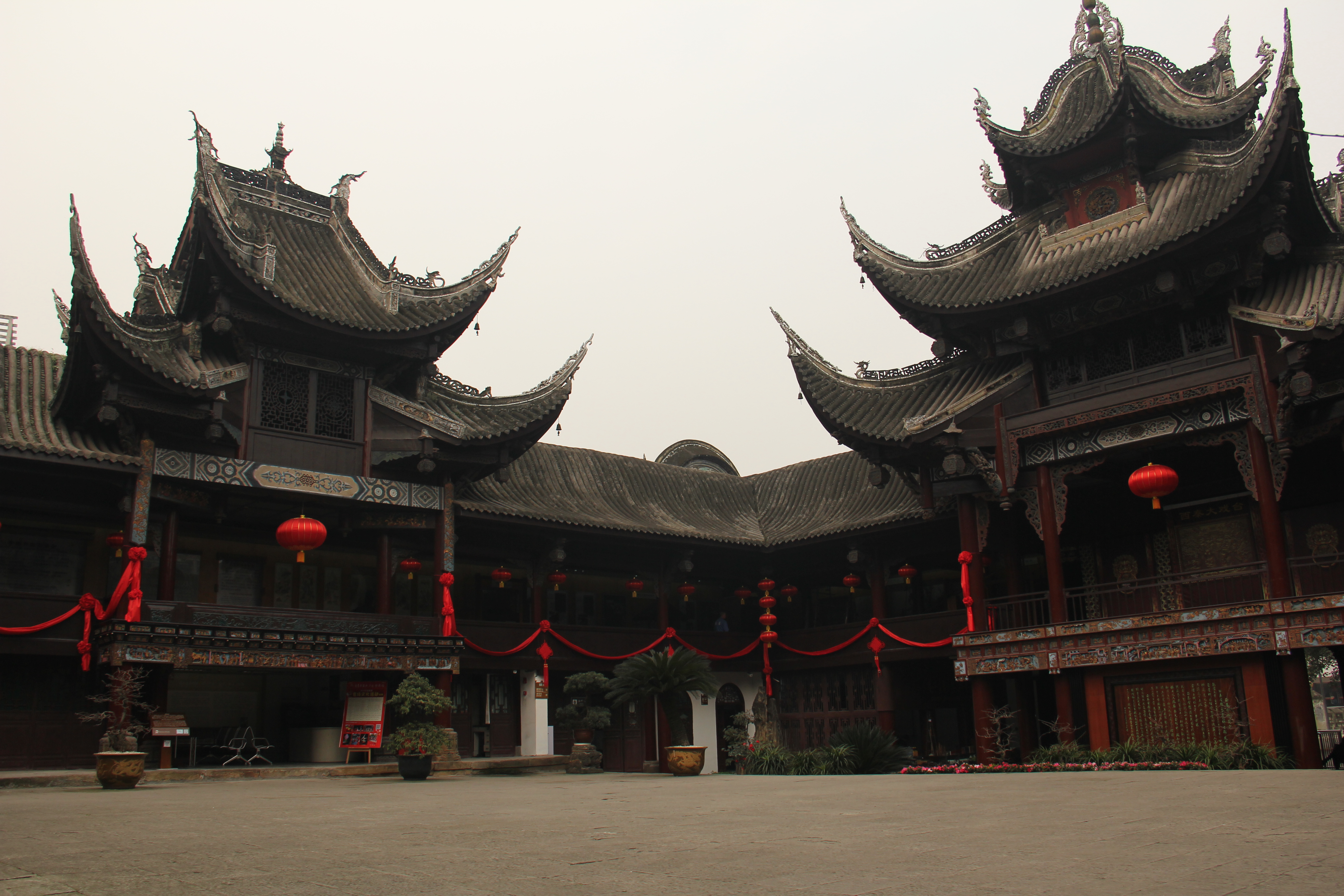
The courtyard of the Zigong Salt History Museum.

The courtyard of the Zigong Salt History Museum.

All of this and more we learned at the Zigong Salt History Museum, housed in the former Xiqin Guild Hall built in 1736 as a meeting hall for Shanxi salt merchants. Aside from the detailed history of salt production since the Han Dynasty (1st century), the museum also features the guild hall architecture – a courtyard lined with intricate carvings and roofs capped with swooping flying eaves.

It wasn’t the only salt guild hall we visited, either.

After touring the museum, we spent a couple of hours wandering the hilly alleyways around our hotel, snacking on street food and pushing through crowded market streets where the various shoes and meat and pets on sale shelter under giant drooping tarps. But the rest of the afternoon we spent on an old Sichuan pastime: whiling away the time at a teahouse. In our case two of them.

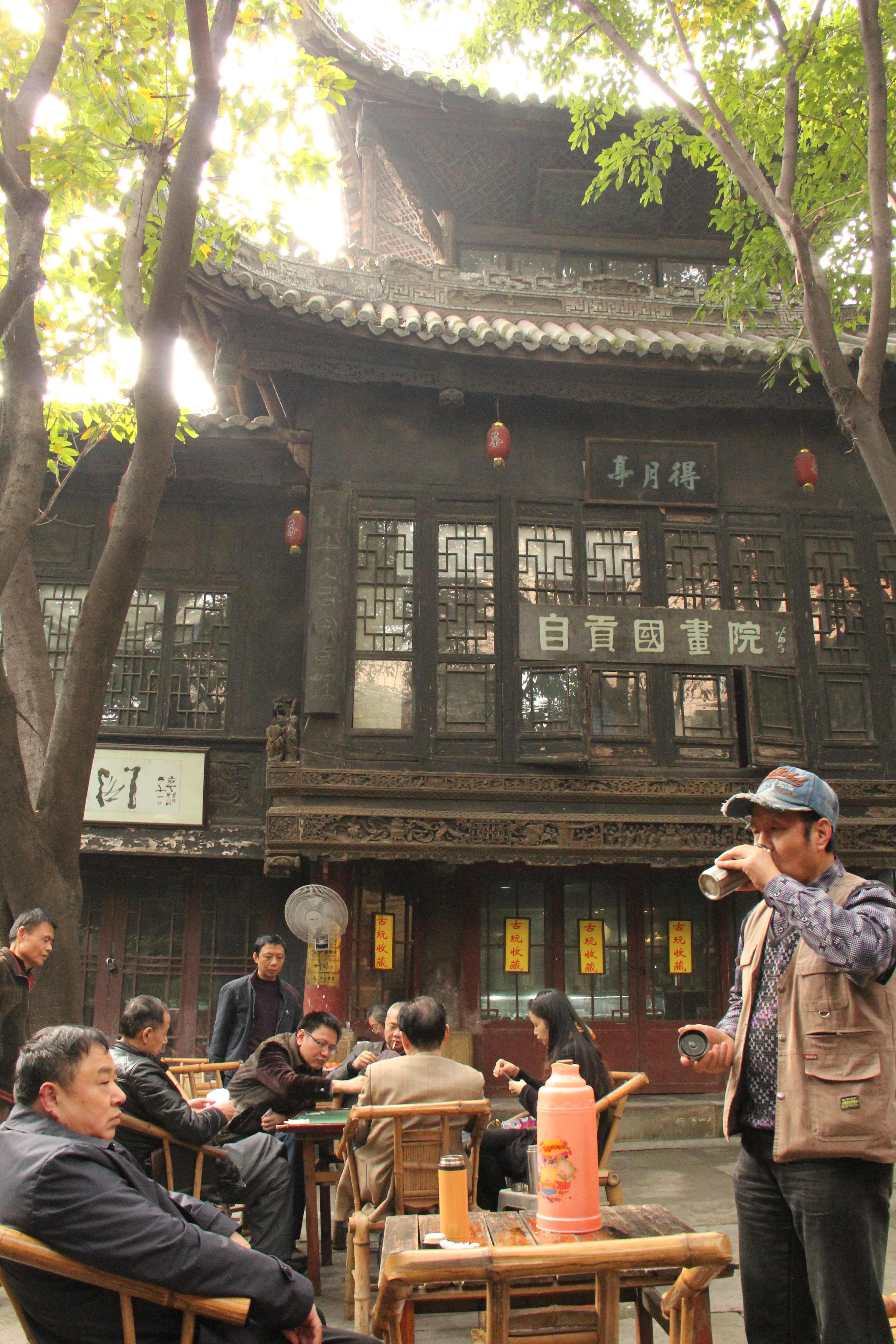
Daily life at the Zigong teahouse.

Daily life at the Zigong teahouse.

The first of them – Huanhoe Palace – was formerly a butcher’s guild hall. Now, it feels somewhat more like a temple than either a guild hall or a teahouse, starting with the grand façade featuring the same flying eaves as the salt museum. Inside, things get more solemn. The door took us into a cool, dark and humid courtyard, where the bamboo tables and chairs, various ferns and a small fish pool sat shaded by lofty trees. On the lowest floor of the wooden walls surrounding the courtyard little antique shops plied their wares, while up above more tea tables sat on a balcony. As the afternoon went on, more and more of the creaky bamboo chairs filled with patrons drinking tea, smoking cigarettes, and reading, chatting, gambling, or napping, just like the tabby cat in the corner.

There really isn’t a good reason to leave. For between 10 and 20 yuan, a Sichuan teahouse will give you a tea cup filled with tea leaves and flower petals, as well as a giant thermos of hot water. The rule is simple: One cup, one chair. The rest is up to you.

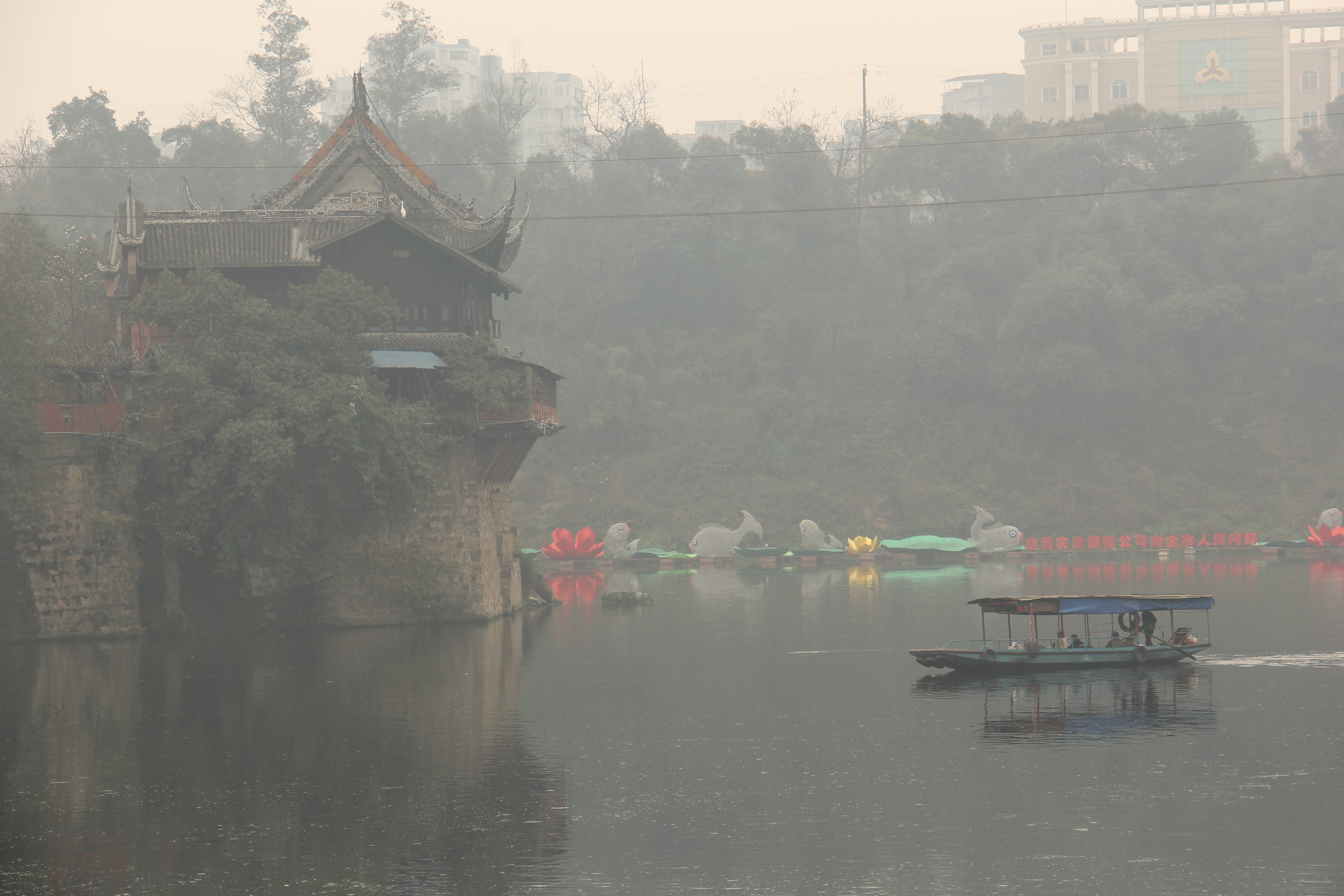
Following a lazy couple of hours, we hit our thirdguild hall of the day, this one the former Sichuan salt merchant guild hall. Less impressive in scale than the salt history museum and perhaps a little less atmospheric than theHuanhoe Palace, the Wangye Miao Teahouse makes up for it with location. Perched on the wall lining a bend of the Fuxi River that runs through the center ofZigong, the view from the swung-open windows of the Wangye match the view of it from without. Inside is more of the same – smoking, laughing, reading, sleeping, and drinking – but the ability to watch a hand-paddled boat ferry locals back and forth across the Fuxi in between book pages of makes for a hard-to-beat teahouse experience.

The Wangye Miao teahouse on the Fuxi river bend. The boat pictured ferries locals back and forth across the river underneath the teahouse windows.

The Wangye Miao teahouse on the Fuxi river bend. The boat pictured ferries locals back and forth across the river underneath the teahouse windows.

Sichuan, especially the capital Chengdu, is famed for its teahouses, but it’s hard for me to imagine any that can top Zigong’s.

So add one to the list: Zigong – city of teahouses.

Zigong – City of Dinosaurs and Lantern Festivals

Zigong has another geological surprise to go with its salt: Dinosaurs.

In the early 1980s, paleontologists discovered an huge number of dinosaur fossils concentrated just outside of Zigong, then in 1987 the city opened the first dinosaur museum in Asia. It remains one of the largest such museums in the world. Sadly, Jordyn and I didn’t have the time to make the trip to the museum, but we got the next best thing: Glowing sauropods and animatronic T-Rexes ridden by orcs.

Zigong is the birthplace of the folk Chinese lantern festival. In the last two decades, the city stoked it’s annual festival into one of the world’s largest. We didn’t know either of those facts when we started planning our trip, but by happenstance the 21st Zigong International Dinosaur Lantern Festival got moving just as we were rolling into town.

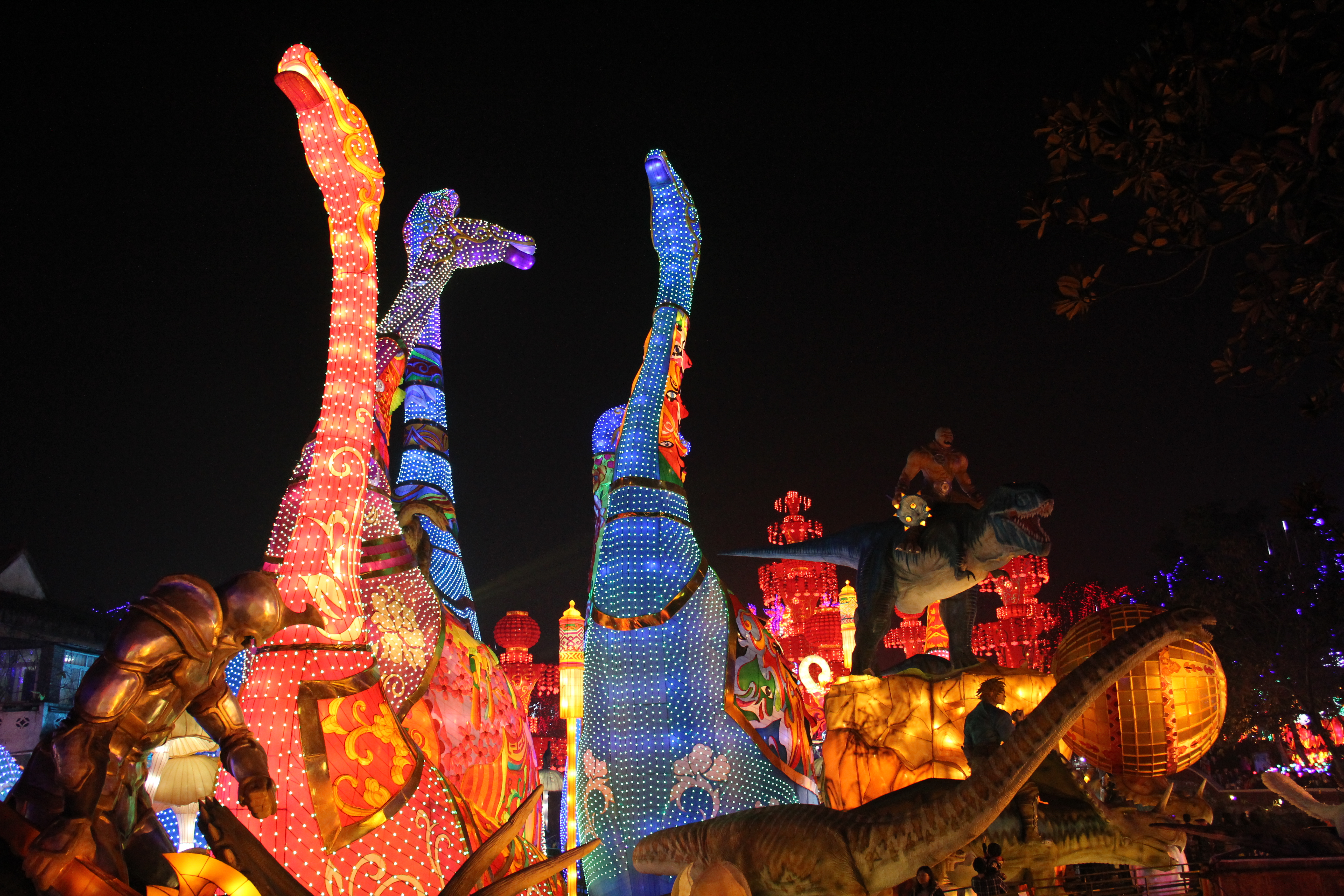
Lantern isn’t really the right word. The festival is made up of mutlicolored cloth creations ranging from dog sized to office-building sized ablaze with light. Add Christmas lights to all the trees, some carnival rides, a zipline, and some faux-classical instrumental music on repeat, and so many domestic tourists you can hardly walk and you’re starting to get the idea. Until you come across the orc on a T-Rex, that is. There are scenes from Chinese children’s stories, giant red lanterns, fish, flower people, dragons and of course lots and lots of goats/sheep, all of them aglow. Its sensory overload taken to the highest level, and it was also a lot of fun.

Dinosaurs, dinosaurs, dinosaurs! And an orc. All that an more at the Zigong International Dinosaur Lantern Festival.

Dinosaurs, dinosaurs, dinosaurs! And an orc. All that an more at the Zigong International Dinosaur Lantern Festival.

To cap it all off, we rode the zipline through the middle of the red lantern spires.

Zigong – City of Cups

But my favorite part of our Zigong stop was the drunk man who helped us out and the gift he gave us.

We arrived in the city about 11 p.m. and thought to walk to our hotel before realizing just how far it was. We stopped at a bus stop and after waiting a few minutes, started to wonder if the buses had stopped running. Next to us stood a drunk-looking 20-something Chinese man who stared unceasingly at the side Jordyn’s face. In his hands he clutched an empty, dirty glass cup.

After a few more minutes unable to stand the staring anymore, Jordyn finally turned and said hello.

“You are too pretty,” he said. “Is that your boyfriend?”

After a short conversation, he decided to accompany us to our hotel, hailing a cab and getting us across the city. He and I then fought a hand battle over the cab fare that ended when I accidentally slapped the cabbies hand. The driver took the other guy’s money.

After we got out in front of our short-term home, our new friend told us to call him “friend”, gave us his phone number, then one more time turned to Jordyn and said:

“You’re so pretty.”

After an awkward pause he added, “I will give you this cup.”

He gave her the cup. Now we just have to get it back to Beijing intact.

Ah, Zigong.