Chengdu Day 1

I’ve put off writing about Chengdu (成都) because I don’t really know what to say about it without inducing boredom.

That’s not because Chengdu is boring. It’s because the best parts are like the humid fog that rises out of the Sichuan’s mountain forests and mixes with the humid smog that rises of its drab concreate forests: languid, hazy, smelly, and not at all what you expected. Lonely Planet has it right. By all means Chengdu should be a miserable place. Actually, it’s pretty lovely. It’s just hard to see why.

So instead of writing some kind of terrible Chengdu opus in which we could wander blindly and lost, then, I’m just going to break it into a few little chunks and call it good. Those Panda’s I promised at the start will finally arrive. Soon.

For starters, Jordyn and I have wanted to visit Chengdu since we started looking for jobs in China. One of our early job offers was teaching children for EF in Chengdu. We read plenty about it. It sounded like our kind of place. Surrounded by mountains. Laid back. Full of tea house culture. Ancient culture. The home of the Pandas.

It isn’t anything like we thought. But it is, too.

We took a short walk to the city square the first morning, getting a good look at the resident Mao statute and the uncheckpointed square nevertheless guarded by dogs and Segways and armor trucks. We got some coffee at McDonald’s. Globalization has its benefits.
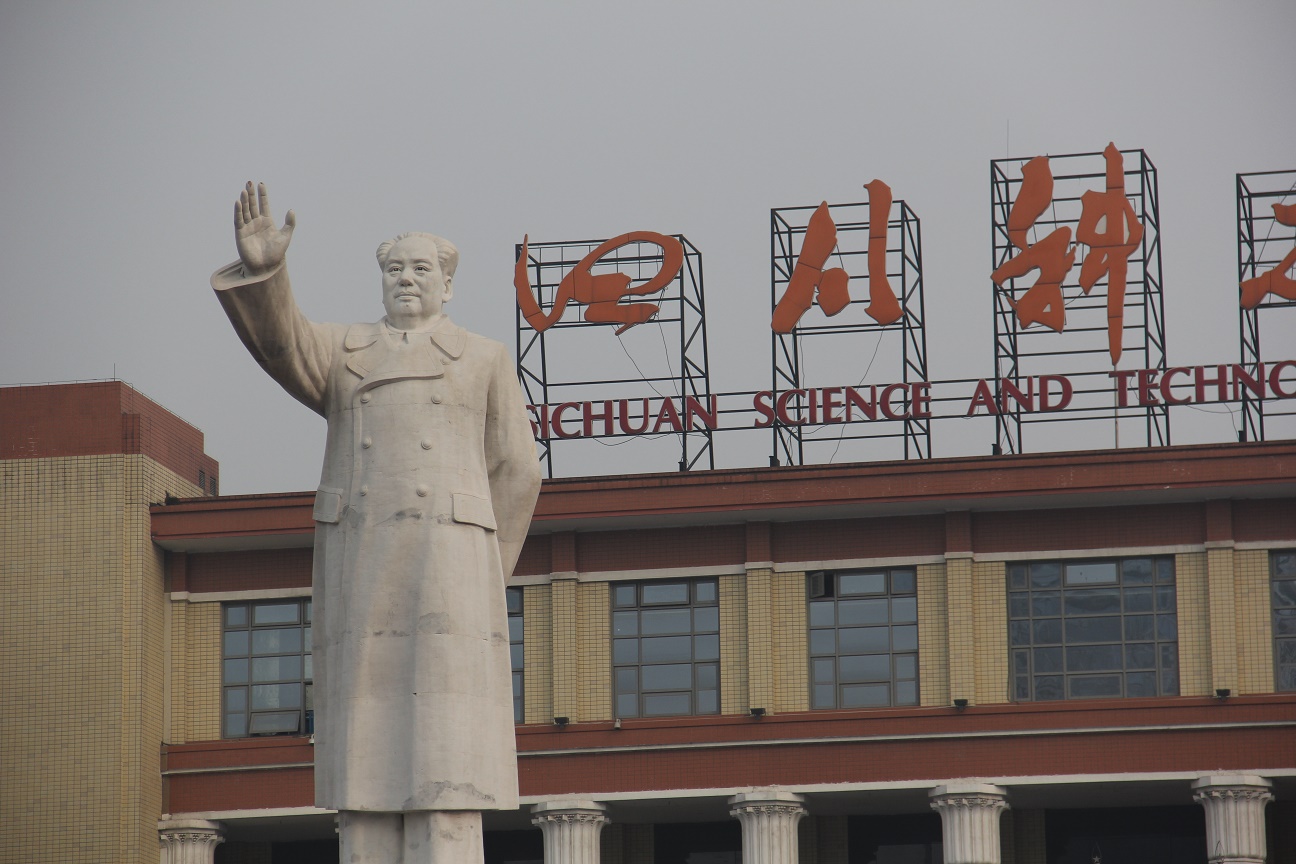
Chairman Mao welcomes you to Chengdu's central square.

Chairman Mao welcomes you to Chengdu’s central square.

But our first real goal was to get the ancient history of Chengdu out of the way. Forty kilometers outside of Chengdu is the Sanxingdui archeological site believed to have been a major Bronze Age city and the center of a kingdom that flourished in Sichuan for more than 1000 years. Artifacts from the Kingdom of Shu indicate that isolated from the rest of China by the mountains which surround the Sichuan Basin, the Shu developed a unique and distinct culture until it was conquered by the Qin in 316 B.C. and integrated it into what would become the Middle Kingdom.

Another also distinct Shu site was discovered in 2001 in the Chengdu city limits during real estate development. Called the Jinsha Site, this second ancient city represented the final era in Sanxingdui’s cultural evolution as the political capital relocated to what is now Chengdu. A new museum was built around the still-active dig, which has uncovered jade, weapons, tools, ivory, and some beautifully advanced iron and gold work.
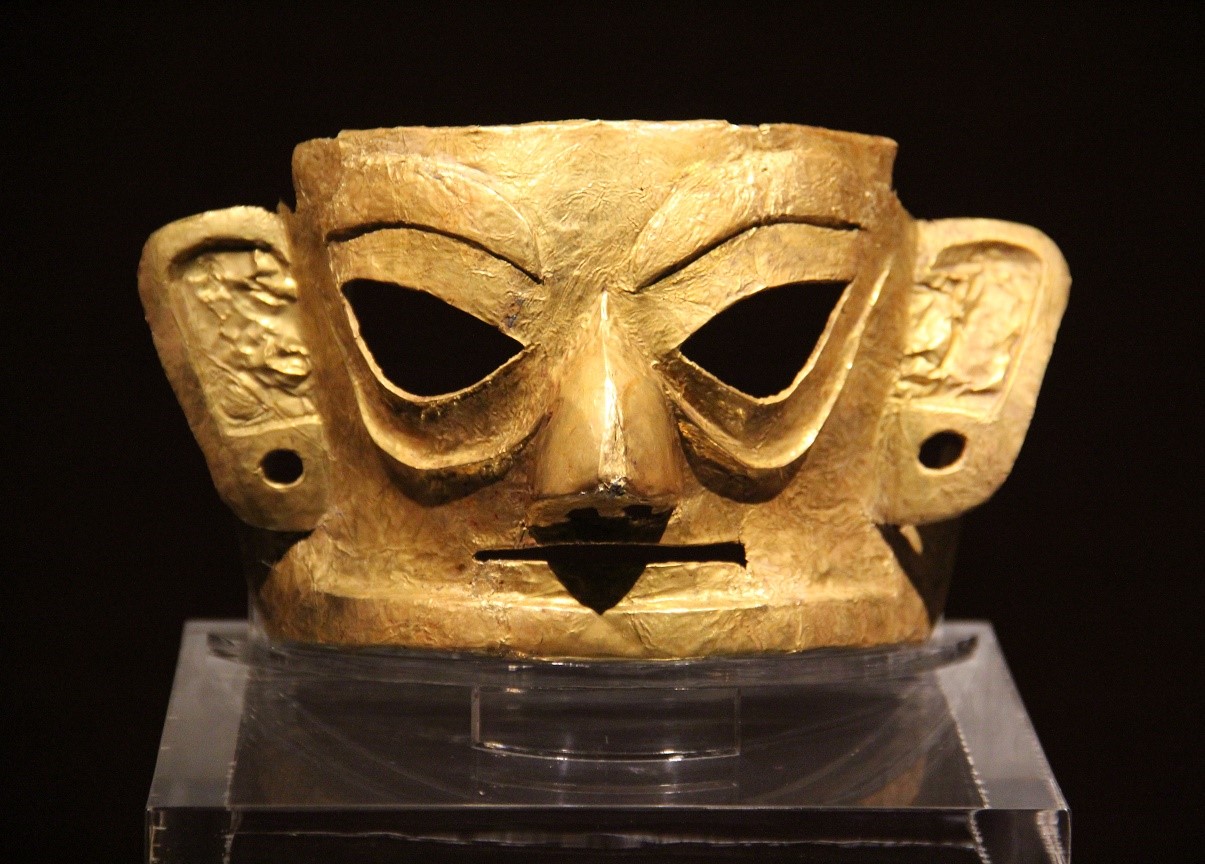
This gold mask is one of the Jinsha Site's most impressive treasures.

This gold mask is one of the Jinsha Site’s most impressive treasures.

Plus on the way to the museum we got our first introduction to roosters tied with leashes to trees like dogs. We would see a lot more of these.
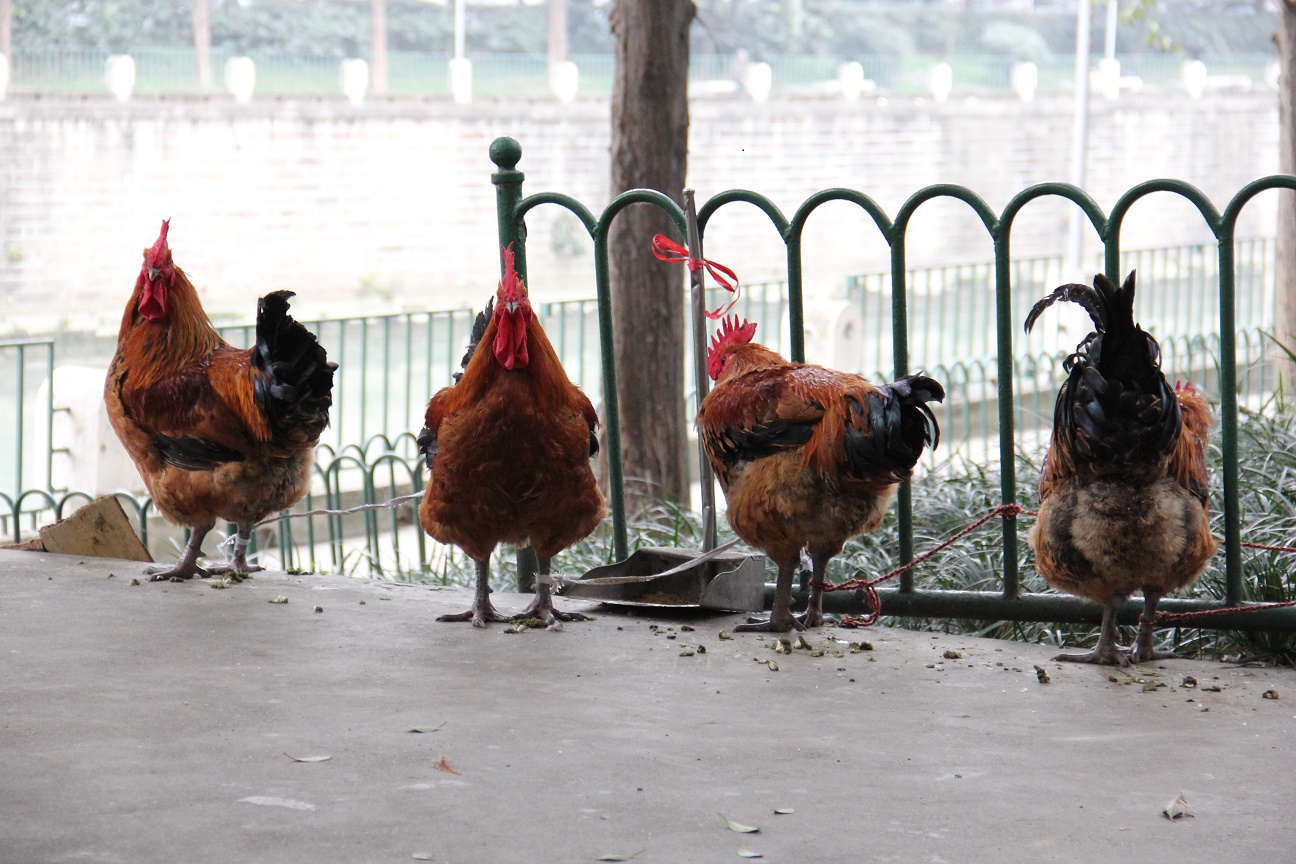
More of these.

More of these.

In the afternoon, we wandered around the Wenshu Temple neighborhood.

Wenshu Monastary is Chengdu’s oldest, founded during the Tang Dynasty sometime around the 7th century. It was torched during the wars of the Ming Dynasty, then rebuilt in its current form during the Qing.

Wenshu was our first encounter with the sweeping eaves style of architecture that dominates in Sichuan and diverges considerably from the Beijing style. The sprawling temple itself was crowd- and incense- and monk-filled in the usual style, nothing particularly unique but still pretty and peaceful.

We struck up a conversation with a group of old men who wanted to take some pictures with us. They tried to teach us something about Buddhism, but the dialect made understanding near impossible until a tiny septuagenarian with long, thin hair, no teeth and a great James Hong impression told them to cut it out. He talked to us in superb English about America instead. He’d never been but knew all about it. He still wanted to go to California someday. Then we all snapped some pictures and went our separate ways.

In the park outside of the walls, the old men gathered with their caged birds, hung on lines between the trees. The birds squawked and squealed at the wind while their owners shaded in a pagoda squawked and squealed at their card game.

After the temple, we walked the reconstructed “old” streets nearby, watching the food and ware hawkers ply their trade. There were nut vendors, meat vendors, bamboo juice vendors, calligraphy vendors, and even “Panda IKEA.”

The highpoint of our first day in Chengdu, though, was Wenshu’s vegetarian restaurant. The sleek wood and white dining room tended to by monks and nuns featured a 5-dollar, all-you-can-eat, all-vegetarian buffet with choices of more than 25 different dishes. Salads, soups, pastas, breads, casseroles, and deserts of all types with more kinds of vegetables and beans and tofu than I’ve ever seen. And perhaps the tastiest I’ve ever eaten.

Culinary enlightenment?
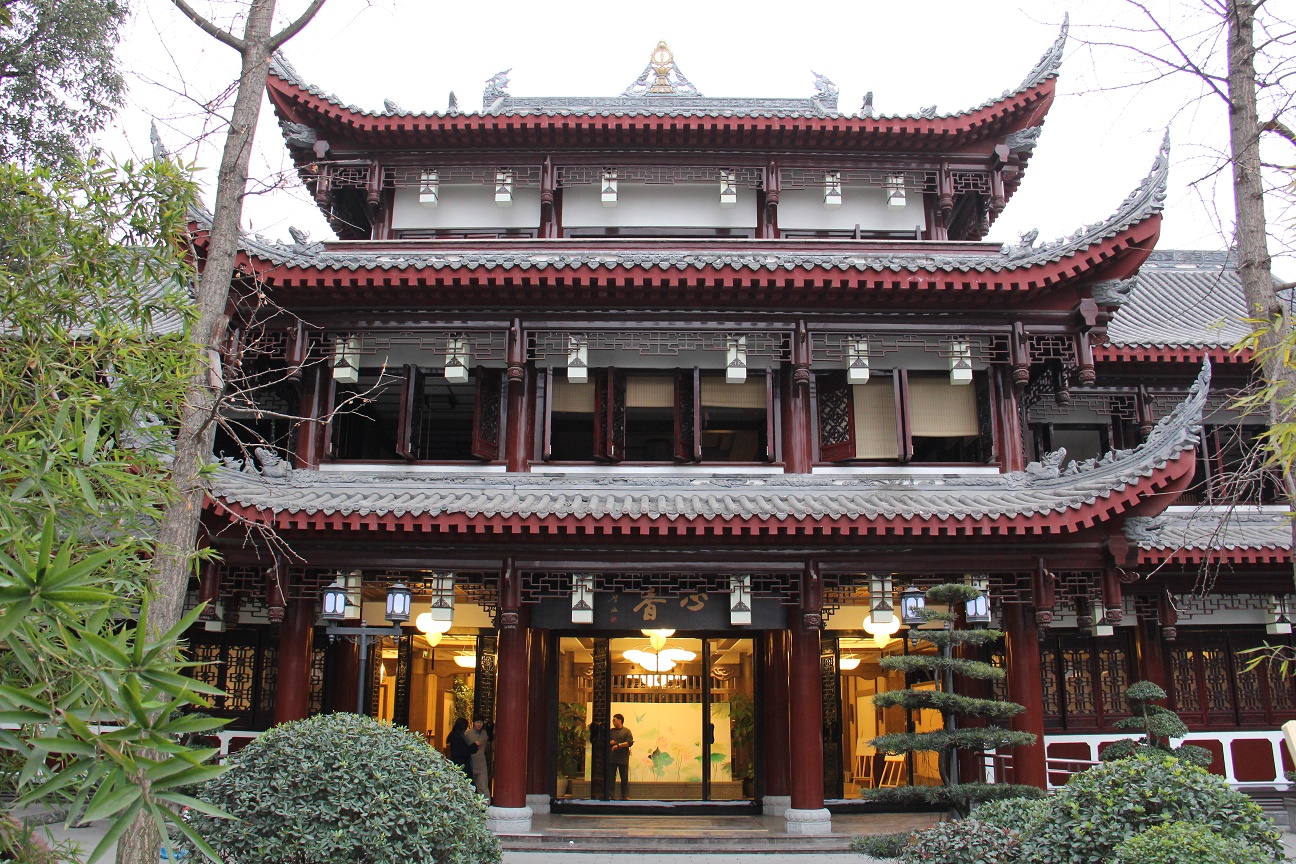
Wenshu's vegetarian restaurant.

Wenshu’s vegetarian restaurant.


Better dead than red? Chinese officials say: ‘Too bad’

I was aware that the Chinese government controls a lot of things. I was not aware it also controls the cycle of death and rebirth.

The Dalai Lama, now 79, recently speculated that he might not reincarnate, ending the spiritual line of Tibetain Buddhism’s most important leader and thus monkey-wrenching the Chinese Communist Party’s plan to anoint a successor who would support China’s policies in Tibet.

That upset Party officials at their annual “two meetings” legislative gathering, and one of those officials, Zhu Weiqun,pulled back to curtain to let us have a peak at just how much authority the Chinese government has.

From The New York Times:

“Decision-making power over the reincarnation of the Dalai Lama, and over the end or survival of this lineage, resides in the central government of China,” said Mr. Zhu.

Forget about karma. With friends like these…

Update:

Chinese state television (CCTV) has more, calling the Dalai Lama’s speculation a “dual betrayal”:

“The reincarnation of the Dalai Lama has to be endorsed by the central government, not by any other sides including the Dalai Lama himself,” said Zhu.

“Politically speaking, he has betrayed his homeland,” Zhu said. “The reincarnation of the Dalai Lama must be approved by the central government. Without the central government’s approval, all would be illegitimate.”

Seeking the Buddha while Keeping One’s Kidneys

Whatever serenity I’d taken away from gazing upon the toenails faded by the time we hit the expressway.

The heat and rumble of the motor made my eyelids droop in the backseat until Jordyn nudged me with her knee. “Don’t fall asleep she,” she mouthed.

The rest of it went unsaid but clear enough: Don’t fall asleep and we might just keep our kidneys.

We really hadn’t come to Leshan on Chinese New Year’s Eve with the intent of embarking on an organ-keeping vigil. We had come to Leshan in the southwest corner of Sichuan to throw ourselves at the feet of the Buddha. And in Leshan, the Buddha has some really big feet.

The Leshan Giant Buddha

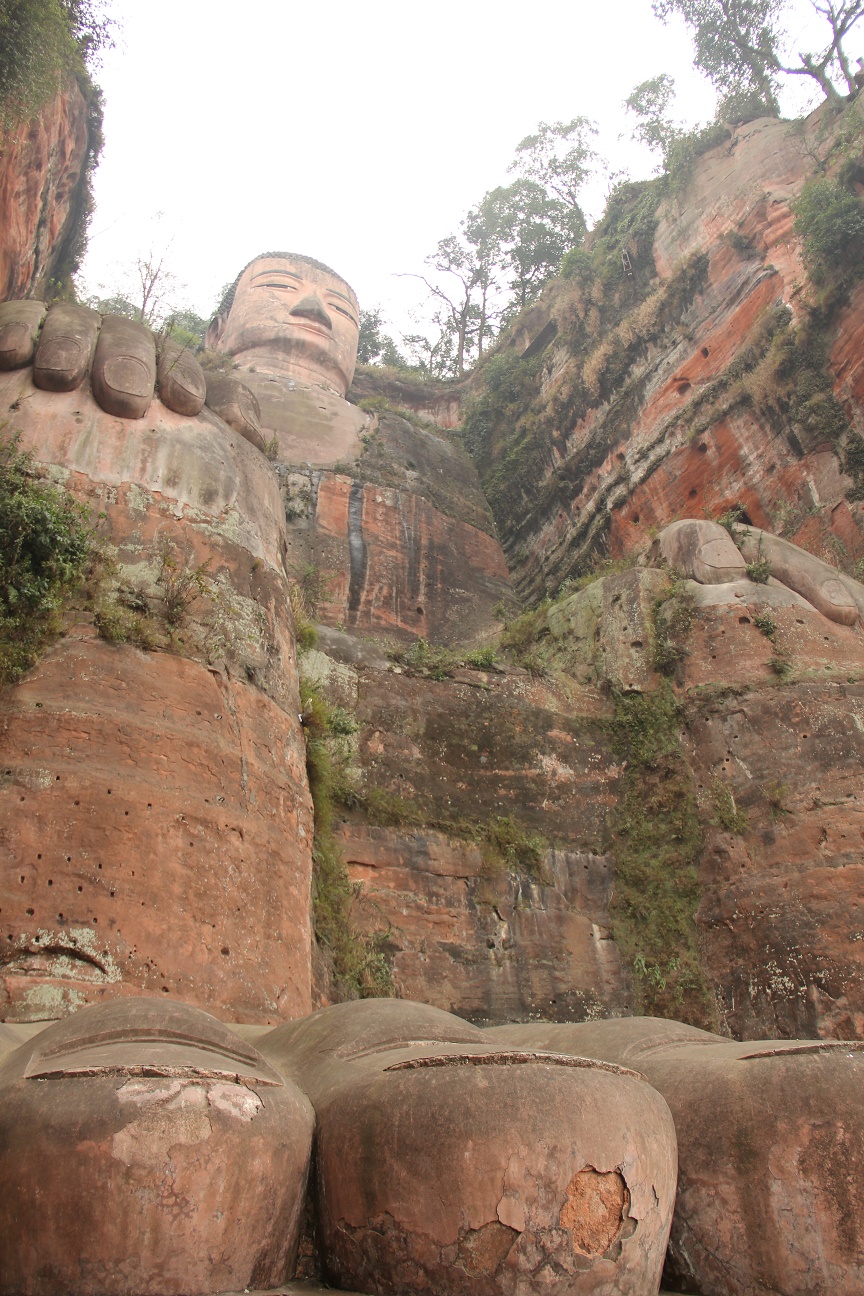
The Leshan Giant Buddha is 71 meters (233 feet) tall, the largest Buddha in the world. I could easily make a chair of one of his toenails.

The Leshan Giant Buddha is the world’s largest Buddha and the world’s tallest premodern statue at 71-meters (233 feet) in height. Commissioned by a local monk in 713 AD during the Tang Dynasty, the Buddha was to be carved out of the cliff face overlooking the confluence of the Dadu and Qingyi rivers. The monk, Haitong, hoped the Buddha would calm the treacherous waters below, making passage safe for ships traveling downriver.

Haitong oversaw construction while living in a cave which still exists near the head of the Buddha. When he died in the middle of the project, construction was halted because of insufficient funds, but his disciples finally finished the Buddha in 803 AD.

Apparently Haitong also got his wish, too. The Buddha calmed the waters. Or rather, the project dumped so much stone into the water below that the river’s turbulent current shifted, making the passage safe for the trading ships plying the waters underneath the new statue’s gaze.

The statue’s majesty isn’t just skin-deep, either: His muscular bulk hides an internal circulatory system of drainage capillaries that to this day pump water through the heart of the Buddha, slowing the effects of weather-aided aging. Sadly, the drainage system hasn’t halted the degradation that has come along with the region’s rapid development and the pollution that in turn has come along with that.

Or so they say. For me, the Buddha was little short of divine.

It’s one thing to read about the Buddha. But it’s another to crest the hill that leads to the statue and catch sight of his curly-haired head, passive staring eyes, and long, straight nose that itself outsizes the human body. And it’s another to wend down the stairs next to his slender, black- and green-stained fingers. And it’s another to stand at his flaking toe, the nail large enough to curl up upon, and gawk up at his hulking form.

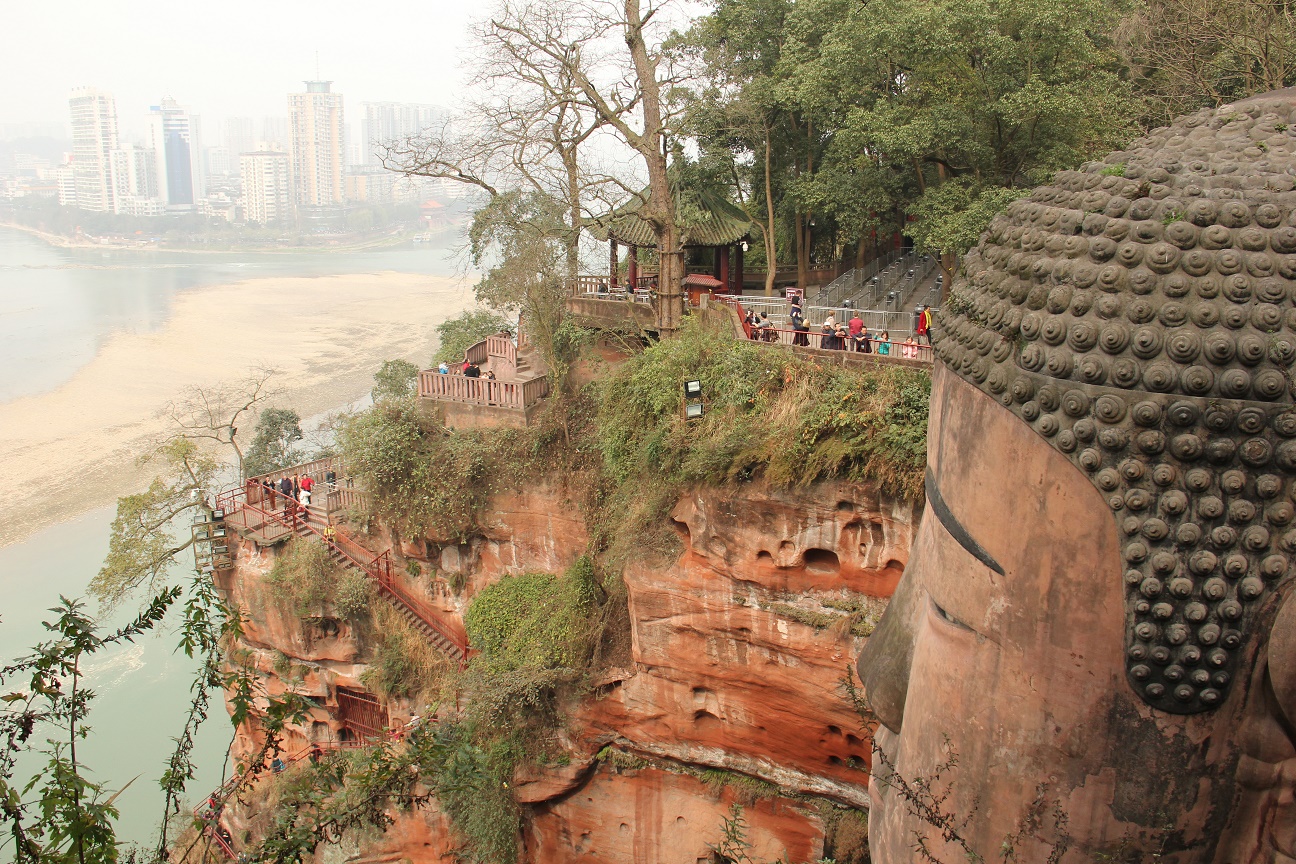
The Leshan Giant Buddha's head

The Buddha was built in the 8th century with the goal of calming the waters of the Dadu River, which he overlooks.

And then it’s another still to ponder the fact that he’s sat there, staring across the river, for nearly 1300 years and witnessed all the changes that have time has swept across his domain as surely as the river below sweeps reeds along its eddies.

Following his gaze today takes your eyes across the river to the skyline of the rapidly developing, 3-million-person Leshan City, where we planned to catch our bus back to Zigong later in the afternoon. But with a couple hours still to spare, we climbed back up from the Buddha’s feet, passing the thousands of crumbling Buddhist figures whittled out of the red sandstone out of which the stairs too are cut, then we wandered the others mountain paths to the smattering of other Buddhist and literary sites nestled among the mountain’s greenery. The bird song that filtered through the trees made it easy to lose track of time, but my guidebook said the last bus to Zigong was scheduled to leave at 6 p.m. so we couldn’t dither too long.

The Leshan Buddha looks at Leshan

Today the Buddha gazes across the river at downtown Leshan, and he’s witnessed plenty of changes in nearly 1300 years.

Buddhist worshipers light incense

Tourists and worshipers alike light incense to honor the Buddha at a temple that stands just behind his massive head.

We said a face-to-giant face goodbye to the Buddha, and caught the city bus back to downtown Leshan, stopping briefly at an outdoor market to sample the street food and get into the New Year’s shopping spirit before the fireworks started later that night.

We arrived at the bus station at about 3:45 — plenty of time to spare. We walked up to the counter and asked for a pair of tickets to Zigong.

“Today no more buses,” the ticket attendant said. “Come back tomorrow.”

As we walked out of the bus station we must have had the “what-to-do?” look well-advertised on our faces. A portly man with rotting lower teeth and a voice like skidding rocks immediately approached us.

“To Zigong?” he asked, then without waiting for an answer launched into a spiel about how it’s New Years Eve and everyone’s with their family and he’s got a private car but its New Years Eve but he can take us anyway but it will be expensive but we don’t have any other choice. He flipped out a business card, but didn’t give me time for a good look at it before jamming it back in his pocket. We talked price. About 60 bucks total to take us the two hours to Zigong. Then he passed us off to his friend who silently led us through the parking lot to a nice-enough silver Chinese sedan. We got in.

As we stop-and-go’ed through the city traffic, the driver made a phone call. I could make out some talk about Zigong and 350 yuan, so I knew he was talking about us, but I the rest of his rapid-fire Sichuanese was lost on me. I knew it was probably normal business talk, but I started to get nervous anyway. Suddenly, carrying two fat envelopes of cash, a camera, and two laptops — not to mention our bodies — into a car with a guy we don’t know in a city we don’t know in a province we don’t know, a place where we’ve got no local contacts and don’t speak the language and have no good way to get help, suddenly that doesn’t feel very well thought out.

Then we were on the expressway. I tried to seek some Buddhist-style inner peace, but my heart pounded with each fork we approached, and I eyed each sign to make sure the driver took the turns toward Zigong. Then I started to nod off. Jordyn woke me up. She started to nod off. I woke her up. I started to nod off. She woke me up. And so on for thirty minutes, then forty, then fifty, and then we were flying through verdant rolling hills brushed yellow with flowering bushes and hadn’t seen another car in some time and there were no houses or buildings in sight.

And then, without a word, our driver pulled to the side of the road and stopped.

My heart stopped with the car. Jordyn turned to me with wide eyes, and my face went purple in the rearview mirror. Nothing happened for a timeless three or four seconds. Then the driver half turned as said:

“I take off my jacket.”

Then we were back on the road. An hour later we arrived in Zigong, paid the man his cash, and walked back to our hotel to eat a fine meal of instant noodles and crackers.

They tasted divine.