Chengdu Day 1

I’ve put off writing about Chengdu (成都) because I don’t really know what to say about it without inducing boredom.

That’s not because Chengdu is boring. It’s because the best parts are like the humid fog that rises out of the Sichuan’s mountain forests and mixes with the humid smog that rises of its drab concreate forests: languid, hazy, smelly, and not at all what you expected. Lonely Planet has it right. By all means Chengdu should be a miserable place. Actually, it’s pretty lovely. It’s just hard to see why.

So instead of writing some kind of terrible Chengdu opus in which we could wander blindly and lost, then, I’m just going to break it into a few little chunks and call it good. Those Panda’s I promised at the start will finally arrive. Soon.

For starters, Jordyn and I have wanted to visit Chengdu since we started looking for jobs in China. One of our early job offers was teaching children for EF in Chengdu. We read plenty about it. It sounded like our kind of place. Surrounded by mountains. Laid back. Full of tea house culture. Ancient culture. The home of the Pandas.

It isn’t anything like we thought. But it is, too.

We took a short walk to the city square the first morning, getting a good look at the resident Mao statute and the uncheckpointed square nevertheless guarded by dogs and Segways and armor trucks. We got some coffee at McDonald’s. Globalization has its benefits.
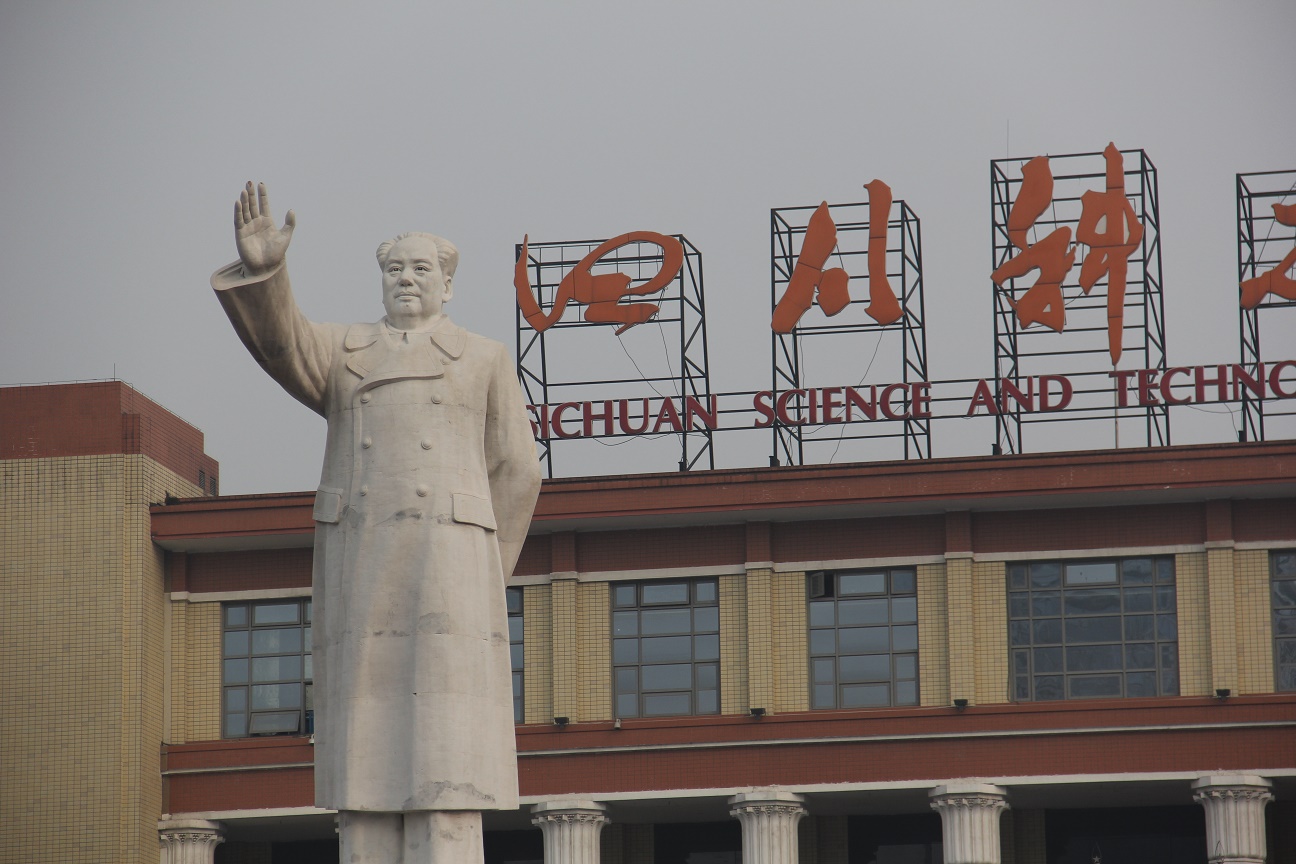
Chairman Mao welcomes you to Chengdu's central square.

Chairman Mao welcomes you to Chengdu’s central square.

But our first real goal was to get the ancient history of Chengdu out of the way. Forty kilometers outside of Chengdu is the Sanxingdui archeological site believed to have been a major Bronze Age city and the center of a kingdom that flourished in Sichuan for more than 1000 years. Artifacts from the Kingdom of Shu indicate that isolated from the rest of China by the mountains which surround the Sichuan Basin, the Shu developed a unique and distinct culture until it was conquered by the Qin in 316 B.C. and integrated it into what would become the Middle Kingdom.

Another also distinct Shu site was discovered in 2001 in the Chengdu city limits during real estate development. Called the Jinsha Site, this second ancient city represented the final era in Sanxingdui’s cultural evolution as the political capital relocated to what is now Chengdu. A new museum was built around the still-active dig, which has uncovered jade, weapons, tools, ivory, and some beautifully advanced iron and gold work.
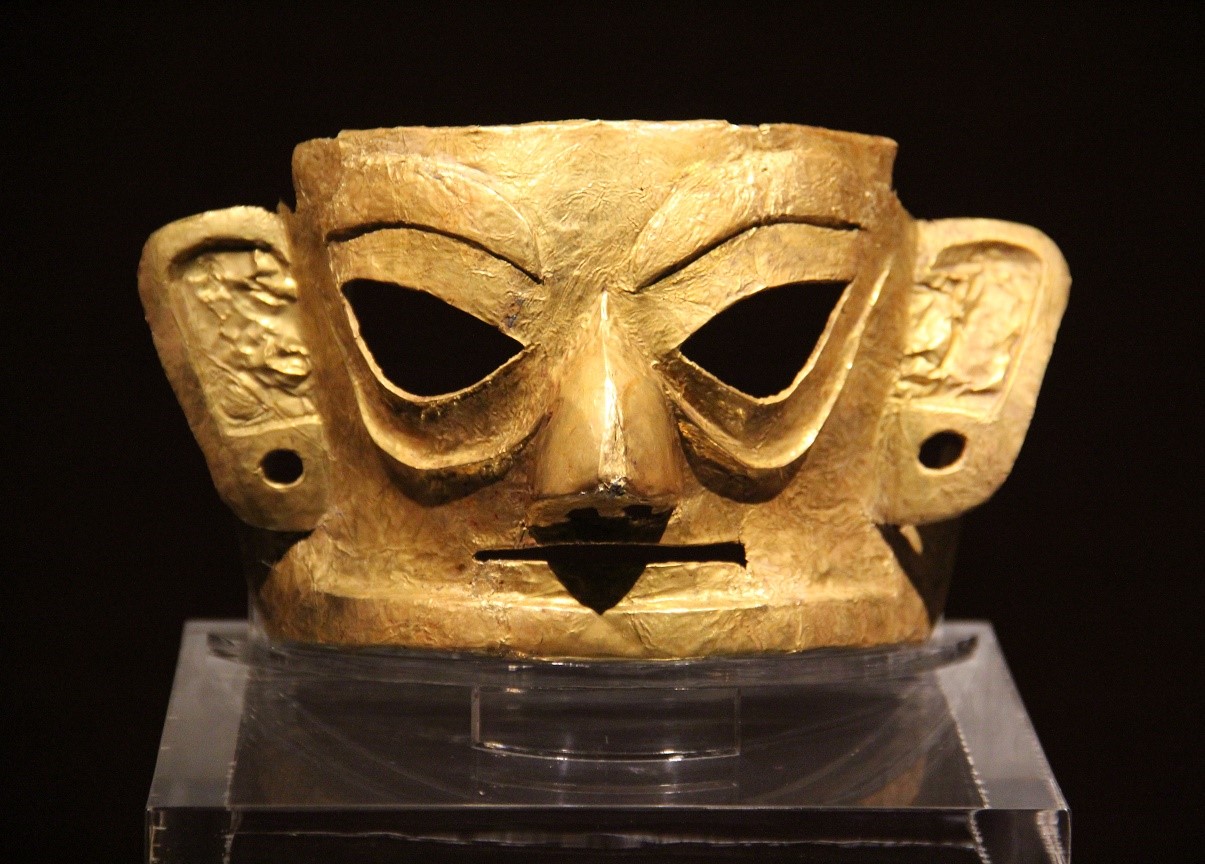
This gold mask is one of the Jinsha Site's most impressive treasures.

This gold mask is one of the Jinsha Site’s most impressive treasures.

Plus on the way to the museum we got our first introduction to roosters tied with leashes to trees like dogs. We would see a lot more of these.
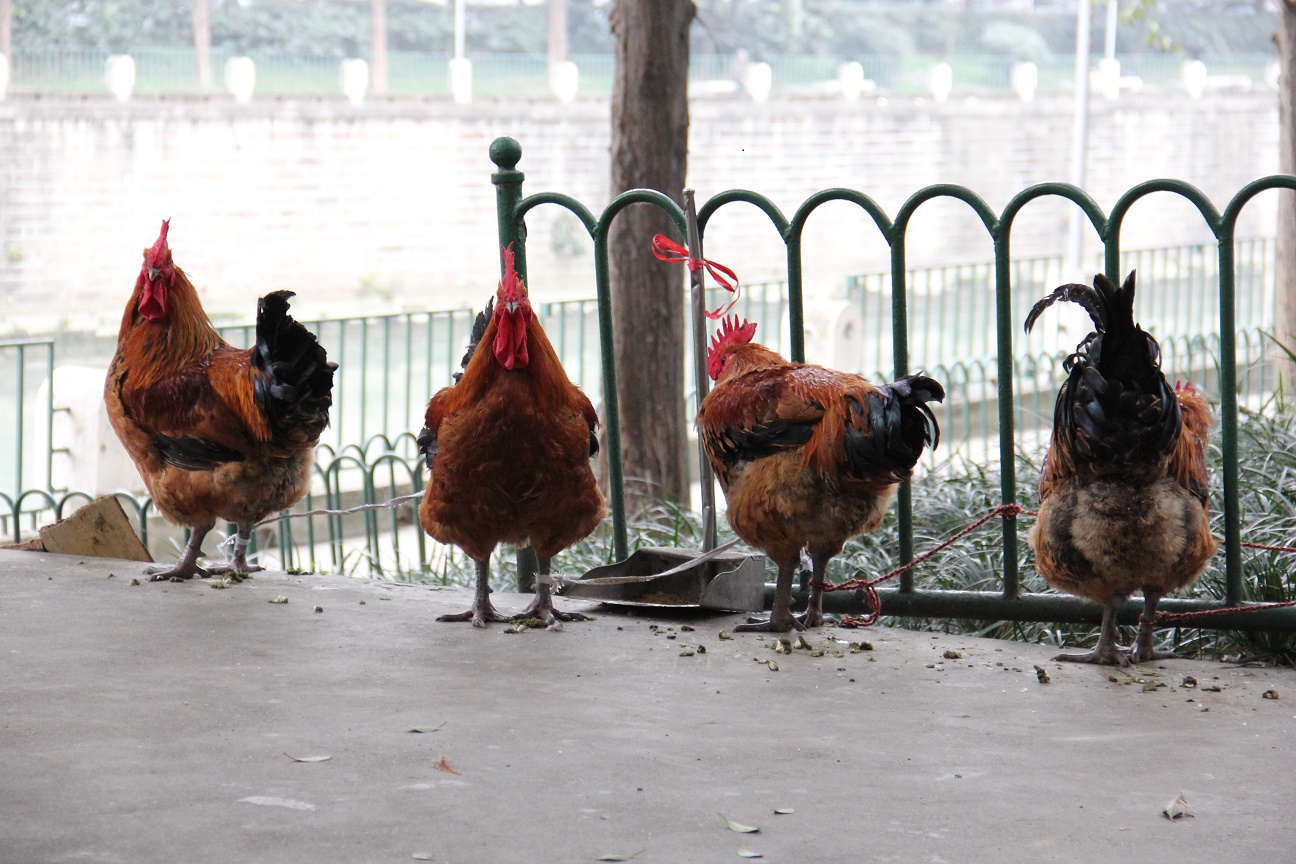
More of these.

More of these.

In the afternoon, we wandered around the Wenshu Temple neighborhood.

Wenshu Monastary is Chengdu’s oldest, founded during the Tang Dynasty sometime around the 7th century. It was torched during the wars of the Ming Dynasty, then rebuilt in its current form during the Qing.

Wenshu was our first encounter with the sweeping eaves style of architecture that dominates in Sichuan and diverges considerably from the Beijing style. The sprawling temple itself was crowd- and incense- and monk-filled in the usual style, nothing particularly unique but still pretty and peaceful.

We struck up a conversation with a group of old men who wanted to take some pictures with us. They tried to teach us something about Buddhism, but the dialect made understanding near impossible until a tiny septuagenarian with long, thin hair, no teeth and a great James Hong impression told them to cut it out. He talked to us in superb English about America instead. He’d never been but knew all about it. He still wanted to go to California someday. Then we all snapped some pictures and went our separate ways.

In the park outside of the walls, the old men gathered with their caged birds, hung on lines between the trees. The birds squawked and squealed at the wind while their owners shaded in a pagoda squawked and squealed at their card game.

After the temple, we walked the reconstructed “old” streets nearby, watching the food and ware hawkers ply their trade. There were nut vendors, meat vendors, bamboo juice vendors, calligraphy vendors, and even “Panda IKEA.”

The highpoint of our first day in Chengdu, though, was Wenshu’s vegetarian restaurant. The sleek wood and white dining room tended to by monks and nuns featured a 5-dollar, all-you-can-eat, all-vegetarian buffet with choices of more than 25 different dishes. Salads, soups, pastas, breads, casseroles, and deserts of all types with more kinds of vegetables and beans and tofu than I’ve ever seen. And perhaps the tastiest I’ve ever eaten.

Culinary enlightenment?
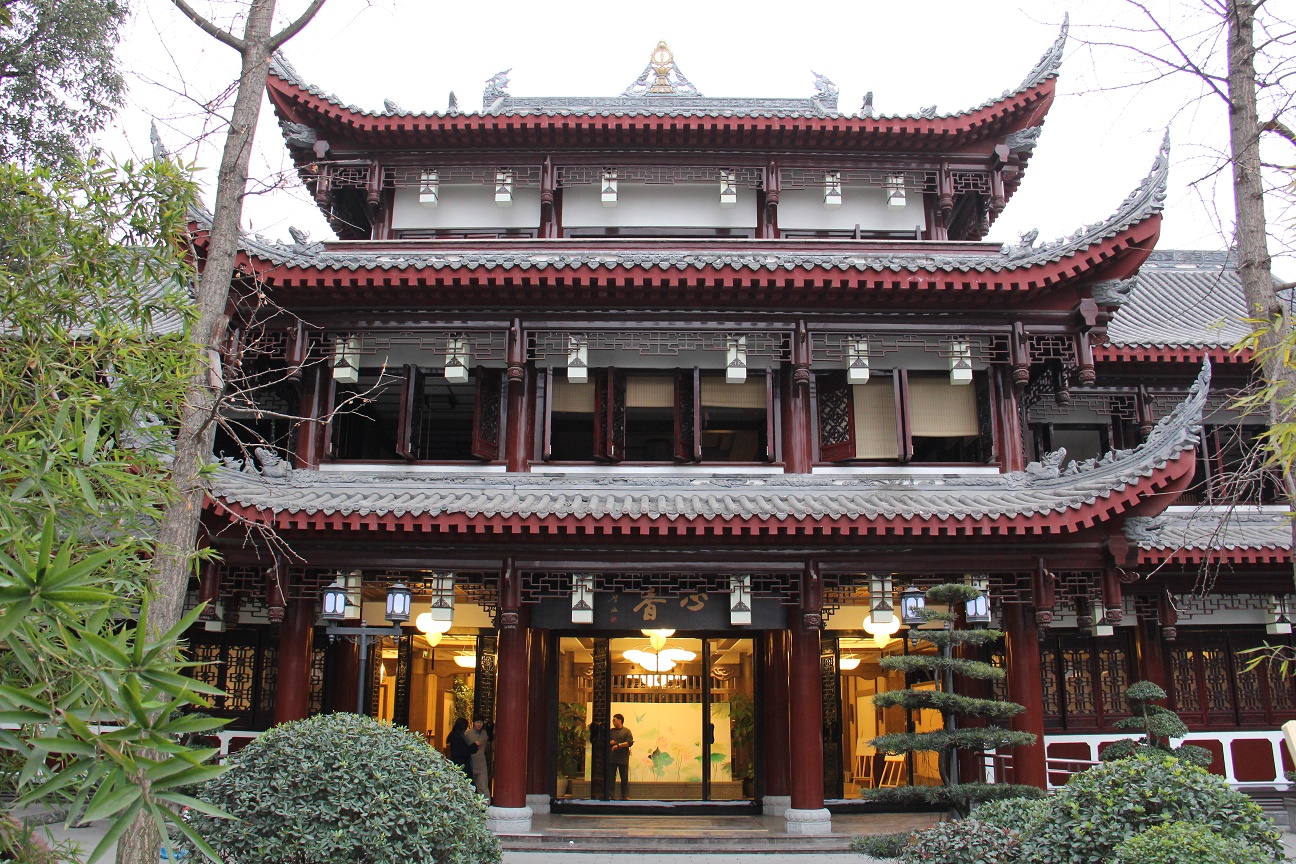
Wenshu's vegetarian restaurant.

Wenshu’s vegetarian restaurant.
 

China’s little Europe

This weekend Jordyn and I took a trip to England. And Italy. And Germany. And the whole time, we stayed in China.

Tianjin is one of those places that all the foreigners in Beijing say they’re planning to go to, eventually. Even though it’s only 30 minutes away by bullet train, most of them never do. We finally did.

At 14 million people, Tianjin is the fourth largest city in China behind Shanghai, Beijing, and Guangzhou and is one of the country’s four direct-controlled municipalities along with Shanghai, Beijing, and Chongqing. It’s location on the Bohai Gulf as well as on the banks of the Hai River, which connects northern China to the Yangtze River via the Grand Canal, also made it one of the most important ports in China, especially after it was forcibly opened to French and British trade by the Treaty of Tianjin, which was signed in 1860 following China’s defeat in the Second Opium War. Over the following decades, Great Britain and France were joined by Japan, Austria-Hungary, Italy, and Belgium in establishing self-administered foreign concession areas in Tianjin, each with its own government buildings, public facilities, and neighborhoods.

That’s what makes Tianjin so interesting: The city is a patchwork of early-20th-century European buildings and avenues that trumpet the cities colonial past and steel-and-glass skyscrapers that announce its intent to own the future. And underneath it all scoot the overstuffed electric tricycles ubiquitous to China.

Sunday was Qingming festival, or Tomb Sweeping Day, so I was off work. Jordyn also had Monday off, so we decided it was time to take the trip. We’d tried to do the same with Toby on the same weekend last year but showed up to the train station too late and didn’t have time to make the trip. This time we planned ahead and bought tickets a few days before.

Tianjin is a walking city.

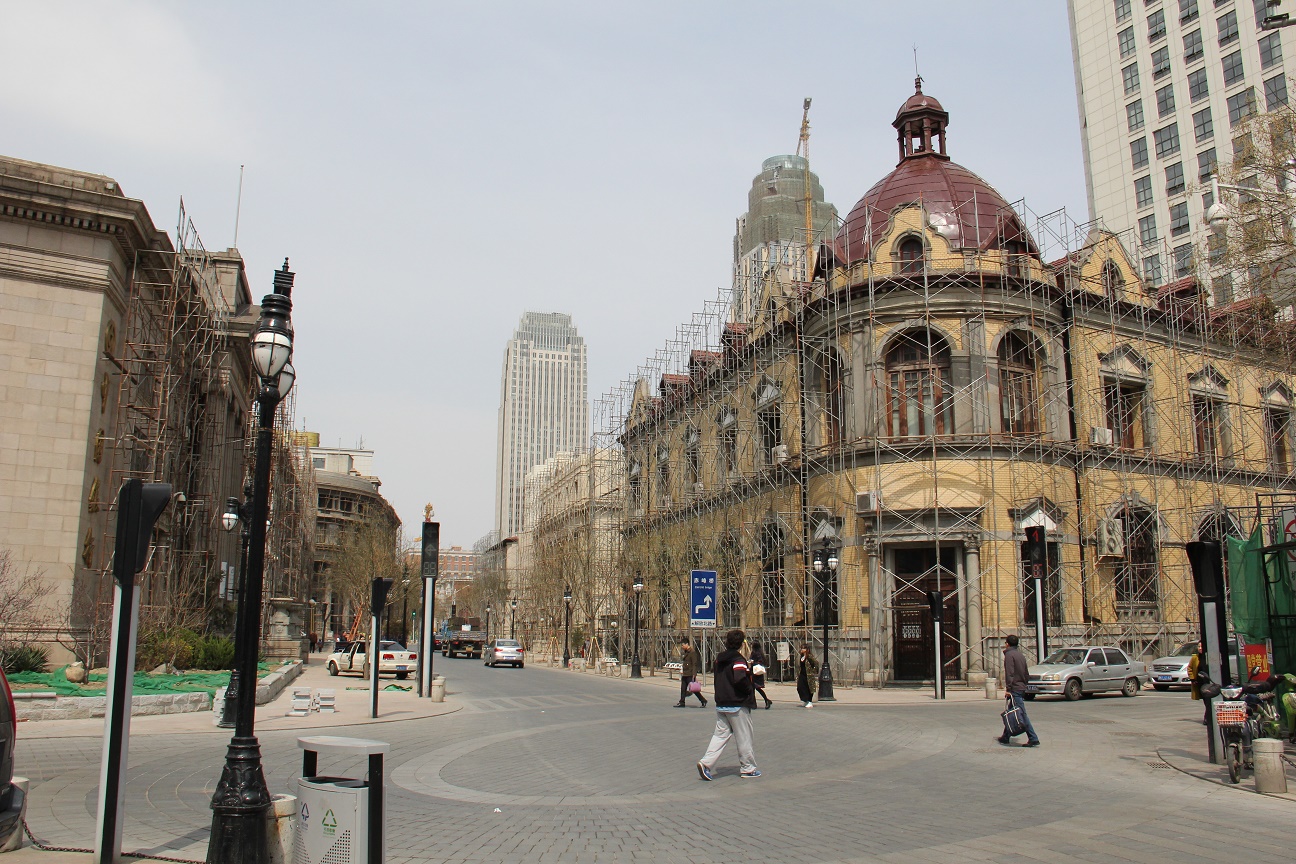
There’s the old downtown, lined with European-turned-Chinese banks of the columned variety, most of them (of course) webbed by renovation scaffolding during our visit.

Banks in Tianjin's downtown

Tianjin’s downtown is mostly banks built during the early 20th century to house European companies. These days they are mostly Chinese banks.

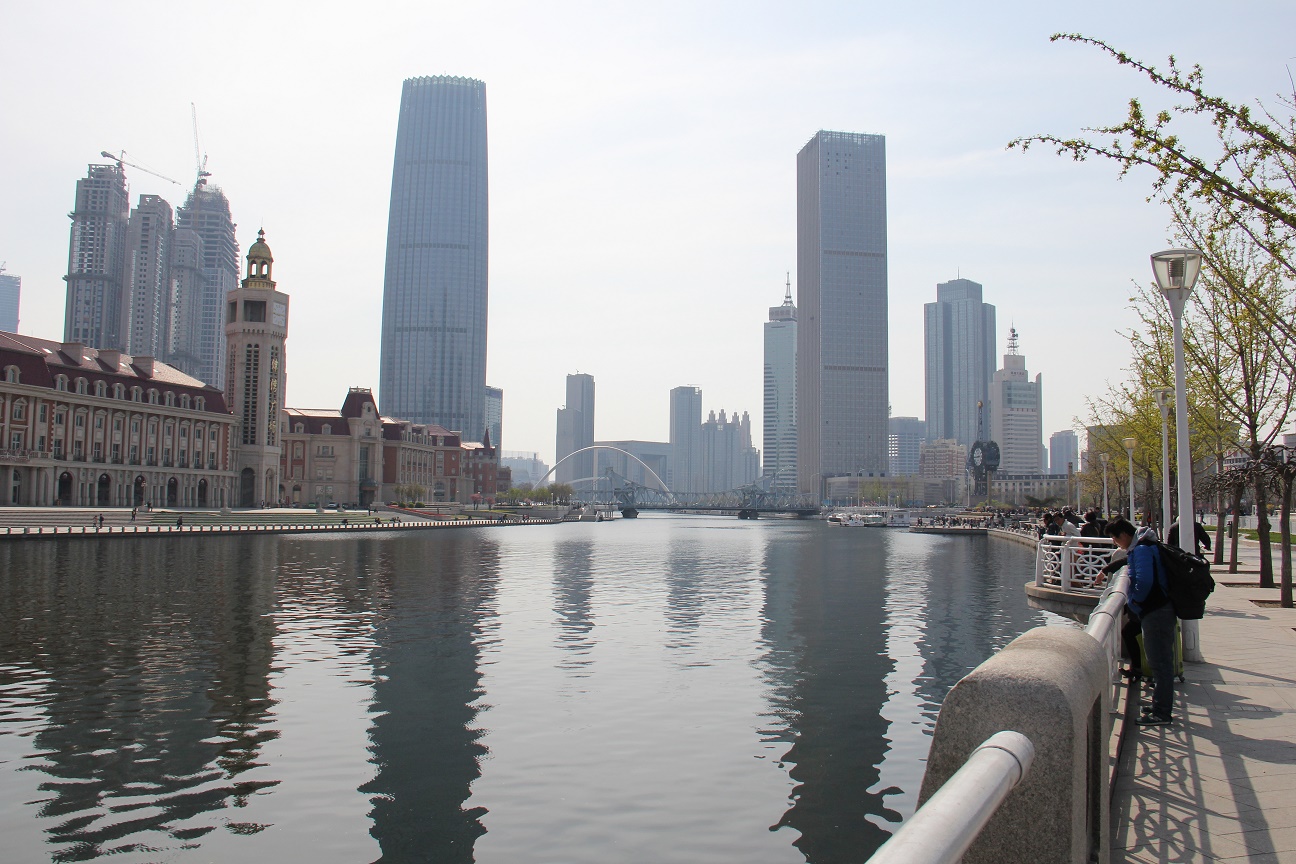
There’s the riverside parks, lined first across from the train station and a giant clock with the old British treaty port, then with fishermen, then with the skyscrapers.

Tianjin

The treaty port sits on the river across from Tianjin’s train station. Past the bridges down the river, the city’s skyscrapers project a different attitude.

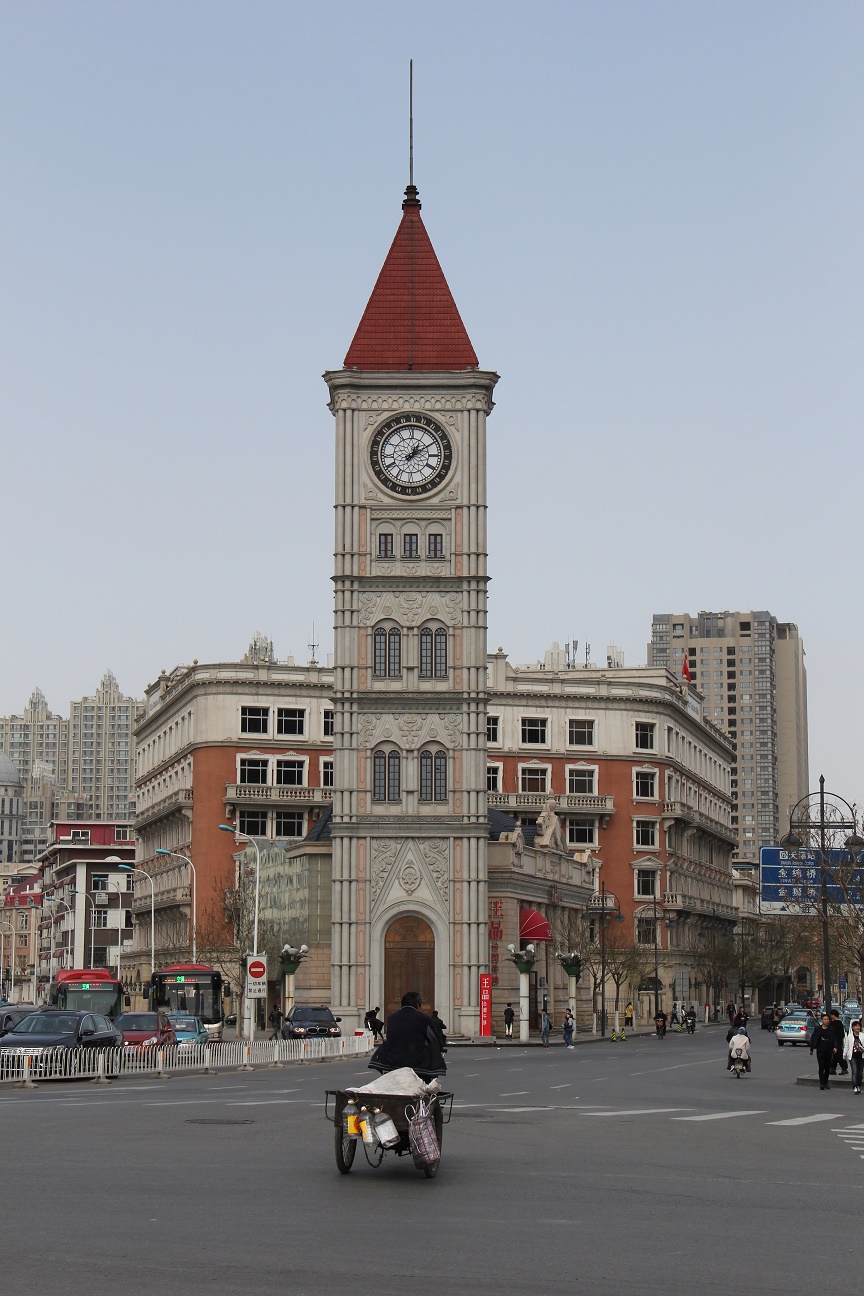
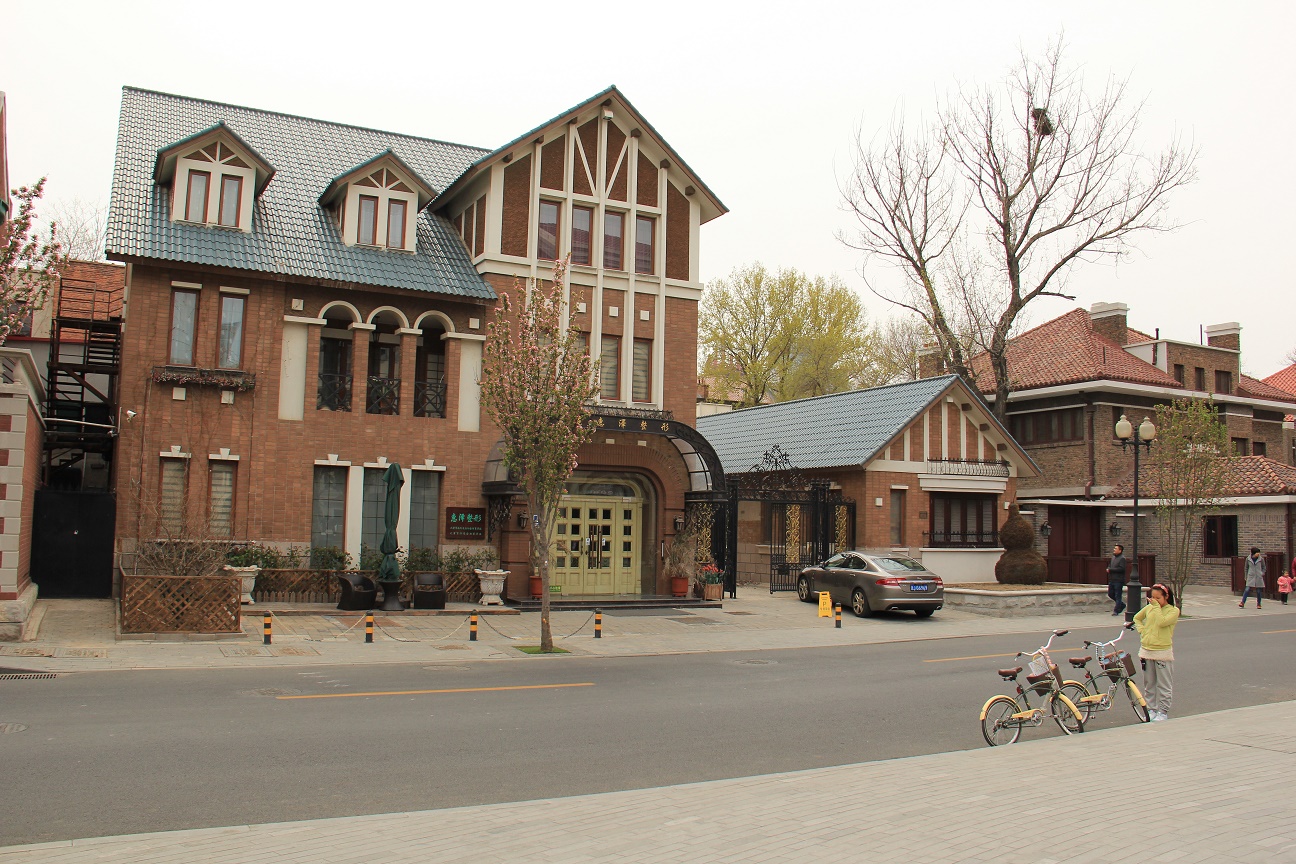
There’s the Italian Concession, Tianjin’s version of Little Italy, lined with Italian villas and European-style restaurants and souvenir shops catering to the domestic crowd.

Tianjin's Italian concession

This clock tower marks the entrance to Tianjin’s Italian concession, complete with gold statues, fountains, and lots of cheesy Italian (and German?) restaurants.

There’s the ancient town street, lined with traditional Chinese craft shops that look like they’ve seen better days.

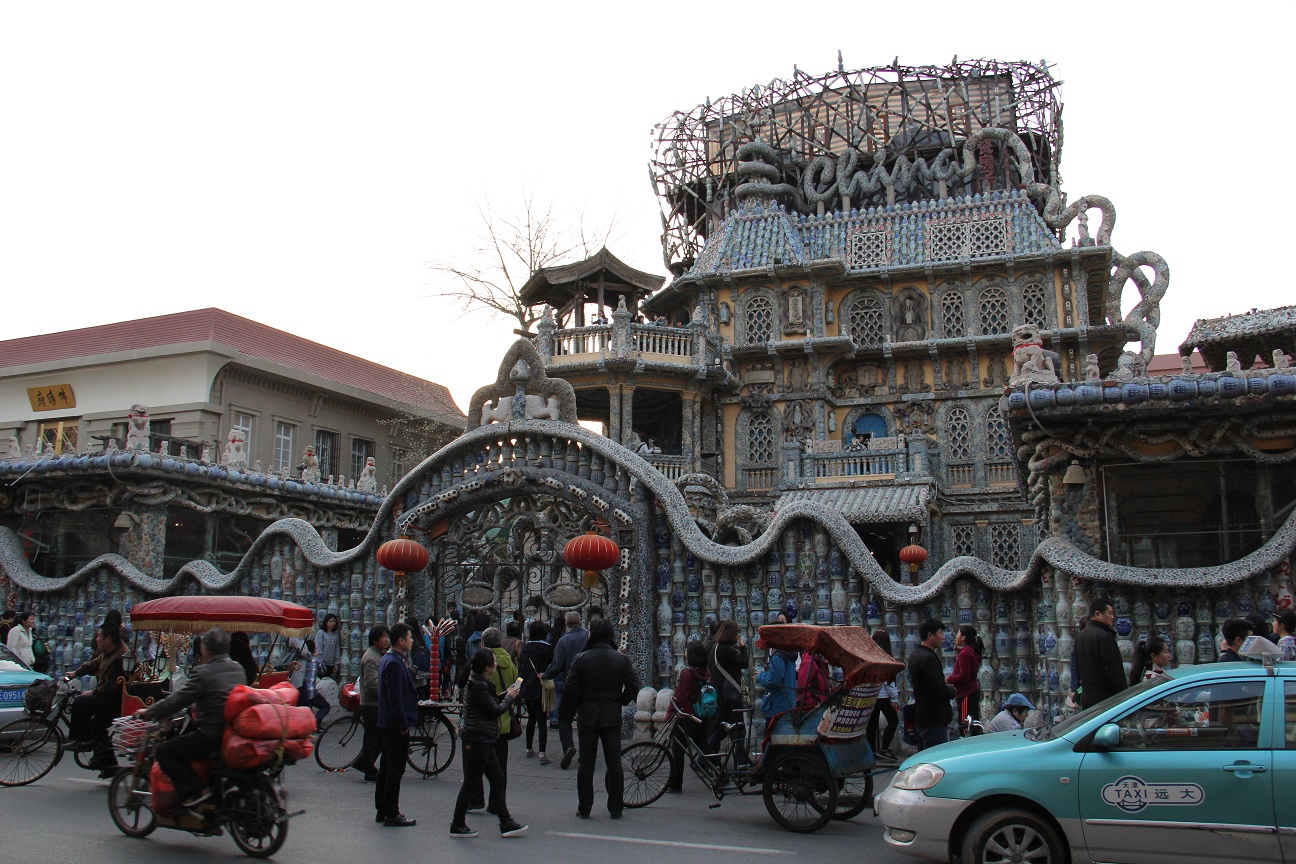
There’s the creepy China house, a house lined with tourists and constructed entirely of concrete and vases or pieces of vases.

Tianjin's China house.

Tianjin’s China house.

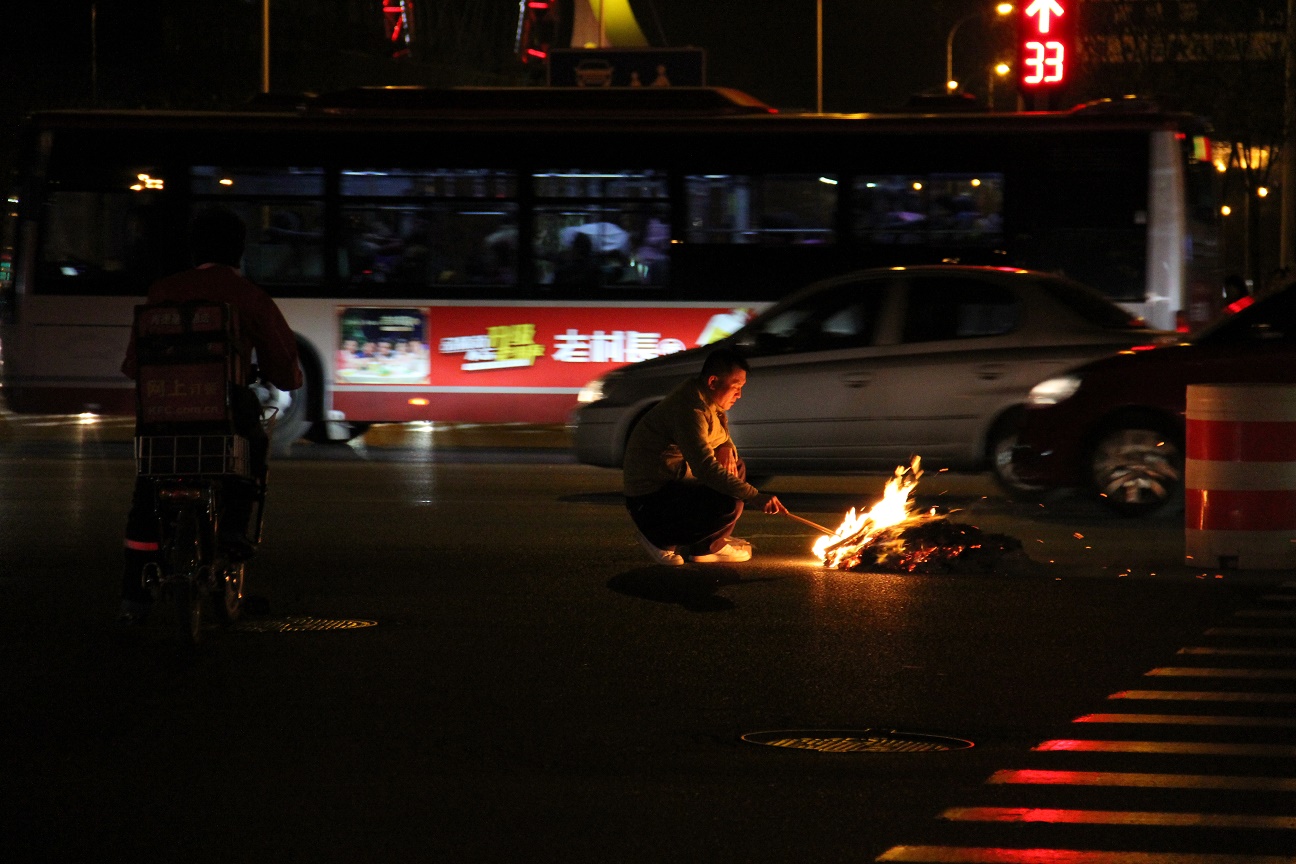
There’s the wide avenues, lined with buses and cars and where, on Qingming, you might catch a man burning piles of paper money for his ancestors in the middle of an intersection or a group of people trying to keep the grass from catching on fire when their paper money takes off with the wind.

A man burns paper money in Tianjin

On Qingming, people burn paper money as well as iPhones and other gadgets, for their ancestors to use in the afterlife.

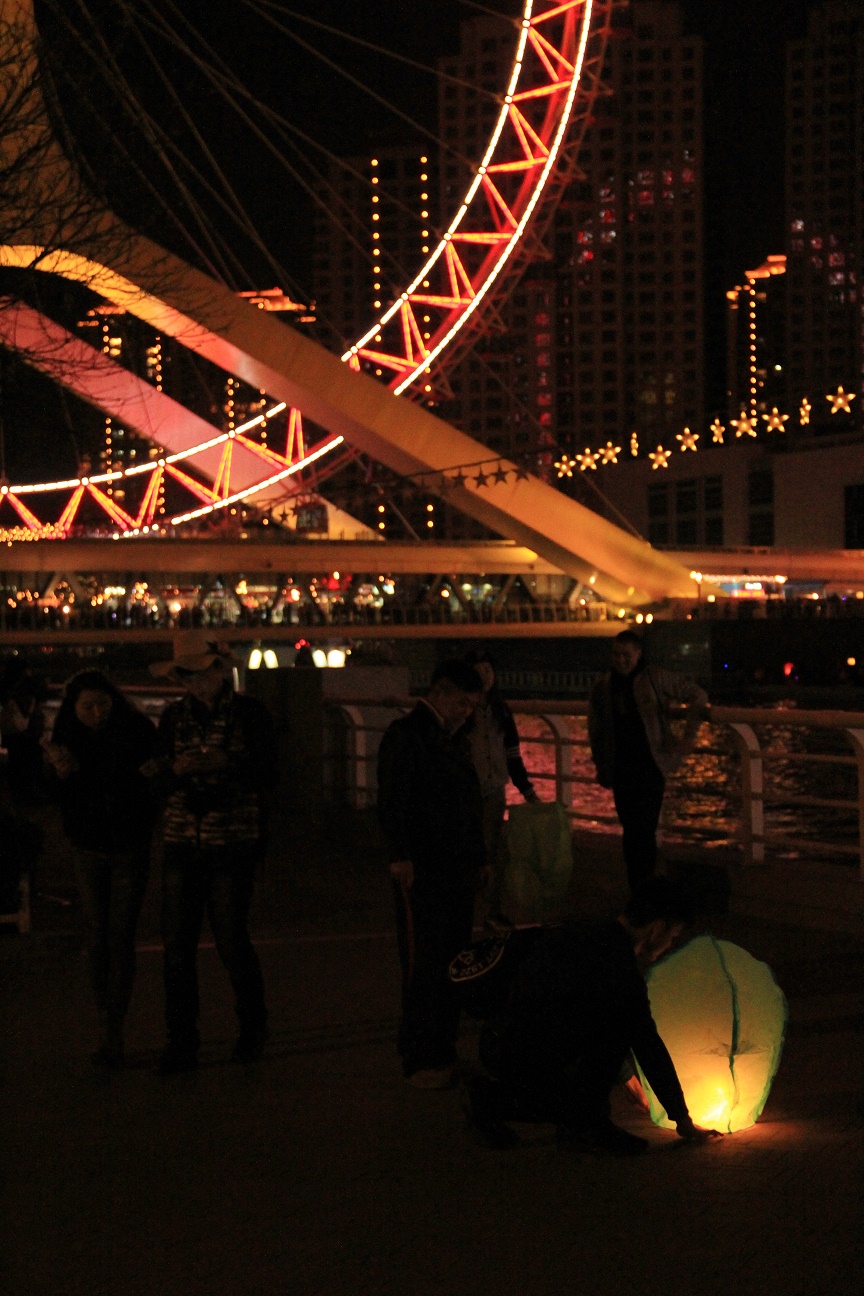
There’s the Yongle Bridge, topped with the Tianjin Eye, the world’s only Ferris wheel ( (120-meters) built on top of a bridge, and lined by a riverwalk where revelers launch flaming lanterns into the night.

People light lanterns near the Tianjin Eye

Evening celebrators light floating lanterns under the glow of the river-spanning Tianjin Eye, the world’s only Ferris wheel built on top of a bridge.

There’s the 五大道 wudadao (five big avenues) area, lined with blossoming trees and the mansions of former government officials and generals, some of their abodes straight out of 1910 London, others out of Spain.

House in wudadao

Houses in the wudadao district certainly don’t look Chinese.

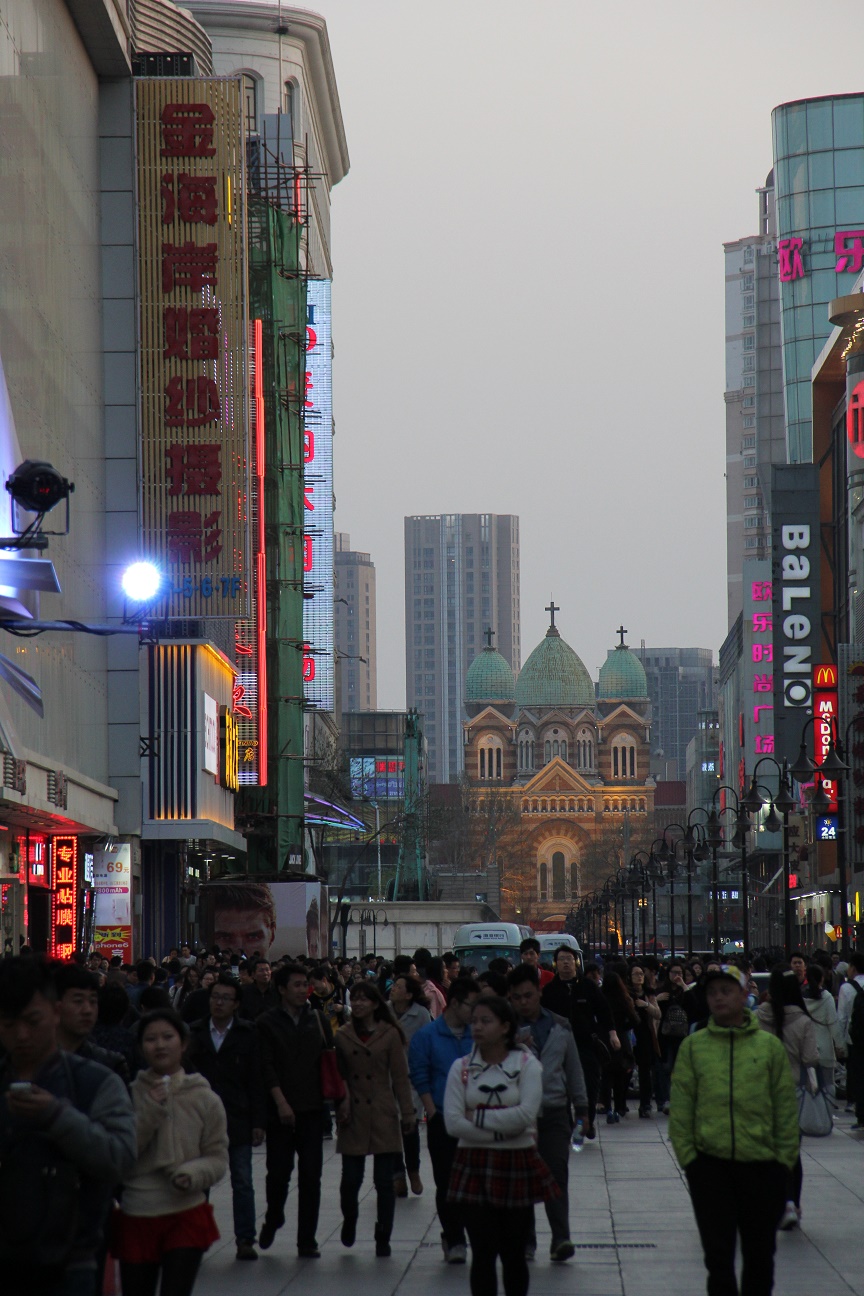
And there’s Tianjin’s biggest shopping avenue, lined with glittering monuments to consumerism and punctuated by the French-built St. Joseph’s cathedral hiding at the very end.

St. Joseph's Cathedral

St. Joseph’s Cathedral is the end point of Tianjin’s biggest shopping street.

For people who liked walking, Tianjin is good for a pair of days well spent.

The city is at once much cleaner than Beijing and also more traditional. Its modern streets and streets alike have almost no trace of what one comes to expect as China, save for all the Chinese people as well as the army of food and repair carts posted at many of the intersections. Many of the European-style doorways the traditional red paper characters and door gods pasted on them. And St. Joseph’s Jesus is covered in Chinese writing. The contrast was somewhat disorienting.

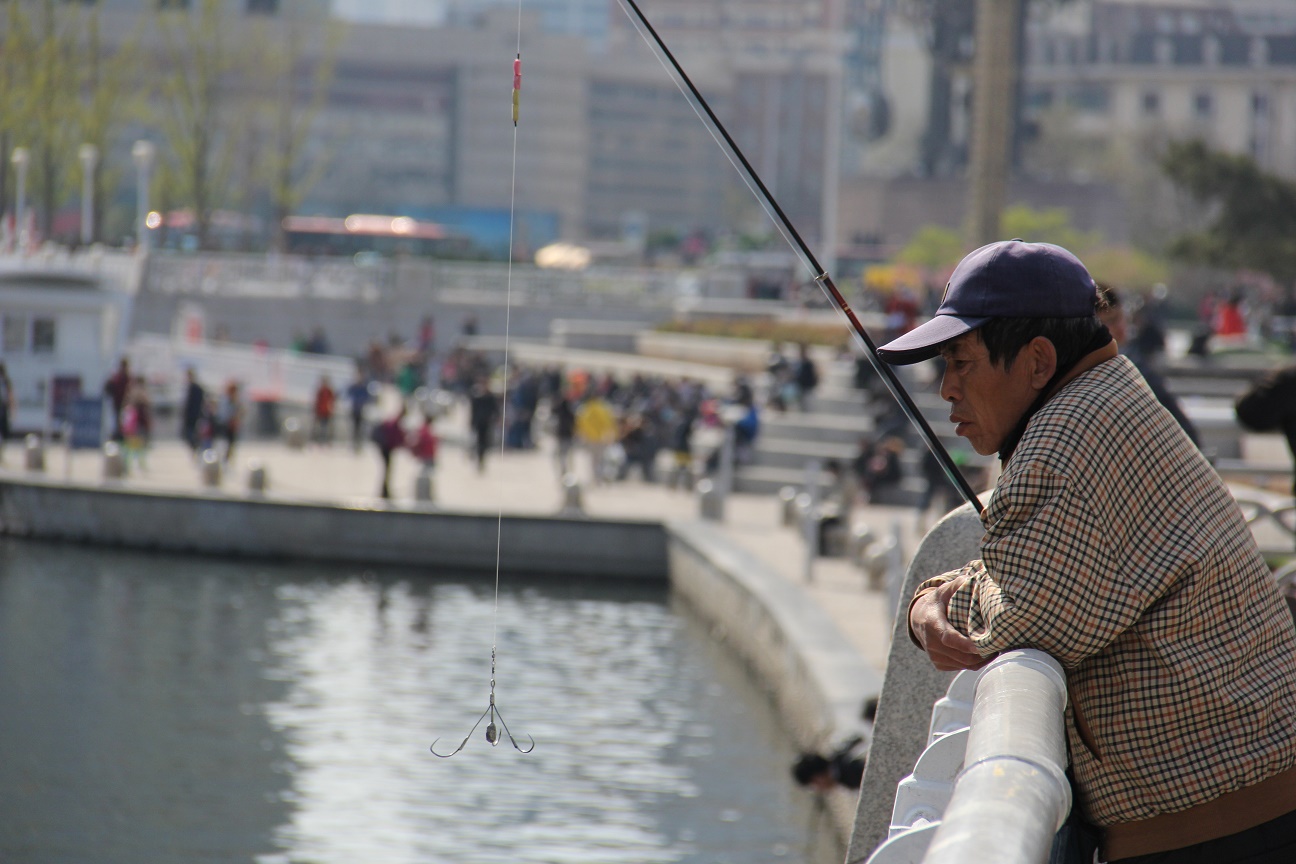
A man takes a break from fishing near the train station.

A man takes a break from fishing near the train station.

Jesus with Chinese characteristics.

Jesus with Chinese characteristics.

Tianjin is also well-known for its snacks, notably jianbing and 狗不理包子 goubuli baozi (translated as Steamed buns that dogs don’t pay attention to).

Jianbing are common in Beijing but originate in Tianjin. They’re basically a crepe, covered in egg and wrapped around cilantro, onion, shrimp crackers (I think), and a spicy sauce. Jordyn loves them so we tried two different styles, one of which made with green peas and fried dough instead of shrimp crackers I’ve never before seen. We decide Tianjin’s jianbing are indeed superior to Beijing’s.

Gobuli is actually the name of Tianjin’s most famous steamed dumping restaurant, which has been open for more than 100 years. More famous Chinese than I care to list have eaten there, and the Empress Cixi called its namesake dumplings the most delicious in China. The strange name (Steamed buns dog doesn’t pay attention to) originates with a villager who came to Tianjin to learn to make dumplings. His name was gou (dog). As he learned, he developed the special style that is Goubuli’s specialty, but would get so absorbed in making his dumplings that people started to say “Dog doesn’t pay attention to people, only to bao zi.” Eventually the saying was shortened to Dog doesn’t pay attention” and the name stuck.

The veggie baozi at Goubuli.

The veggie baozi at Goubuli.

It turns out Goubuli also has a branch in Beijing where Jordyn and I have eaten a few times before, though we didn’t know it until we returned from Tianjin. They are our favorite steamed dumplings. Regardless, we had to eat in Tianjin’s original branch, so for an excessive price – truly – we ordered one set of eight vegetable baozi. They were delicious, but we decided the baozi round goes to Beijing.

Goubuli baozi in Tianjin.

Goubuli baozi in Tianjin.

Walk a 160 miles in my shoes

Jordyn recently got a FitBit as a gift from my mom, and we put it to good use on our Sichuan/Hubei trip. She finally synced it up with the computer today and here’s the breakdown for the two weeks (minus one day she left it in the hotel):

160.24 miles (a day high of 18.95)
380,520 steps
37,223 calories burned

Not bad, I say.