Shades of Red on the Yellow Mountain

Holidays being what they are, I wasn’t able to get a bus out of Hangzhou until three hours after the first one left, which crimped my plans for climbing Huangshan.

Rising out of the Anhui bamboo forests, the Huangshan range is known for its jagged and jutting granite peaks thrusting more than 1,800 meters out of a sea of clouds into the blue. The mountain, which translates as Yellow Mountain in English, inspired an entire school of Chinese painting. Now a UNESCO World Heritage Site, the peak has held renown in China for more than 2000 years, and some of its 10,000 steps are said to have been constructed as long as 1,500 years ago. Today it’s one of the most popular tourism sites in China and, being located just a few hours from Hangzhou, I got it into my head to climb it.

The only problem was, given those 10,000 steps, Huangshan isn’t the easiest climb. And since I wanted to summit before sunset, my three-hour delay, coupled with one of China’s ubiquitous traffic jams, was jamming up my plans.

There are two main routes up the mountain – well three if you count the three different cable cars, which I don’t – a 15-kilometer climb among some of the mountains most well-known geologic features or a 7.5-kilometer climb up the east side. I’d planned on the long route, but given my time constraints, I decided on Option 2. Still, by the time I’d bought my ticket and taken the shuttle to the base, it was already 3 p.m.

My guidebook says the climb takes 2.5 hours. The sun starts to set at 5:30 p.m. I was going to have to run.

So I did. Taking steps two at a time and dappling the stones with my sweat, I hoofed the four-mile climb in an hour and a half, shrugging off the shouts of “Look, look! Running foreigner!” and even stopping to snap some pictures and make some new friends, two of which mentioned they’d each make an excellent girlfriend. I declined.

And then I was at the top.

I’d packed a borrowed tent with plans to camp at the summit, but I had no sleeping bag and no pad, only a light down jacket and a pair of gym shorts. Two days before, I read that the temperatures were dropping to the high 30s some nights, so I’d booked a room at the White Goose Hotel at the summit at the last minute, figuring it would be better to pay outrageous prices than spend the night freezing on a block of concrete.

I hiked one more set of stairs and found the place, then checked in to my bunk in the hotel basement. Nice enough for a night, though not for 70 bucks.
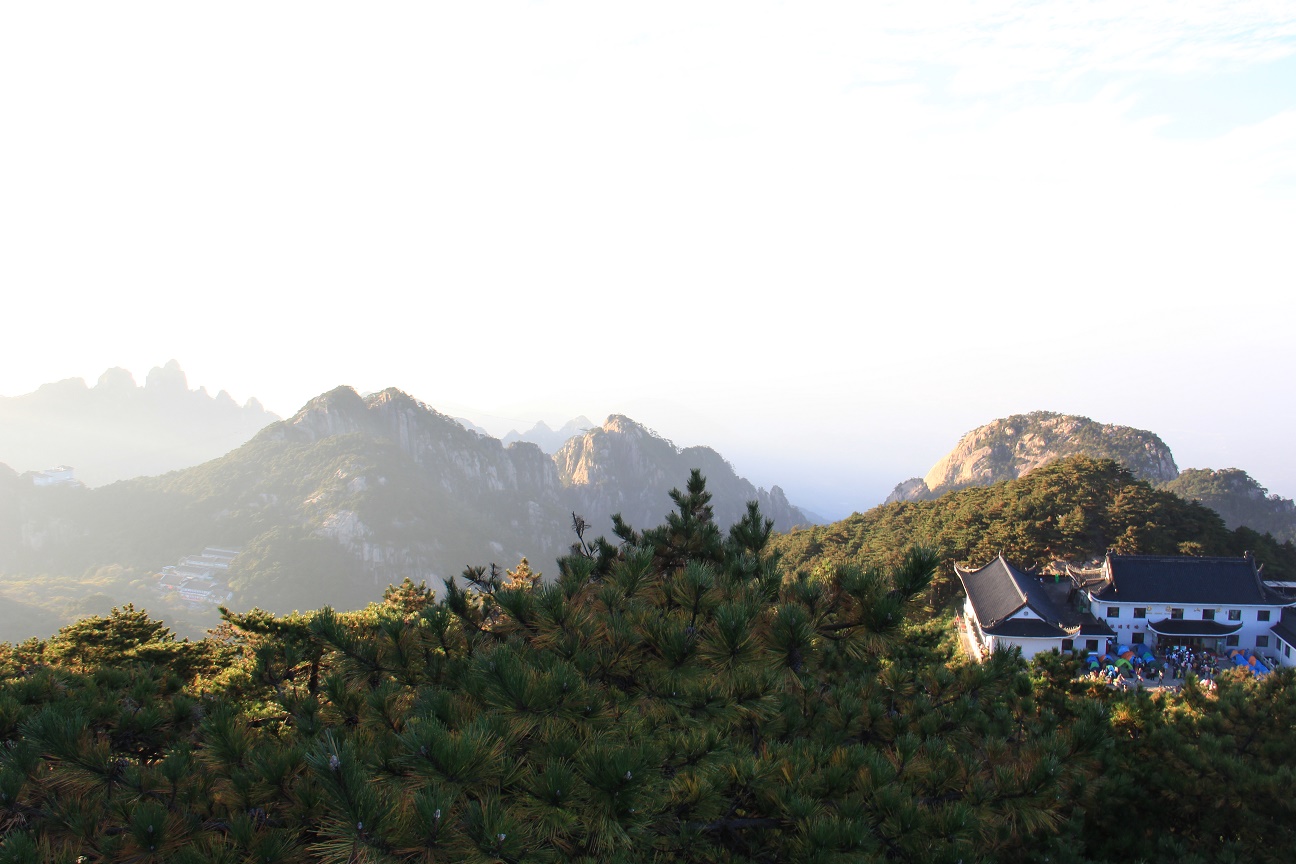
The White Goose Hotel, complete with campsites.

The White Goose Hotel, complete with campsites. I did dodge a bullet indeed.

Then it was off for the sunset.

By the time I reached Guangming Peak, the second highest of Huangshan’s spires, nearly every piece of ground was supporting at least a body and a half. I scrambled around, climbing trees, balancing on fence posts – sometimes with the help of my new friends – snapping whatever pictures I could. Below, wisps of haze went red, then purpled as they embraced the rolling hills which gently shaded the sun as dusk turned to night. Behind, the rock faces caught the last light before they, too, faded into the gloom.

As I walked back to the hotel, I realized I’d made my second big mistake: Food. I didn’t have any, I hadn’t eaten any, and there didn’t seem to be any.

I bought a pack of cookies for four dollars, and went to find my bed, tripping all the way over the darkened stairs.

Turned out, sometime in between checking in and taking pictures, someone else had taken it. And every other bed in my basement room. That wasn’t all: By this time, beds had appeared in all the hallways and all the lobbies. Outside on the basketball court, nearly 100 tents were packed side to side in a scene that was being repeated all over the mountain, wherever tents were allowed. Where they weren’t, police were chasing off would-be sleepers.

I realized I might be in trouble.

I went up to the service desk. She drug me back down and the questioning began. We went through everyone’s receipts. After much denial, it turned out a middle-aged man tucked in to his spectacles had taken my bed in confusion.

“We can switch, OK?” he pleaded. “Ok?”

Ok.

The attendant showed me to my new room. I had the corner bunk. Pushed together with some other bunks. Shared with other people. At least it would be warm, I thought.

I followed the attendant back upstairs, where I started a pretty typical conversation: “Where are you from? How old are you? Where do you live? You’re Chinese is so good … blah blah blah.” Then, it took a weird turn.

“So,” all three young women behind the desk turned to look at me.

“Do you think Chinese girls are pretty? Do you think they’re prettier than American girls? Are Chongqing girls or Anhui girls prettier? What about Shandong girls?”

“Are you married?”

“Do you want to be?” one of them practically shrieked.

I hadn’t noticed that a crowd had gathered. It erupted in cackles. My ears flushed. I dissembled.

“Yeah, Beijing is pretty far away,” she said.

“Yeah,” I mumbled, looking at my feet and wishing beer didn’t cost 20 yuan a can.

After a half hour of conversation with this person and that, the lights at last went out. I went downstairs to find a room of snoring men. I clambered into bed with them, snuggled up, and tried to sleep.

My alarm went off at 4:30 a.m. Sunrise at 5:40, and I had a couple of kilometers to cover in the meantime. I grabbed my bag, and lurched into the dark.

Down, up, down again, more up, passing crowds of people on the half-lighted steps along the summit paths. In no time, my hat, gloves, and sweatshirt came off. Wherever I got, 1000 people had gotten first. I tried to force my way up to the cliff edges to get a clear look. Nothing. As the clouds started to brighten, I lucked upon a security guard opening a gate to a previously closed peak. The rusty gate creaked open, and I darted up the steps. Fifth one on the top, with prime position. Finally. More shades of red, this time the morning. Below, the cloud sea lapped at the lower peaks, and early rays silhouetted the pinnacles in pinks.

In less than 12 hours, I’d seen the sun fall and rise on the slopes of Huangshan.

But I had miles to go.

My plan for the day was to hike the West Sea Canyon, regarded by many as the most beautiful hike in the park, then to slide down the West Steps that I’d shunned the day before.

I’d picked a sunrise peak in close proximity to the West Sea Canyon entrance just for that reason. As soon as the sky blued, I was through the gate and onto the steps, built hanging onto the side of the cliff with 1,000 meters of air below. Across the canyon, the famed Huangshan rocks burst with of gnarled pines clinging to their faces like beard patches on a high school boy. For three kilometers I looped around the spires and down the hanging stairs, through tunnels, over pines and across broken bridges, swooning with bits of vertigo where the railing disappeared and the path edges slipped into abyss.

About halfway down the winding staircases, though, I realized I’d made my third classic mistake: I’d brought half a bottle of water my last three cookies. Surely there was a store at the bottom.

Indeed, there was. Only, it was staffed by a pair of small dogs which, instead of offering me succor, chased me out of the storefront, yipping and howling at my heels. As I faced the upward stairs stomach rumbling, mouth parched, I knew it was going to be a long five kilometers back up, views of the sun-sloshed granite notwithstanding.
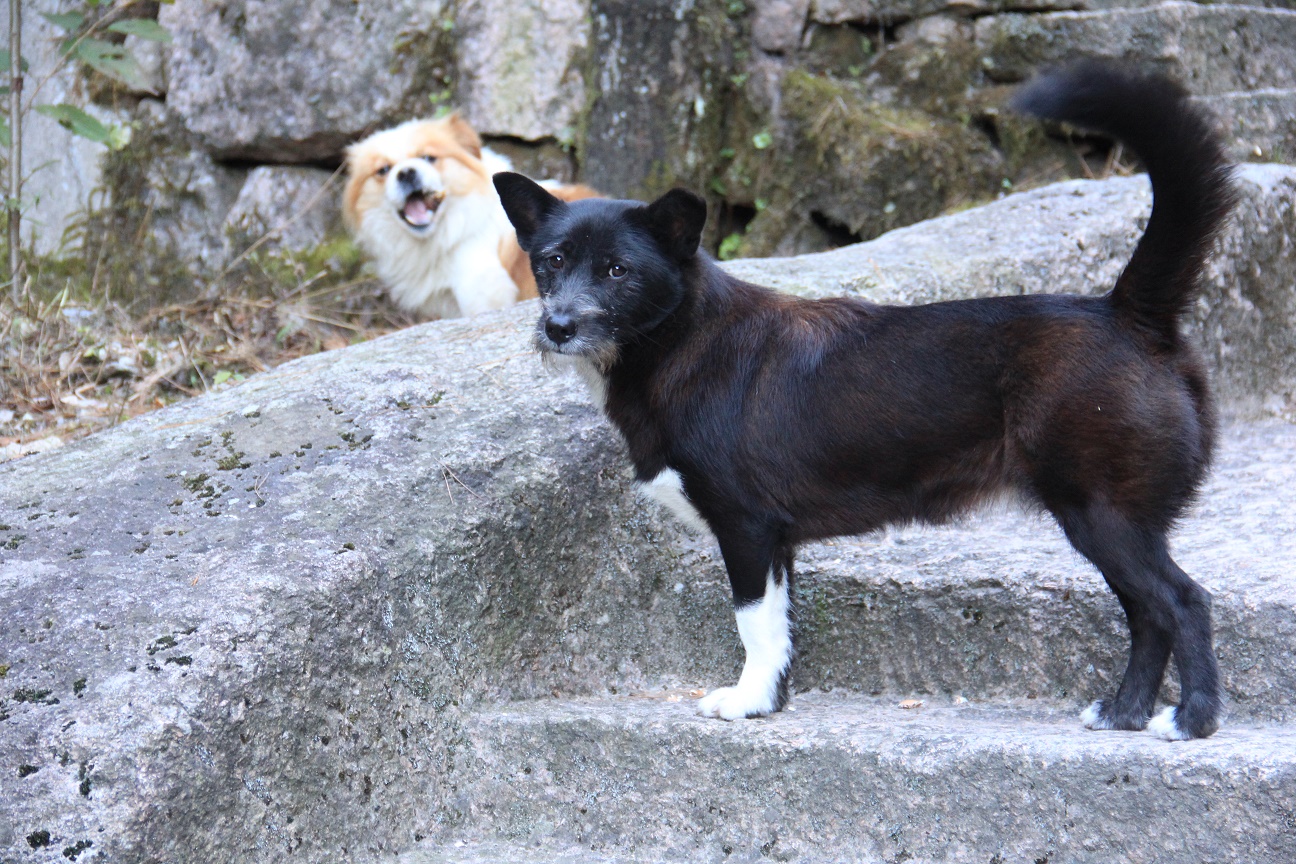
My nemeses.

My nemeses.

I didn’t know just how long it would really be.

Through my whole hike in the West Sea Canyon, I saw maybe two dozen people. That changed.

As I staggered up the last of the steps, nearly fainting and vomiting both for lack of hydration and energy, I nearly fainted and vomited again. I’d finally found what everyone had warned me about: The Horde.

I spent the next four hours “hiking” in line, shuffling up and down steps, shoving by in frustration when gaps appeared only to run into the next person’s back. Where I could manage, I ran through the underbrush, dodging angry police and even People’s Liberation Army soldiers who were trying to keep order and stop runners like me. I tried following a stick-stick porter whose bamboo load-bearing pole kept the crowds away but eventually lost him to the masses.

At one junction approaching my planned decent-route, after jamming myself into the crowd China-style, I stood without moving for nearly 10 minutes in the then-baking sun as I stared aghast at the red-and-yellow-capped snake of tour groups that coiled around the mountain past what appeared to be a man-carried chair that had fallen off the mountain side, and then coiled around again out of sight.

No way. No way. I shook my head. And shook it some more.
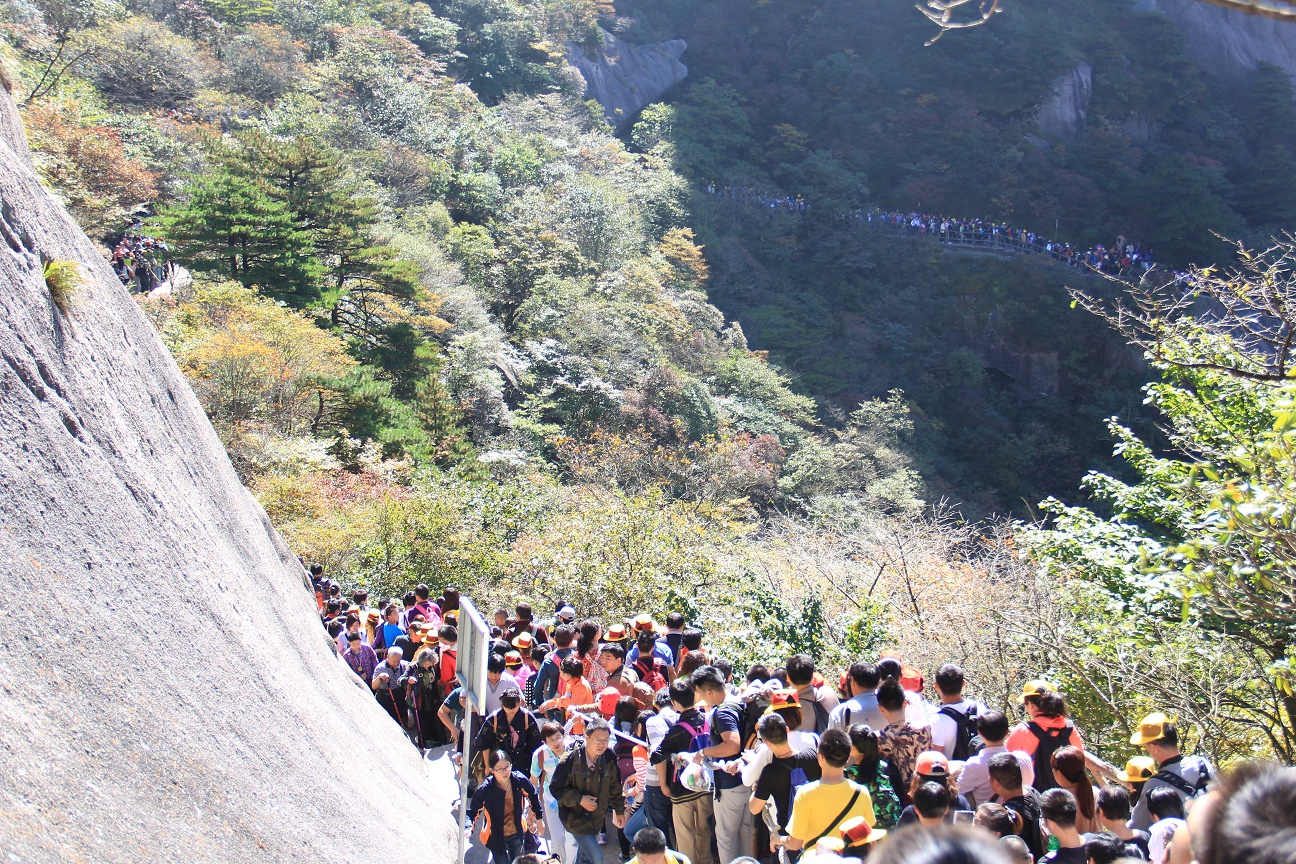
No way out, indeed. Yes, this is the summit.

No way out, indeed. Yes, this is the summit.

For a moment I considered hurling myself after the chair into the void and into sweet release from panic. Then I ducked the line, instead, smacked a woman with my bag, and went back the other way. Only to find more jams. In vain, I searched this way and that with trembling legs frantic to find an alternate route down the mountain. Everywhere was more of the same. Lines in every direction. There was no way out. I was trapped on the mountain with a million other people. There was no way out.

Well there was one: The way I came. And I could only pray it would be better.

It wasn’t by much. For another 7.5 kilometers I smashed my way through children, tripped old women, and stumbled over groups of men sauntering back and forth across the steep and narrow stairs – all the while seeing my last shades of red and trying not to scream or punch or simply kill myself on the mountain side.

Well, I didn’t. But it was a close call.

In China, everyone stands in line

August 6, 2015

I’d forgotten the way that the slow growl of the diesel engine and the light tottering side to side begs me to sleep. Or the way the thrown open curtains, brushes against my just-too-long-for-the-bunk legs, and never-ceasing chatter keep me from it. But that’s travel by the slow train in China.

It’s been a while. A busy couple of months. My personal life got a little weird; school came to an end; my parents, sister, and brother-in-law came to Beijing, accompanied me to Xi’an, then left again. My friends Matt and Dave came to Beijing, too. I might come back to it all later, but for now, it’s on the road.

There’s five thousand kilometers of rail and road ahead of us; one thousand behind us. Beijing, China to Osh, Kyrgyzstan. Go west, young men, someone decided, so that’s where we’re going.

Anyway, we were on the train.

Matt watches the dusty country go by.

Matt watches the dusty country go by.

The first leg was Beijing to Lanzhou. Twenty-eight hours by slow train, and man was it slow. Brisk-jog slow. But beyond the windows was China.

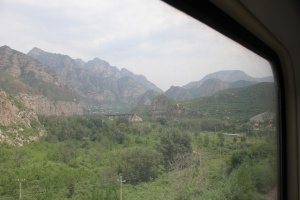
Just outside of Beijing, the mountains reared up from the plain, craggy and cliffy in whites and reds. Shrubs speckled the softer sides and added color in smudged greens to the muddy rivers that slinked through the valleys below. Hamlets of grape and corn farmers clung to the hills where the train plodded in and out of tunnels in alternating light and dark.

Further along came the coal towns. There, herds of ravenous sheep rambled across rolling hills shredding the greenery. The houses were broken clay. Circular mound graves broke up the plants. As the sun set, DaTong rolled by and a nuclear plant loomed in vaguely disconcerting contrast to the crumbling hovels in its shadow.

DaTong powerplants.

DaTong powerplants.

Then nighttime. The shades came down. The old men pulled out their liquor. Matt, Dave, and I spent the evening in the dining car, spilling grease on our clothes. The beer cans stacked up. Eventually, one of the staff came over and made a sleeping motion with his hands. We packed up, and he seemed proud to have gotten his meaning across to the lone table of foreigners. When he returned to the staff table he told them of his triumph. They chuckled and took turns making the sleep-time signal with their hands.

Back in the sleeping car the dozen inlets of half a dozen bunks – low, middle, and high, in pairs – buzzed with people coming and going from washing faces and changing clothes. Some young men played cards. Some families chatted. They were impressed with our China Famous Brand Red Star 二锅头。It made us a fast friend, sitting a few inlets down on the tiny seats that fold out into the aisle next to the window.

Train bunks are not for big people.

Train bunks are not for big people.

He wore a gray wifebeater, rolled up over his substantial, drooping belly.

“Come drink!” he shouted down corridor, the sound waves bouncing from bed to bed and into the ears of sleeping children and finally to the table where we were playing cards.

My drinking buddy.

My drinking buddy.

We went.

“Sit!” he yelled, only a little less loudly, as we arrived. He lifted the cut-off bottom part of a coke bottle, which is serving as his liquor glass. We lifted our bottle. Then moved to the in-between-cars section where smoking is tolerated.

We talked of LanZhou, his hometown and our first and brief stop. Our new friend’s skinny friend joined us. We talked of LanZhou beef noodles and of their deliciousness and cheapness and of standing in line – children and old men and bosses and soldiers alike – to get them. I said that in China, everyone stands in line. The skinny friend clapped me on the shoulder.

“In China, everyone stands in line,” he repeated then barked a toothy cackle. “You’re an Old China Hand.”

Talk turned to Chinese cigarettes and local legends and Obama and Xi Jinping and Mao ZeDong. I tried to translate for Dave but most of it I couldn’t understand.

At 11, the lights went out.

“You’re an Old China Hand” the skinny friend said again and slapped my shoulder.

“When we get to LanZhou, I’ll treat you to whiskey,” the big man said, then paused and cracked another grin. “In China, everyone stands in line.”

Beer in a bag

The first thing to know about Qingdao is that they serve beer in a bag. Like the kind of bag inside which you’d take a fish home from a pet store.

Nearly every corner store, market, and restaurant – even some hotels, it looked like – has lurking in its doorway a keg or two or three of Qingdao’s most famous export: Tsingdao Beer. Because foremost, Qingdao is a beer city. A German beer city. In China. And they serve beer in a bag.

Stop your car! Buy some beer in a bag!

Stop your car! Buy some beer in a bag!

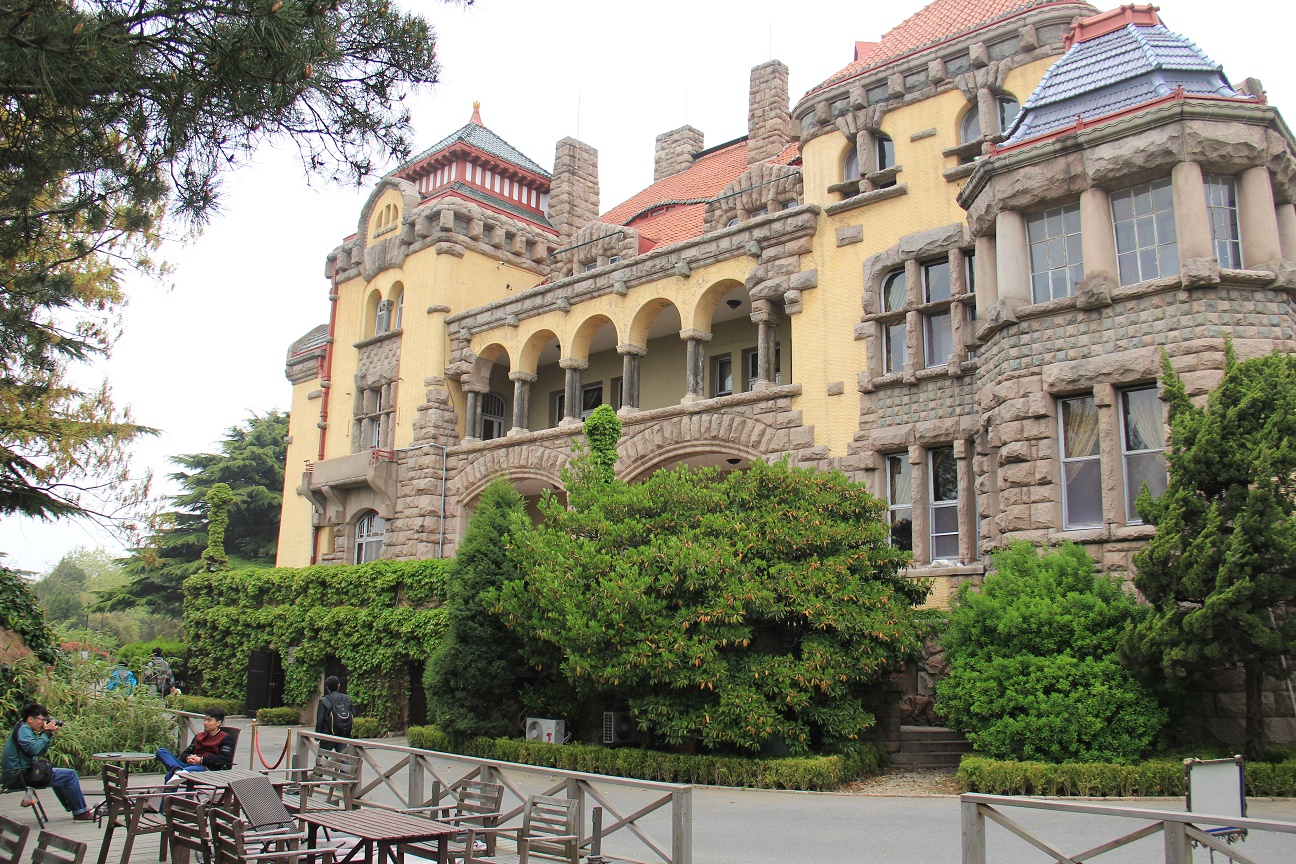
Nestled on the Shandong Province coastline, Qingdao today is a city of about three million people and small for The Middle Kingdom.  It always has been. For centuries it existed as a fishing village and strategic port, exporting salt instead of beer. The beer came in 1903, just six years after Kaiser Wilhelm II set his mind to turning Qingdao into a little Germany in Asia, wresting control of its strategic seaward batteries in 1897 and signing a 99-year lease on the territory. With the Tsingdao Brewery came electric lights, the railroad, and many of the Bavarian-style buildings whose red-tiled roofs still line the gently rolling hills looking out over the bay and make the city a sharp break from China normal.

Despite the castle-like mansion the German governor built in those then-empty hills, the German dream didn’t last. Qingdao was the site of the only World War One battle fought in Asia, a standoff between the cutoff German garrison under orders to hold out as long as it could and a sleek new fleet of Japanese warships eager to prove their mettle. A months-long joint British-Japanese naval bombardment brought the city under Japanese control in 1914. The Rising Sun was rewarded with a strengthened grip over Northern China at the Treaty of Versaille in 1919, sparking the May 4th Movement, a massive student protest movement which would spread across China, which is where a young Mao Zedong would cut his teeth, and which is credited today as the seeds of the later-day communist faction. Although the city was returned to the Chinese in 1922, the Japanese would retake it in the Sino-Japanese theater of World War Two and hold it until their surrender.

The brewery, however, didn’t go away, first being absorbed by the Japanese brewers of Asahi and Kirin, then reverting to Chinese control later in the century. Today it’s modern, still holds with German brewing purity law and known all over the world, its label emblazoned with the Huilan Pavilion that sits in the waters of Qingdao’s harbor off the shore of its old town and the edge of an always-packed pier.

Despite the crowding, the pier is one of Qingdao’s many pleasant walks, especially on a clear day as the sun sets when a stroller can watch the lights pop onto the German architecture lining the Oceanside street while the megasized container ships ply the waters heading out of the container port down the coast. And Qingdao is full of pleasant walks:

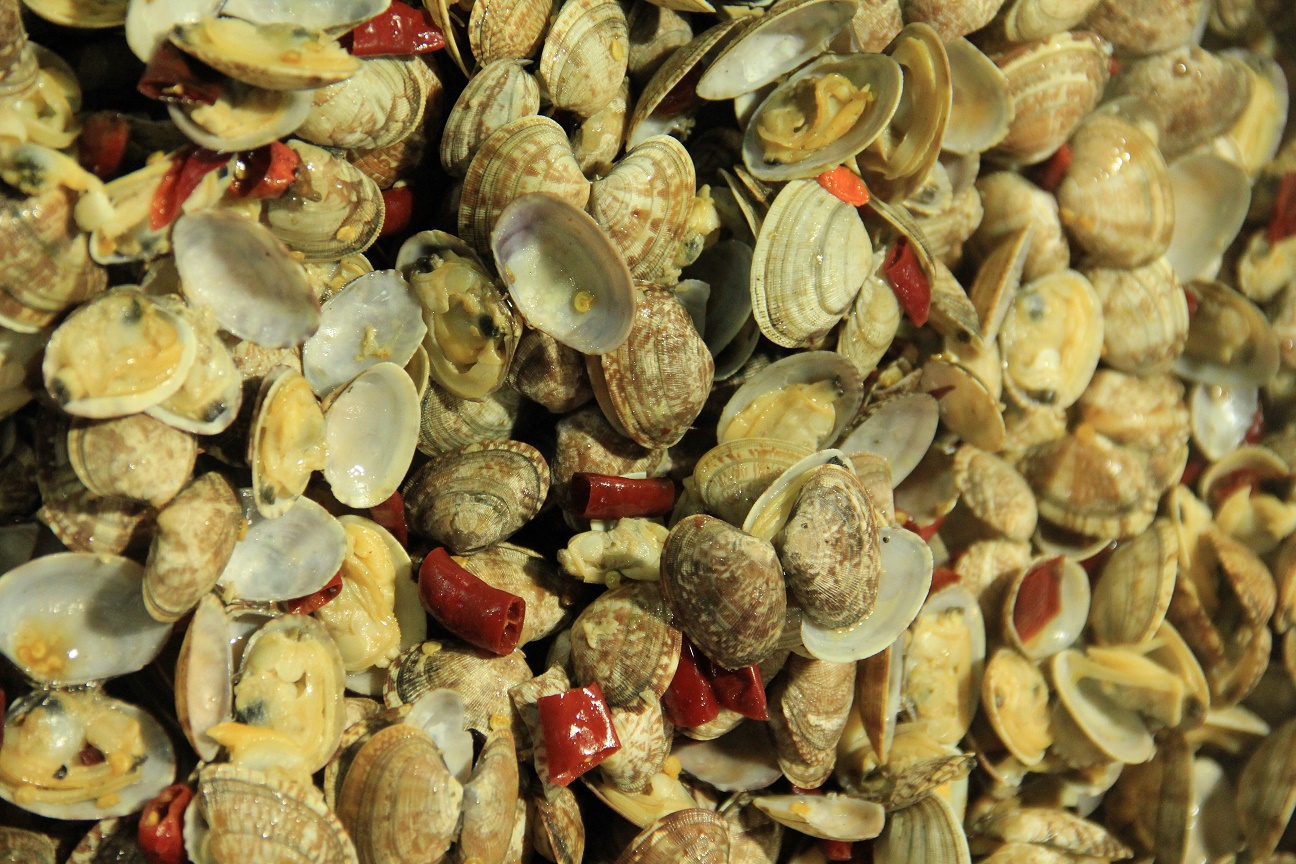
Walks past the endless little seafood restaurants serving up fresh seafood picked – by you – from tanks in front of the restaurant. When you pick a fish or octopus, the staff will beat it to death on the ground in front of you. We tried the clams at three different restaurants. Dabbed in garlic infused oil and topped with hot peppers, they were all delicious … for clams.

Clams. I don't they they beat these to death before the cook them. But they do add peppers.

Clams. I don’t they they beat these to death before the cook them. But they do add peppers.

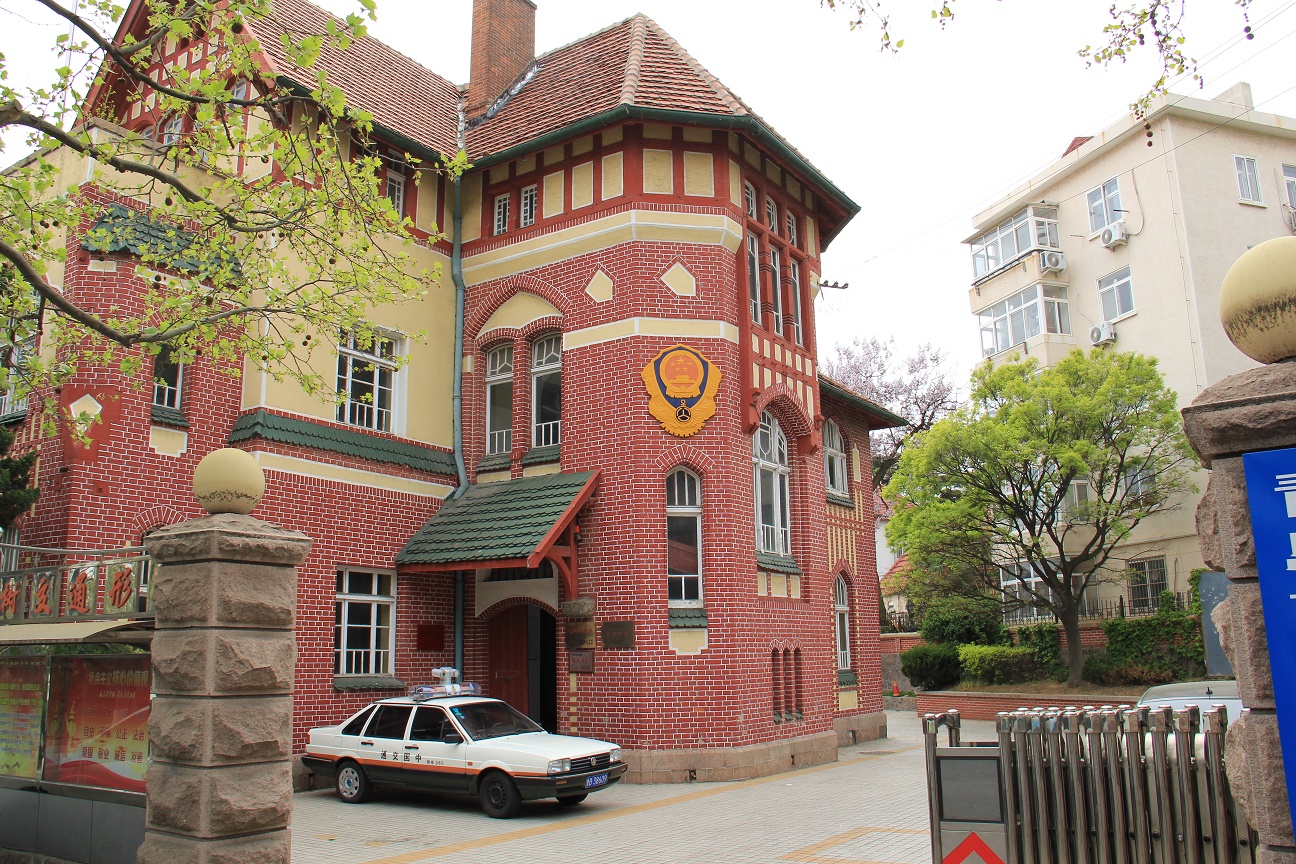
Walks through the leafy avenues of European-style houses now filled with coffee shops and restaurants and residences.

A Chinese police station.

A Chinese police station.

Walks under the turrets of St. Michael’s catholic cathedral – the capping crosses of which were buried during the Cultural Revolution by locals in the nearby hills to keep them safe and found by accident during construction work in the early aughts – and the old protestant church stocked to the gills with Chinese bibles and song books for the Chinese hordes, locals and tourists alike, to flip through.

For those who prefer to play 007 missionary and milk their congregations for greenbacks, though, I’m sure there are some house churches to skulk around, too. It’s all very hush-hush, I hear.

Walks along the boardwalk under central business district’s glass and steel towers and past May 4th Square and the now-dark torch overlooking the waters which hosted the 2008 Olympics’ sailing event.

Qingdao's CBD and the May 4th Square overlook the Olympic sailing venue.

Qingdao’s CBD and the May 4th Square overlook the Olympic sailing venue.

Walks through aristocratic halls of the governor’s mansion which hosted military men Germanic and Japanese alike and their families.

The first governor was sacked for the exorbitant cost of his palace, which overlooks the bay from a hilltop.

The first governor was sacked for the exorbitant cost of his palace, which overlooks the bay from a hilltop.

Walks across the decks of retired Chinese destroyers and past the rusting parts of jets, anti-aircraft guns, missiles, and mines at the naval museum. All of the exhibits on China’s naval development were in Chinese. A shame. I’d have loved to learn the “facts”.

Walks through lines of old brewing equipment explaining the history of Qingdao’s most famous export, and past the endless kegs of that export. The original 1903 buildings are still standing and house a museum of the brewery’s fascinating history. Outside is Qingdao’s “Beer Street”, a collection of all-the-same seafood restaurants offering the standard fare plus on tap the unfiltered and stout versions of Tsingdao beer, which are difficult to find anywhere else in the world

Walks under the late-night blaze of neon lights in the back alleys of Qingdao’s food street where those so inclined can buy fried crabs on a stick; ice cream crepe; scorpions; shrimp dumplings; all variety of fish, clams, and prawns; fire-seared squid; and of course, beer bags with a straw.

Beer bags are a good way to reduce your inhibitions for practicing your Chinese. They are also a good way to reduce your inhibitions for prodding live scorpions with your pointer finger.

Walks over boulder-strewn slopes of Laoshan Mountain, on the south side of Qingdao. It took a sickening cab drive to get there, but the mountain park is a sprawling and enchanting collection of naked stone, seaward views, and millennia-old Taoist temples. China’s first Emperor, Qin Shihuang, even ascended the slopes seeking immortality and in the fifth century, the pilgrim Faxian landed on its shores in a return from India bearing the first Buddhist scriptures to enter China. All along the routes winding through the rocks are teahouses and snack shops where you can stop and take in the slopes and the sea over a cup of green tea. Chinese ingenuity shows up here, too, as the shopkeepers have all diverted the river with little plastic pipes and created mini waterfalls cascading gently downward from one bowl of fruits or drinks to the next keeping everything cold by letting gravity do the lifting.

Walks through the bright blue-tiled gate to one of China’s first Taoist temples, Taisqing Palace, sheltered hulking, leafy Ginko trees and by the rocky slopes of the rolling mountains above. For atmosphere, as well as beauty, this temple ranked among my favorite. It seems the temple is also in the process of constructing and monumentally sized monument – Lao Tze himself – to glower out at the crusty, wooden fishing boats bobbing in the sea, circling their nets around the catch under the afternoon sun.

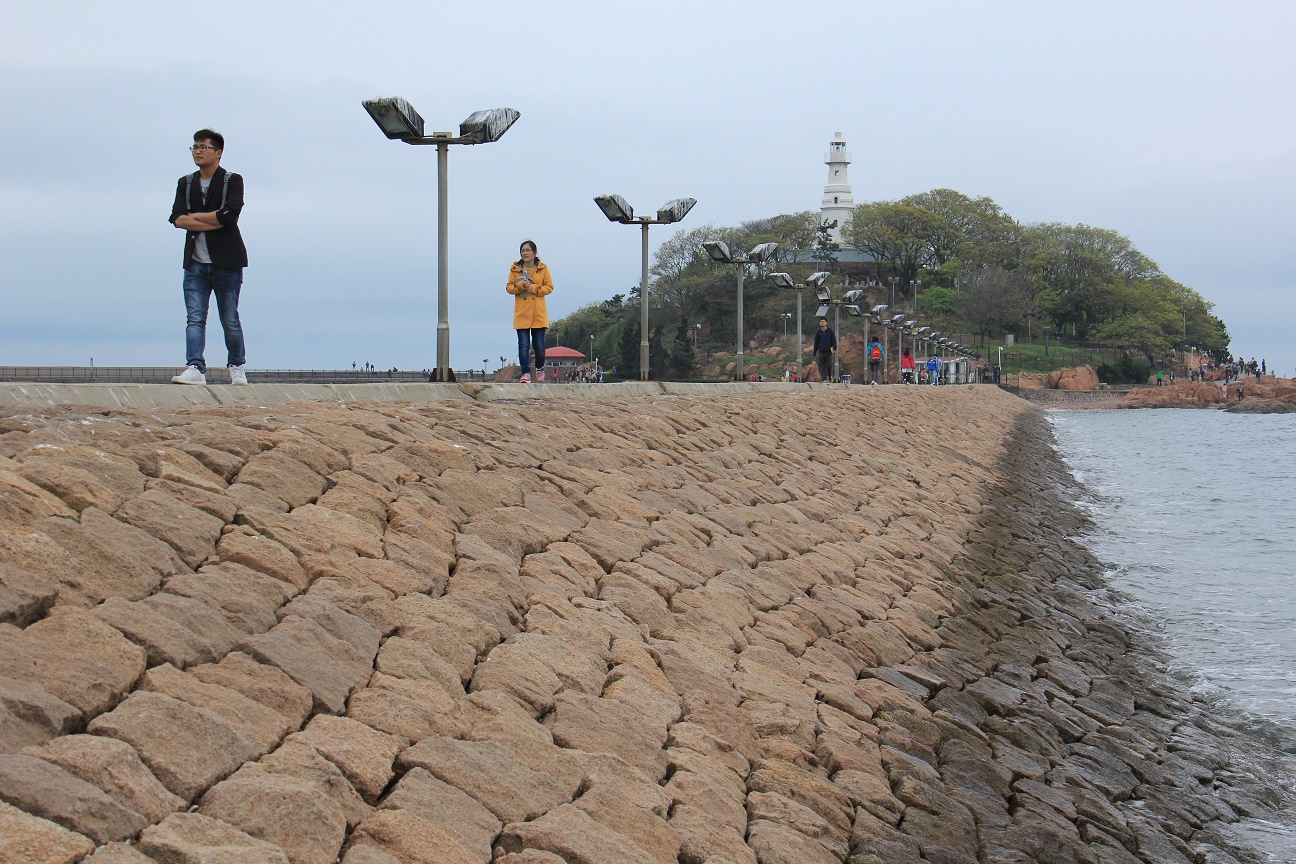
Walks under the white walls of the lighthouse that sits on Little Qingdao island. The lighthouse was destroyed during the Japanese bombardment in WW1 but was rebuilt to look out over Qingdao’s old town and keep ships clear of its shores.

The Little Qingdao lighthouse watches over the harbor and the seawall protects it.

The Little Qingdao lighthouse watches over the harbor and the seawall protects it.

Walks through the Qingdao Eastern Bear Park, where you can see hundreds of Asiatic Black Bears laying atop of one another. They can be fed with peanuts, while they hop up and down begging for a treat. Then you can watch grim-faced trainers lead bears around by a chain leash and tap them with sticks until the ride bicycles, walk on balls, walk a tightrope, juggle fire, and more. This place was utterly weird and utterly depressing, even if the view of the aquamarine ocean was lovely and even if we did get a VIP tour from one of the grizzled trainers who told us all about the different bears and asked us about America. When I asked him why two of the bears were fighting he shrugged and said “I don’t know. They just hate.”

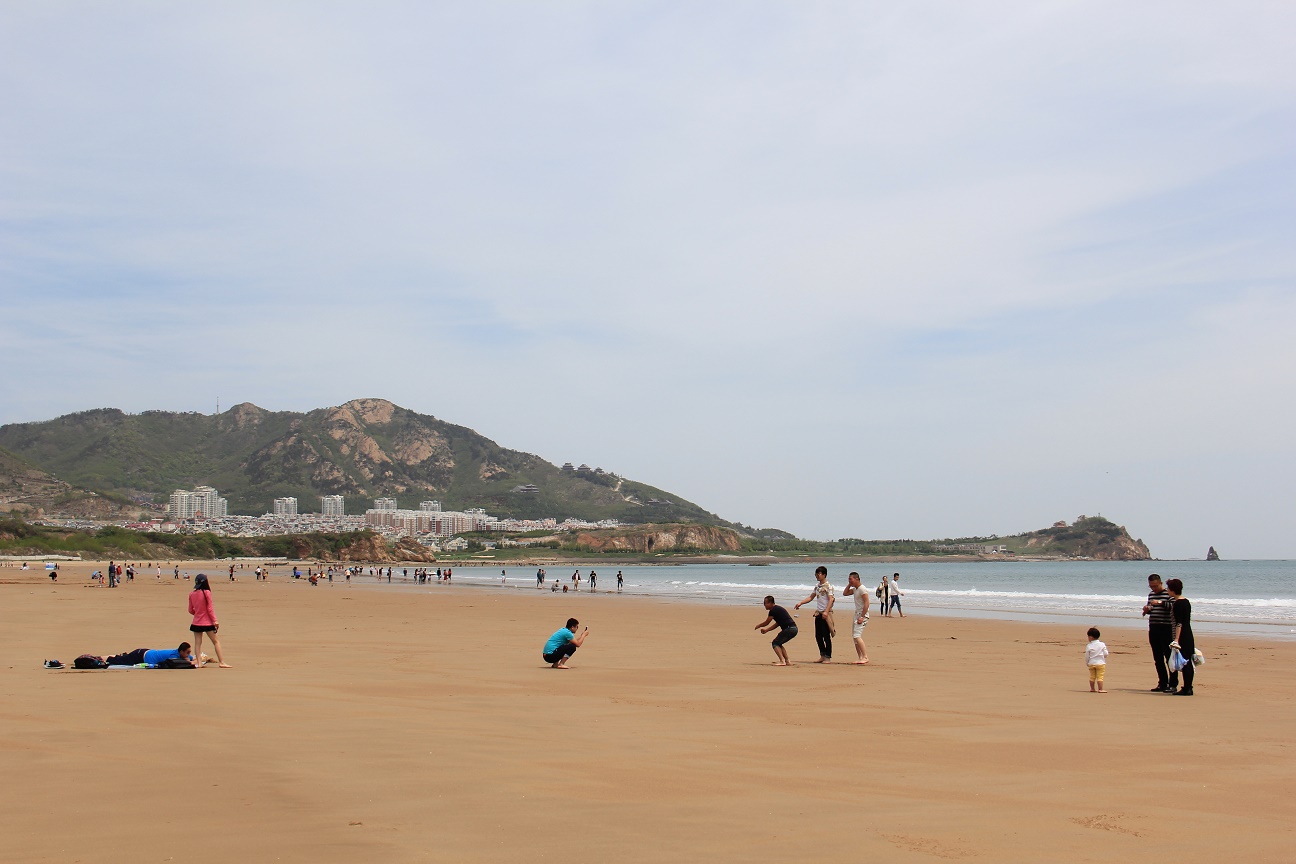
Walks along the yellow sand of Old Stone Man beach, past the touts begging you to go on a boat ride on their speedboat moored just strides of the swimming beach. With the sea on one side and the mountains on the other and Qingdao’s modern skyline splitting the difference, this beach really was pretty nice.

Old Stone Man beach.

Old Stone Man beach.

In three days, we did a lot of walking, but that’s pretty standard for us. And if it’s not clear, I came away impressed with Qingdao. It’s skies are clear, it’s old buildings gorgeous, and it’s modern streets clean. It’s got stunning mountains on one side, stunning ocean on the other.

Plus they serve beer in a bag.