Health check

All my organs are still in their proper locations. At least that’s what I assume the ultrasound was about.

It’s that time of year again: Health check time.

Every foreigner who’s lived in China on something other than a tourist visa knows what I’m talking about. The wonderfully bewildering cattle call that aims to learn something about your health. But things they are a-changin’.

I’ve taken half a dozen trips to the Beijing International Travel Healthcare Clinic way out in the hinterlands of the Haidian District. It’s the only place in Beijing where a foreigner seeking a long-term visa is able to get the official health check they need every time they apply for a new visa type. It takes longer to get to the hospital than it does to do the exam.

I remember the first time well. Accompanied by my Beijing-based friend, Jordyn and I walked into the clinic feeling the nerves of healthcare anticipation buzzing. But that buzz of anticipation turned to a hum of confusion as we were given a sheet of paper and herded from room to room to complete a barrage of tests that included an EKG, chest x-ray, blood drawing, eye test, and more.

I realized something strange was going on about the time that Jordyn laid down on an exam table at our first station and had her shirt yanked up to her throat with nary a shielding curtain in sight before her naked flesh was slathered in cold jelly.

And then when I was jammed up against the x-ray machine with no lead apron to be found. And then when then ear, nose, and throat exam consisted entirely of sitting down in a chair and standing back up without the doctor even looking at me in between grunts.

And then the assembly line blood drawers who as far as I’m concerned are the best in the world, sliding their needles and vials in and out without me ever feeling a thing.

And then when I walked, heart pounding, up to the door labeled “surgery” to find just a scale.

In fact after that first time, I’ve come to view going to the health clinic as a treat. It’s that sweet look on every first-timer’s face stuck somewhere between anger and fright and bewilderment which finally melts into “what just happened to me” as they walk out the door.

But changes are coming fast in China, and the healthcare clinic is just one more little example. The first time I went, each mini-exam required the signature of the presiding doctor. Yesterday they all had premade name stamps. There were guides to point you from one door to the next. There was a lead curtain to keep the x-rays at bay.

The eye and throat tests were still a joke, but now they even close the curtain before they take off your clothes.
Chengdu Day 1

I’ve put off writing about Chengdu (成都) because I don’t really know what to say about it without inducing boredom.

That’s not because Chengdu is boring. It’s because the best parts are like the humid fog that rises out of the Sichuan’s mountain forests and mixes with the humid smog that rises of its drab concreate forests: languid, hazy, smelly, and not at all what you expected. Lonely Planet has it right. By all means Chengdu should be a miserable place. Actually, it’s pretty lovely. It’s just hard to see why.

So instead of writing some kind of terrible Chengdu opus in which we could wander blindly and lost, then, I’m just going to break it into a few little chunks and call it good. Those Panda’s I promised at the start will finally arrive. Soon.

For starters, Jordyn and I have wanted to visit Chengdu since we started looking for jobs in China. One of our early job offers was teaching children for EF in Chengdu. We read plenty about it. It sounded like our kind of place. Surrounded by mountains. Laid back. Full of tea house culture. Ancient culture. The home of the Pandas.

It isn’t anything like we thought. But it is, too.

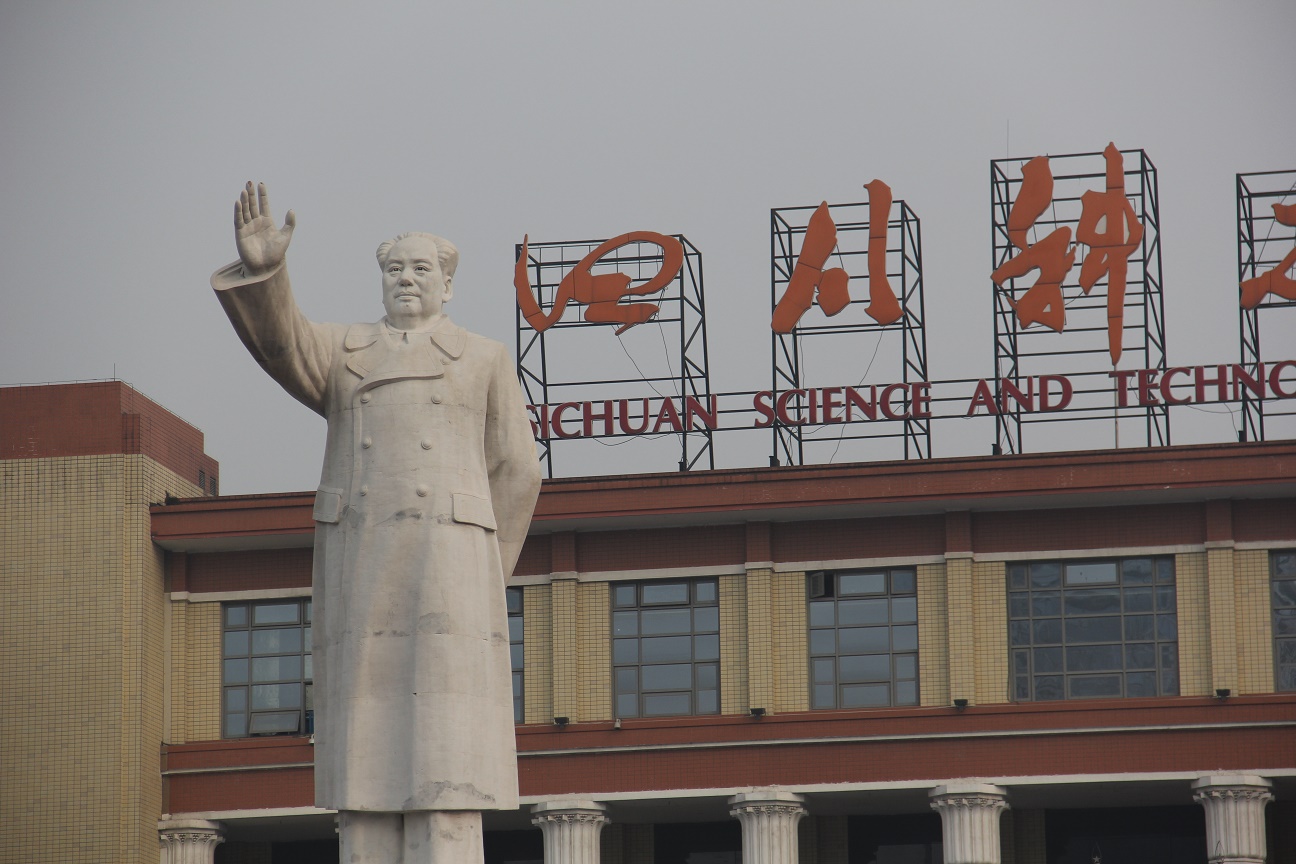
We took a short walk to the city square the first morning, getting a good look at the resident Mao statute and the uncheckpointed square nevertheless guarded by dogs and Segways and armor trucks. We got some coffee at McDonald’s. Globalization has its benefits.

Chairman Mao welcomes you to Chengdu's central square.

Chairman Mao welcomes you to Chengdu’s central square.

But our first real goal was to get the ancient history of Chengdu out of the way. Forty kilometers outside of Chengdu is the Sanxingdui archeological site believed to have been a major Bronze Age city and the center of a kingdom that flourished in Sichuan for more than 1000 years. Artifacts from the Kingdom of Shu indicate that isolated from the rest of China by the mountains which surround the Sichuan Basin, the Shu developed a unique and distinct culture until it was conquered by the Qin in 316 B.C. and integrated it into what would become the Middle Kingdom.

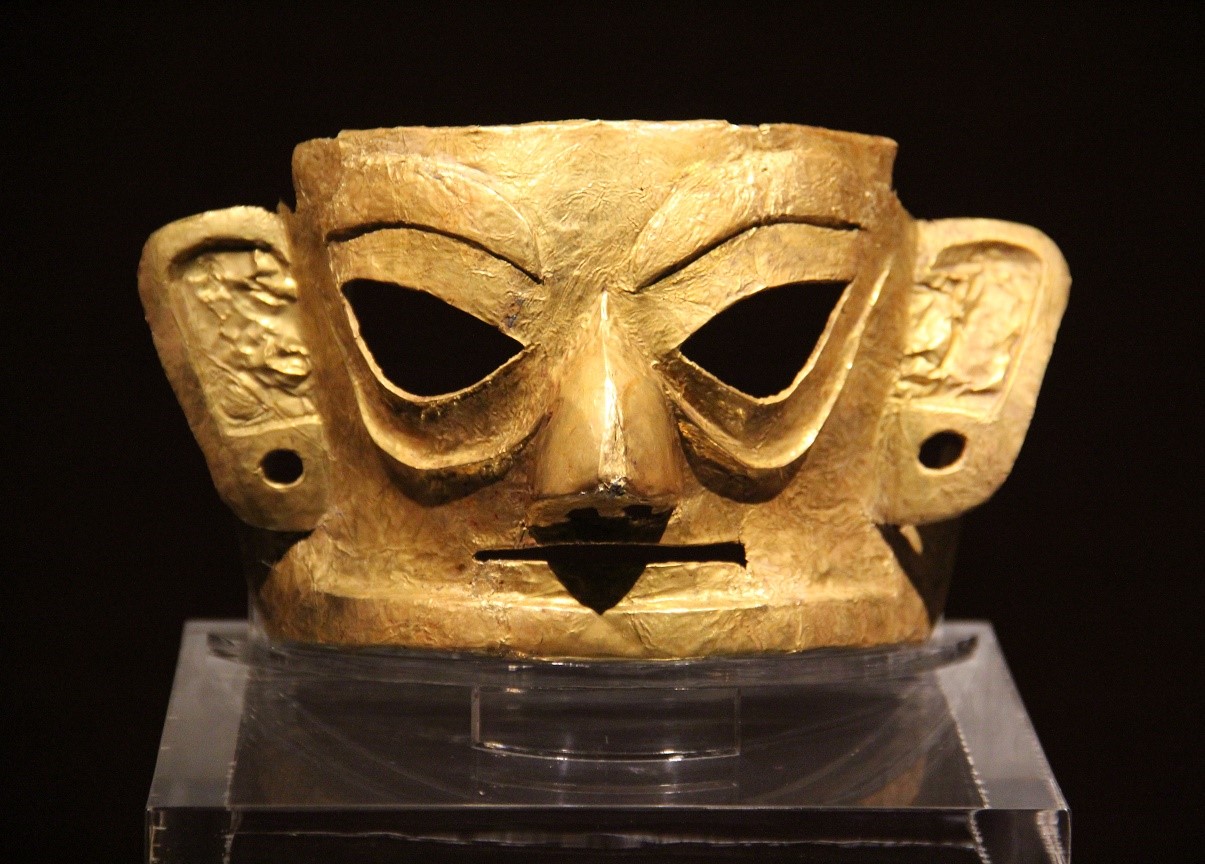
Another also distinct Shu site was discovered in 2001 in the Chengdu city limits during real estate development. Called the Jinsha Site, this second ancient city represented the final era in Sanxingdui’s cultural evolution as the political capital relocated to what is now Chengdu. A new museum was built around the still-active dig, which has uncovered jade, weapons, tools, ivory, and some beautifully advanced iron and gold work.

This gold mask is one of the Jinsha Site's most impressive treasures.

This gold mask is one of the Jinsha Site’s most impressive treasures.

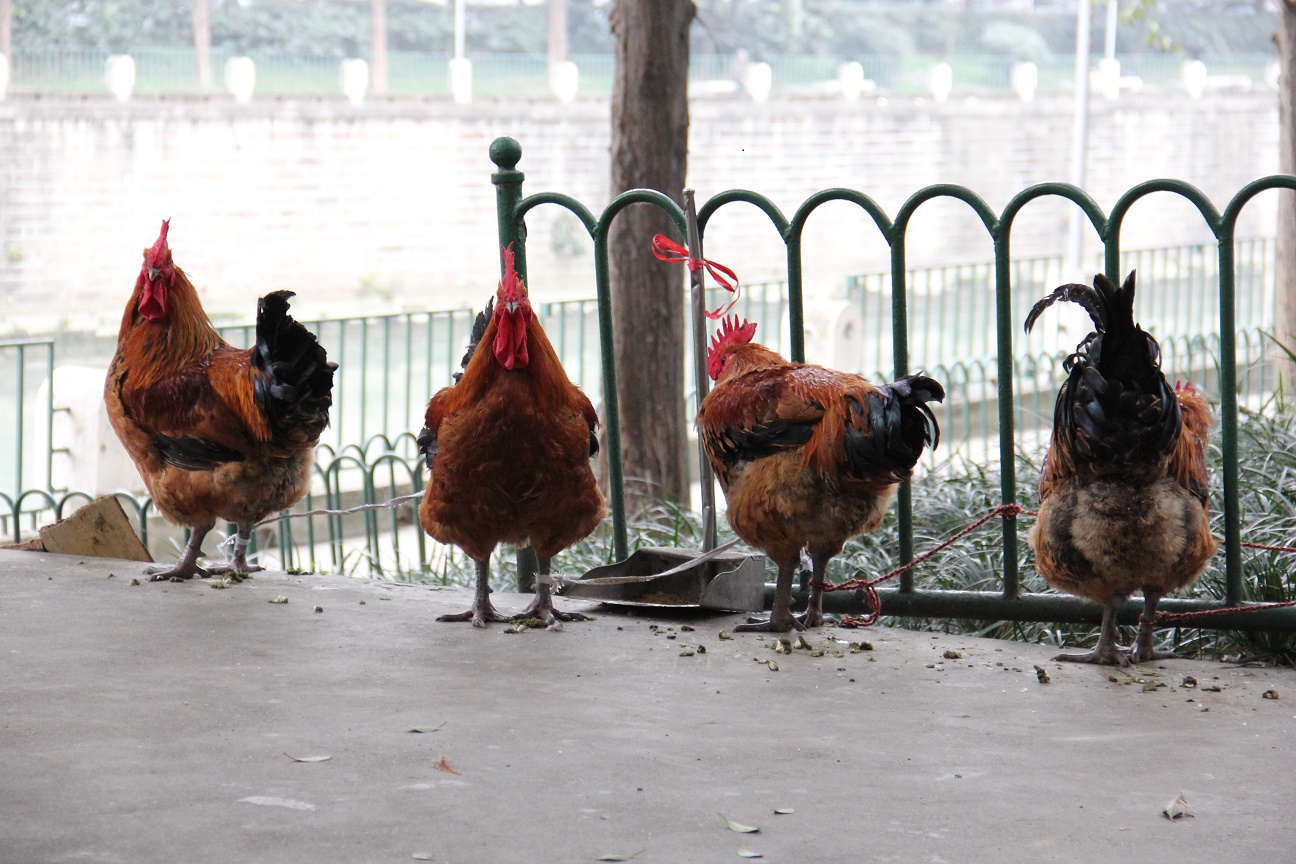
Plus on the way to the museum we got our first introduction to roosters tied with leashes to trees like dogs. We would see a lot more of these.

More of these.

More of these.

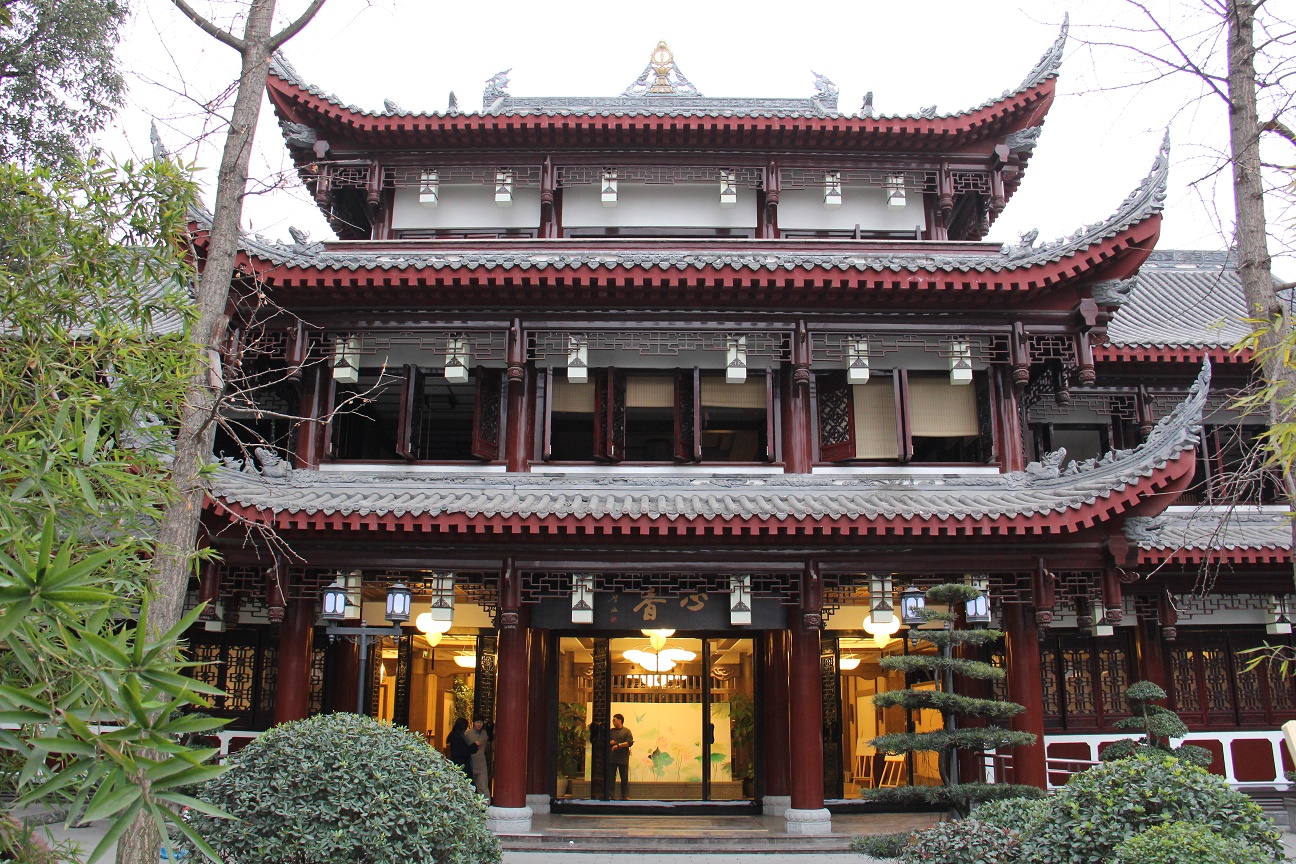
In the afternoon, we wandered around the Wenshu Temple neighborhood.

Wenshu Monastary is Chengdu’s oldest, founded during the Tang Dynasty sometime around the 7th century. It was torched during the wars of the Ming Dynasty, then rebuilt in its current form during the Qing.

Wenshu was our first encounter with the sweeping eaves style of architecture that dominates in Sichuan and diverges considerably from the Beijing style. The sprawling temple itself was crowd- and incense- and monk-filled in the usual style, nothing particularly unique but still pretty and peaceful.

We struck up a conversation with a group of old men who wanted to take some pictures with us. They tried to teach us something about Buddhism, but the dialect made understanding near impossible until a tiny septuagenarian with long, thin hair, no teeth and a great James Hong impression told them to cut it out. He talked to us in superb English about America instead. He’d never been but knew all about it. He still wanted to go to California someday. Then we all snapped some pictures and went our separate ways.

In the park outside of the walls, the old men gathered with their caged birds, hung on lines between the trees. The birds squawked and squealed at the wind while their owners shaded in a pagoda squawked and squealed at their card game.

After the temple, we walked the reconstructed “old” streets nearby, watching the food and ware hawkers ply their trade. There were nut vendors, meat vendors, bamboo juice vendors, calligraphy vendors, and even “Panda IKEA.”

The highpoint of our first day in Chengdu, though, was Wenshu’s vegetarian restaurant. The sleek wood and white dining room tended to by monks and nuns featured a 5-dollar, all-you-can-eat, all-vegetarian buffet with choices of more than 25 different dishes. Salads, soups, pastas, breads, casseroles, and deserts of all types with more kinds of vegetables and beans and tofu than I’ve ever seen. And perhaps the tastiest I’ve ever eaten.

Culinary enlightenment?

Wenshu's vegetarian restaurant.

Wenshu’s vegetarian restaurant.