October 4, 2015 – Tunxi, Anhui Province
My legs felt liked they’d been beaten with hardwood staves, but the thing I felt most was fear.
After what I’d just experienced on Huangshan, there was no way I was going to find a room for the night in the nearby town of Tunxi, where I planned to base myself for the next couple of days.
Tunxi, hosting a mere 150,000 people, is the central district of the greater Huangshan City and with its busy bus station, it serves as something of a gateway to both the mountain and the outlying Huizhou villages.
The Huizhou region of southern Anhui province boasts its own distinct culture, including its own language – which is mutually unintelligible with standard Mandarin – its own culinary style – which is recognized as one of China’s eight main cuisines – and most recognizably, its own architecture – which has earned two of the area’s ancient villages World Heritage status.
And that’s why I was there. Rather, why I’d planned to be there, if I could find a place to sleep.
I caught the late-afternoon bus to Tunxi, about an hour from Huangshan, after spending an hour in a Chinese restaurant bashing my head against the spotty internet and failing to find an available room. Fingers crossed, I arrived outside of the city’s famous Old Town, a touristy street full of Huizhou-style buildings, antique shops, souvenir stands, and packed-house restaurants.
My guidebook only listed two hostels, so it was going to be that or pay Huangshan-summit prices for a too-big bed. If I was lucky. The first hostel I tried was booked up. Along the humming Old Town street, things looked bleak. I started to prepare myself to sleep in my tent in a park corner. Two Germans I met once in Kyrgyzstan had done this for a month in China. They said the police only bothered them sometimes. I also considered what it would be like to sleep face down on the table top at KFC. Chinese friends of mine do this all the time.
But I caught a break. The second hostel had a single bunk left. It was mine. No parks or KFC table-tops. The fear dissipated. All that was left was the wood-cane pain. I booked a bunk for two nights just to be sure, then took my first shower in three days. When the front desk attendant rented me a towel she told me to bring my deposit slip back to the desk.
After I showered, she emphasized.
Cleaned up, I wandered the sea of people along Old Street, trying to marvel at the Ming Dynasty-era architecture without knocking anyone over. The sun blazed through the legion of Chinese flags adorning the eaves in celebration of national week and turned the crowd orange. When the sun set, so did I.

Chinese flags fly for national day along Tunxi’s rooftops.

Old Street’s side streets have Chinese restaurants galore.

Tunxi’s Old Street was packed with tourists.
Morning came early after sweating it out in my hostel bunk. I set out in the dark for Hongcun Ancient Village, about an hour and a half from Tunxi brushing against the southwestern slope of Huangshan. Getting there required taking a long-distance bus to a different county bus station, then transferring to local bus. My first bus was nearly an hour late – this was normal – so I arrived later than I’d hoped, and The Horde had already arrived.
I ducked out of the main square and into Hongcun’s still-deserted back alleys.
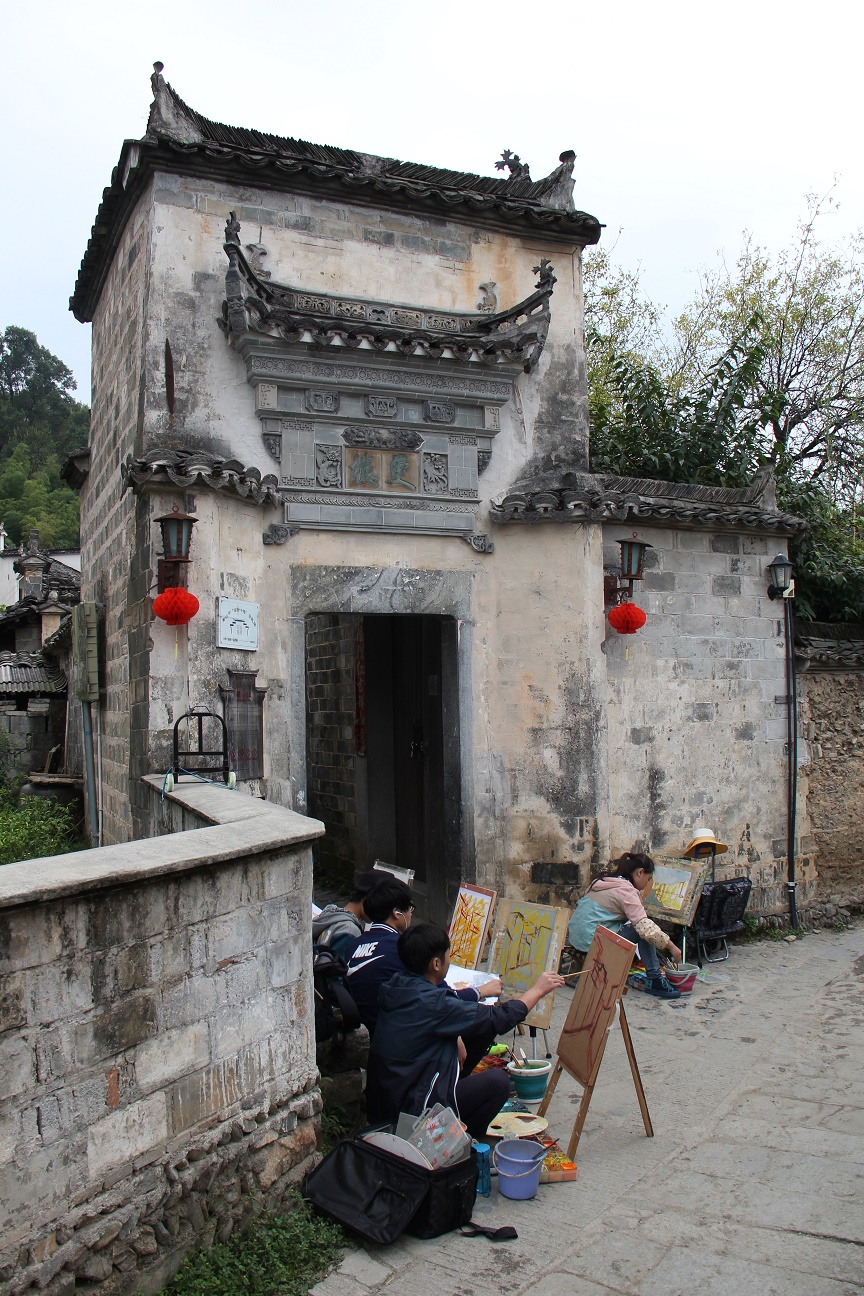
Hongcun was founded during the Southern Song dynasty with a history stretching more than 900 years. For much of its history it, its residents were mostly merchant families, which used their fortunes to construct elaborate entranceways famed for their distinct horsehead eaves and intricately carvings adorning the tops of their doorways. Homes in Hongcun mostly date from the Ming and Qing Dynasties, between about 600 and 200 years old, and are typical of Huizhou style: white walls with black tiled roofs and those horsehead eaves, originally designed to prevent the spread of fires before taking on a more decorative nature.
Hongcun, in particular, has an irrigation system composed of a large lake, a small lake, and a stream, which flows alongside winding stone alleyways of village, flushing water all the way through and providing a convenient place to wash vegetables or clean out chicken innards. The village elders designed the village in the shape of an ox, two trees making up its horns, the hill at the back the head, the lakes and stream making up its entrails, and the four bridges that span it making up the ox’s legs. Purportedly, this formation resulted in some positive geomancy.
For Westerners, the most distinctive feature is the main bridge leading over the south lake into the village. That’s because Hongcun was the setting for a number of shots in Crouching Tiger, Hidden Dragon, the bridge featured in the opening shot.
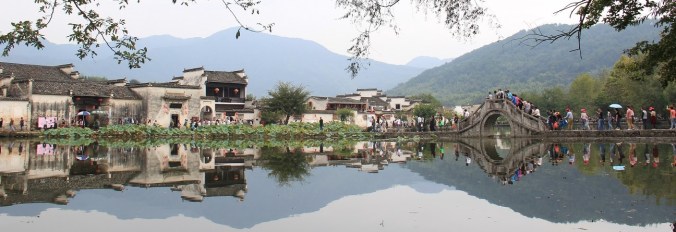
Hongcun’s famous bridge was featured in Crouching Tiger, Hidden Dragon.
But I was more giddy to find that the oldest surviving building in Hongcun once served as the headquarters for the Taiping Heavenly King.
A historical aside:
In 1837, a would-be imperial scholar, a Hakka-minority born named Hong Xiuquan failed the imperial service examination – which had a pass rate of about 1 percent – again, this time due to what was apparently a nervous breakdown. The mental break brought on dreams and hallucinations of terrifying intensity. Six years later, upon reading Christian tracts gifted to his family nearly a decade earlier, he reinterpreted this dreams as mystical, heaven-sent visions. Then he declared he was the younger brother of Jesus Christ. And he began to gather a flock.
By 1850, Hong Xiuquan had a following that numbered in the tens of thousands. The increasingly alarmed imperial authorities tried to disperse the multitude in 1851, but Hong Xiuquan’s followers routed them, then beat back a full-scale assault by the imperial army. On January 11, 1851 Hong Xiuquan declared that the Heavenly Kingdom of Transcendent Peace had arrived in China.
For the next 14 years, China would be riven in two pieces – Southern China the domain of the Taiping with their capital at Nanjing, Northern China the domain of the Manchurian emperor with his capital at Beijing. Over that time, perhaps as many as 100 million people would die (though a precise estimate is hard to come by), some by violence, some by disease, some by starvation.
Sometime in those years between 1843 and 1964, Hong Xiuquan lived, preached, and commanded from a small, stone gate tower in a little village in Anhui Province. And I was standing in it.
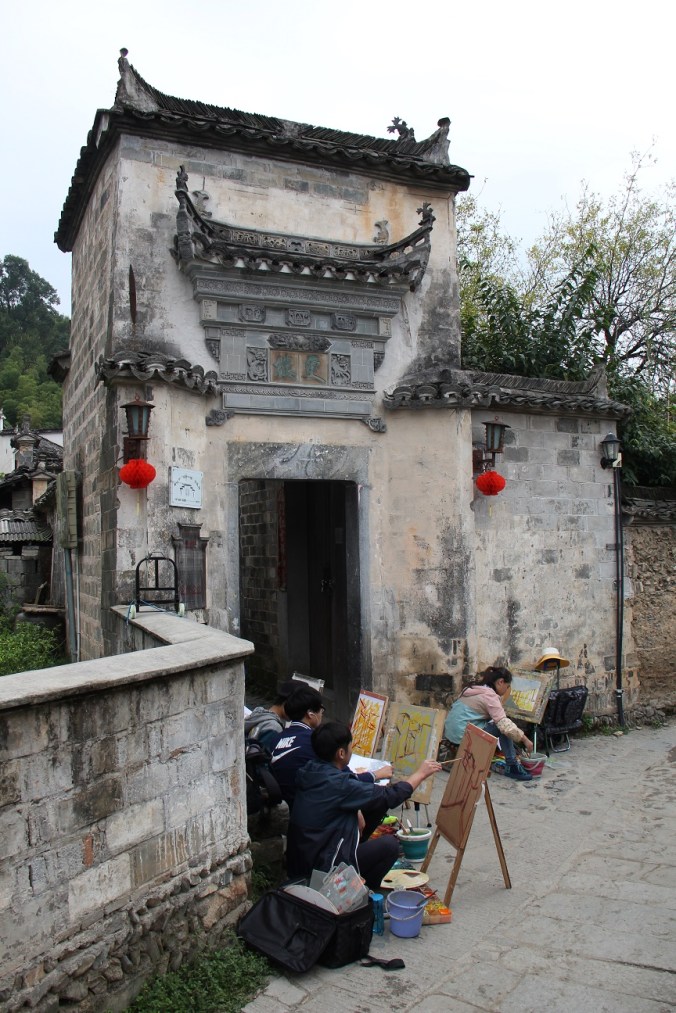
The Heavenly King made his headquarters in this watchtower, the oldest building in Hongcun.
My moment of wonder, didn’t last long. The village peace was soon shattered by the omnipresent scourge of Chinese tourist sites: Chinese tour groups, each equipped with its own speaker-equipped tour guide.
Through the narrow stone lines their tinny drone hounded me as I skipped from one village tourist site to the next, never quite escaping except in gloom of dusty, lonely alcoves in the back corners of ancestral temples.
Nevertheless, there was always just enough breathing room to admire the never-quite-the-same wood carvings that shaded the window light set in those distinct whitewashed walls.

Hongcun’s alleyways wind along the stream that runs through it.

Hongcun’s stream is nothing if not convenient.

Hongcun’s smaller lake makes up the bull’s stomach.

The hill behind Hongcun is a great place to escape the crowds and get a better view of the village.

This dog is tired.
I spent a few hours marching along with the crowds, snacking on a local style of tofu, and trying my best to imagine what the village would’ve been like in the 1850s as longhaired rebels crowded the lanes, or in the 1940s when a ragged band of communist soldiers including Mao Zedong made Hongcun a hotel during the Long March.
By the time I felt like I’d marveled enough, there was just enough time left to try to make a quick tour of the bamboo sea a few kilometers up the road. The first cab refused to take me, saying that the traffic was too bad. I had a hard time believing it, as my destination was just up the road, and found room in a van instead.
Thirty minutes later, I was on the main road to the bamboo sea. I could still see the village gate through the choking exhaust of unmoving buses. Should’ve listened to the cabbie.
The time started to press one me. The van driver told me not to worry, I could just call him when I was done with the bamboo and he’d take me back to Tunxi. For about 500 yuan. The bus was 18. No thanks. I paid him 25 yuan for the 300 meters we’d moved and jumped out into the traffic jam.
As I walked along the road back to Hongcun, I tried to imagine the army of the Heavenly King tramping through the lush and sweltering hills around me. I tried to put myself behind the eyes of Zeng Guofan – commander of the Hunanese Provincial Army who would in 1864 finally capture Nanjing and bring an end to the war – as he peered into the winter mists from the mountain peaks to the north, unable to see his enemy, sure of his impending destruction, and paralyzed with fear and regret. And I tried to picture the barren and blackened earth that pushed the price of human flesh so high in Anhui in the last days of the Taiping Civil War that only the richest of folk could afford to eat their dead.
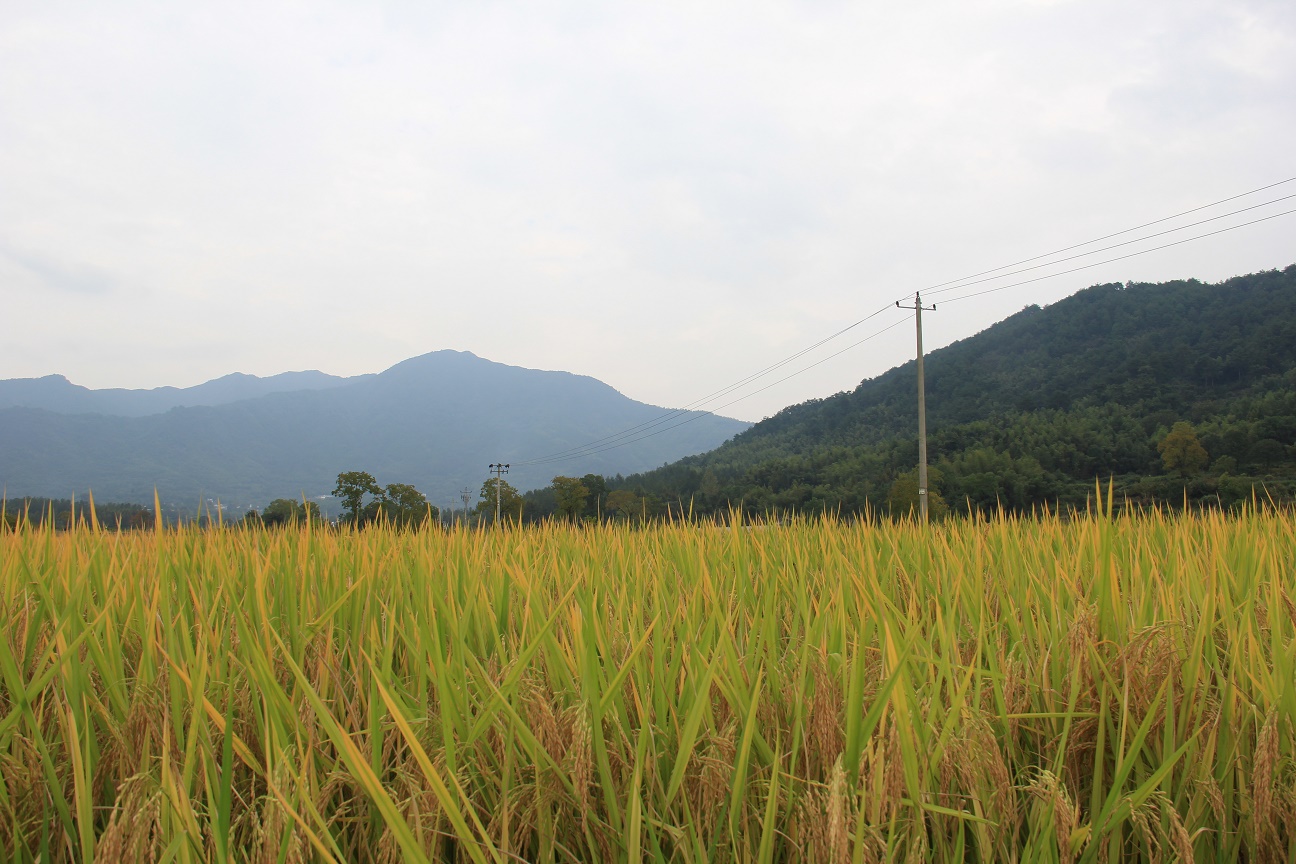
Around me, the yellow grasses swayed, peaceful and alive in the afternoon breeze.
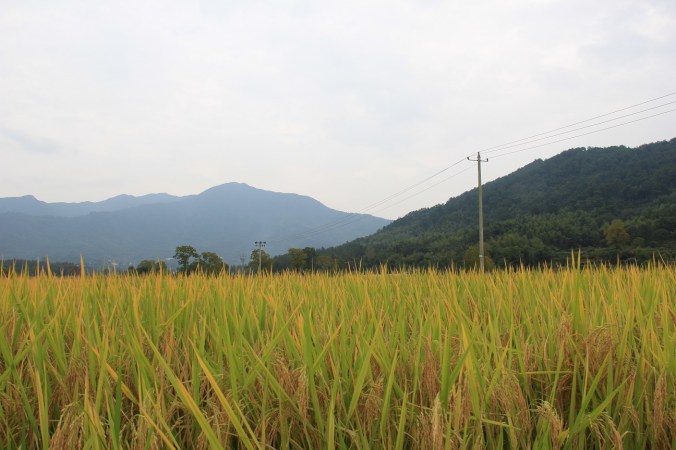
Anhui grass








 Sojourns